Roundup
Handmade wood cutting boards
The most-gifted handmade object there is, and the one where the difference between forty dollars and a hundred and forty is actually visible.
We earn a commission when you buy through our Amazon links, at no extra cost to you. It never changes the order of the picks, and we say so when the cheaper thing is the better buy. How this works.
Every pick below is on Amazon Handmade unless the card says otherwise, and every price is the live one. If you want the rules we apply before anything gets listed, they are on how we pick.
The short answer
Quick picks
| # | Product | Best for | Provenance | Price |
|---|---|---|---|---|
| 01 | 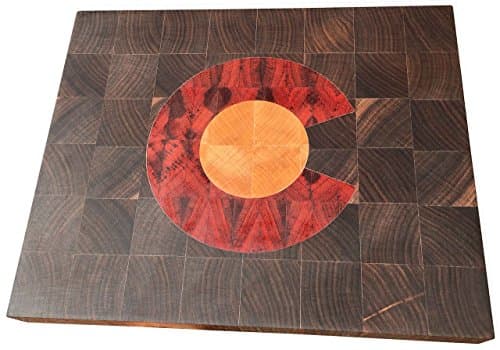 Colorado End Grain Cutting Board A true end grain block from a Handmade storefront, at the price where end grain starts. | the cook who actually chops, and who will keep this for twenty years | Amazon Handmade | $125.00Amazon (affiliate link) |
| 02 | 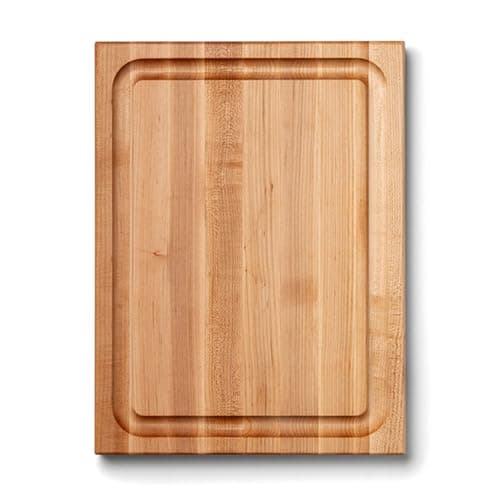 John Boos CB Series Reversible Maple Block, 20 x 15 in Twelve pounds of reversible maple at 1.5 in thick, and it will outlive the kitchen. | a serious home kitchen with counter space to spare | Factory-made | $129.95Amazon (affiliate link) |
| 03 | 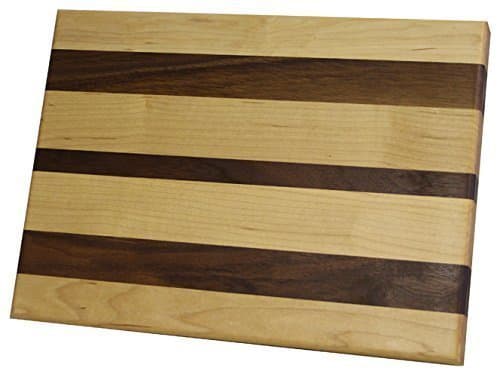 Maple and Walnut Cutting and Serving Board, 10 x 14 in The same footprint as the striped version, plainer, and cheaper for it. | a household that wants one board to chop on and serve from | Amazon Handmade | $70.00Amazon (affiliate link) |
| 04 | 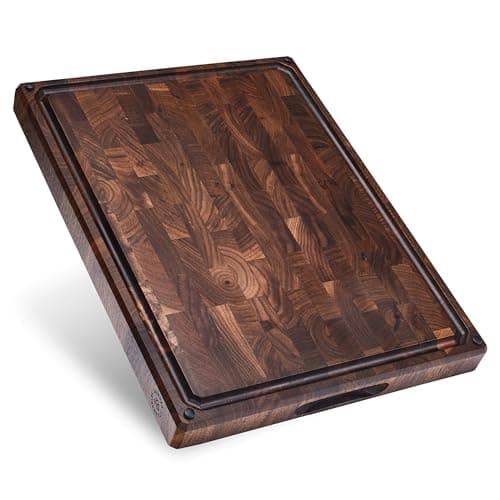 Sonder Los Angeles Alfred End Grain Walnut Board Production end grain walnut, 17 x 13 x 1.5 in, and the specs are stated plainly. | someone who wants end grain walnut at a known brand with a return policy | Factory-made | $179.99Amazon (affiliate link) |
| 05 | 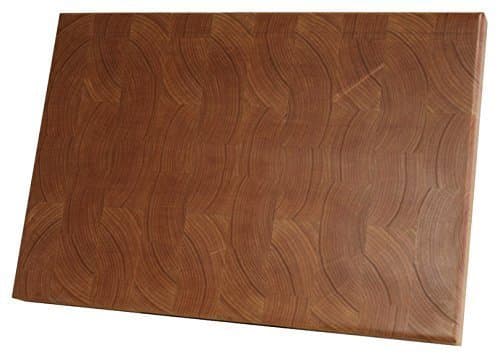 American Cherry Board, 12 x 18 in Single-species cherry, large, and it will darken to a deep red over a few years. | someone who wants a board that gets better looking with age | Amazon Handmade | $110.00Amazon (affiliate link) |
| 06 | 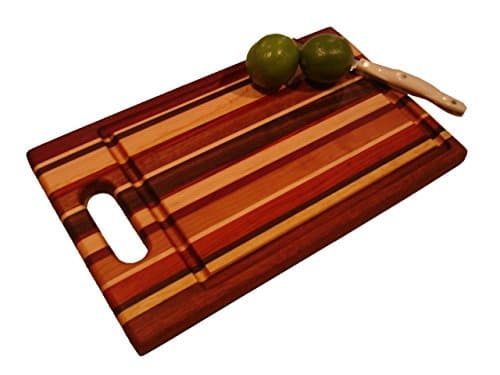 Lucky Stripes Medium Board with Handle A handled board in mixed offcut hardwoods, so no two are identical. | cheese, bread and anything that travels from kitchen to table | Amazon Handmade | $65.00Amazon (affiliate link) |
| 07 | 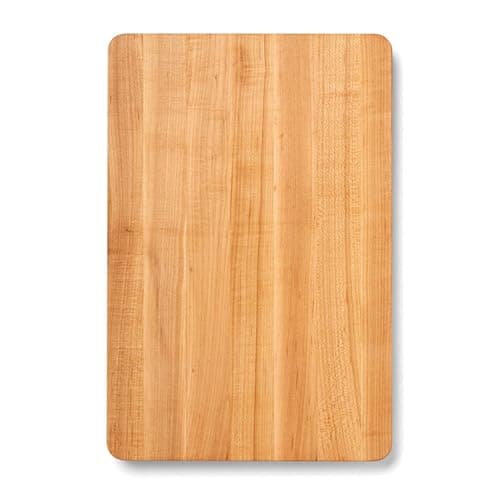 John Boos Chop-N-Slice Maple Board The default American maple edge grain board, made since long before any of this. | the reference point every other board on this page is measured against | Factory-made | $48.95Amazon (affiliate link) |
| 08 | 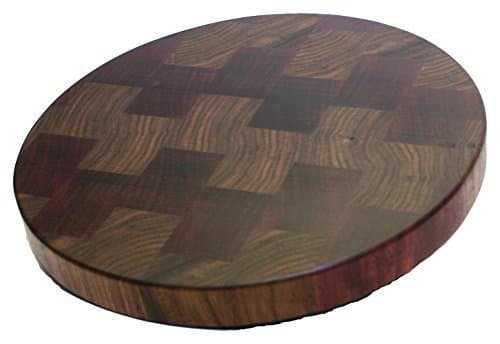 Purpleheart and Walnut Round Board, 12 in A round board in purpleheart and walnut, which is a color combination nobody expects. | the person who has a perfectly good board and wants an object | Amazon Handmade | $115.00Amazon (affiliate link) |
#ad · Live prices from the Amazon Creators API, as of October 25, 2026. Where we hold no verified live price we show none — a gap beats a number that has rotted.
The one we would not buy
Thin edge-grain boards under three quarters of an inch
They warp. A board that thin has almost no mass to resist the moisture gradient between its wet top face and its dry underside, so it cups within a season and then rocks on the counter — which is both annoying and genuinely unsafe with a knife in your hand. Under an inch, buy the board for a specific light job, not as the main board.
The picks, in full
Colorado End Grain Cutting Board
by Independent maker
For a cook who owns knives they care about. A true end grain block from a Handmade storefront, at the price where end grain starts.
End grain means the wood fibers stand vertically, so the knife edge slots between them instead of scraping across them. Two things follow: the board is kinder to your knives, and the cut marks close up rather than staying as scars. It is also heavier and more expensive to make, which is why edge grain dominates the shelves. This is the entry point to the real thing.
Worth knowing first
End grain boards are thick and heavy by design. If they wash up in a small sink, measure first.
Price as of October 25, 2026. Prices move, and the one on Amazon is the one that counts.
#ad we may earn a commission from this link to Colorado End Grain Cutting Board
John Boos CB Series Reversible Maple Block, 20 x 15 in
by John Boos
For a kitchen that actually cooks every day. Twelve pounds of reversible maple at 1.5 in thick, and it will outlive the kitchen.
This is a working butcher block rather than a gift object: heavy enough that it does not move while you chop, thick enough to be resurfaced repeatedly, and reversible so one face can stay for raw meat. Nobody gives this as a romantic gesture. Give it to someone who has complained about their board.
Worth knowing first
Factory-made, heavy, and it needs permanent counter space. Measure before buying.
Price as of October 25, 2026. Prices move, and the one on Amazon is the one that counts.
#ad we may earn a commission from this link to John Boos CB Series Reversible Maple Block, 20 x 15 in
Maple and Walnut Cutting and Serving Board, 10 x 14 in
by Independent maker
For a first good board without a big decision. The same footprint as the striped version, plainer, and cheaper for it.
This is the board to buy when the recipient is practical rather than decorative. It does both jobs a wooden board is asked to do and it does not announce itself on the table. At this price it is the strongest value in the section, and the one we would send to a first apartment.
Price as of October 25, 2026. Prices move, and the one on Amazon is the one that counts.
#ad we may earn a commission from this link to Maple and Walnut Cutting and Serving Board, 10 x 14 in
Sonder Los Angeles Alfred End Grain Walnut Board
by Sonder Los Angeles
For someone who wants it dark. Production end grain walnut, 17 x 13 x 1.5 in, and the specs are stated plainly.
We label this factory-made because it is, and we include it because it is a real end grain walnut board at a size and thickness the listing actually states. Production boards win on consistency and on returns: if it arrives warped you send it back, which is not always simple with a one-person workshop. If the maker story matters to the recipient, buy handmade instead.
Worth knowing first
Mass-produced. It carries no maker story, which for a gift is often the entire point.
Price as of October 25, 2026. Prices move, and the one on Amazon is the one that counts.
#ad we may earn a commission from this link to Sonder Los Angeles Alfred End Grain Walnut Board
American Cherry Board, 12 x 18 in
by Independent maker
For counter space and a bread habit. Single-species cherry, large, and it will darken to a deep red over a few years.
Cherry is the one common board wood that visibly changes: it starts pale pinkish and darkens under light into a red-brown, so the board looks different at year five than at week one. That is a genuine feature for a gift, because it makes the object a record of the time it has been owned. Cherry is softer than maple, so treat it as a serving and light-prep board rather than a butcher block.
Worth knowing first
Cherry is softer than maple or hickory. It will scar faster under heavy chopping.
Price as of October 25, 2026. Prices move, and the one on Amazon is the one that counts.
#ad we may earn a commission from this link to American Cherry Board, 12 x 18 in
Lucky Stripes Medium Board with Handle
by Independent maker
For carrying food to a table, not just chopping. A handled board in mixed offcut hardwoods, so no two are identical.
Boards built from shop offcuts are the most genuinely one-off thing in this category: the maker is using what is on the bench, so the stripe pattern cannot be repeated. The handle turns it into a serving board you can carry with one hand while holding a glass in the other, which is most of what a board does at a party.
Price as of October 25, 2026. Prices move, and the one on Amazon is the one that counts.
#ad we may earn a commission from this link to Lucky Stripes Medium Board with Handle
John Boos Chop-N-Slice Maple Board
by John Boos
For a second board, or a student kitchen. The default American maple edge grain board, made since long before any of this.
John Boos has been making maple butcher block in Illinois since the nineteenth century, and the Chop-N-Slice is the plain edge grain board most professional kitchens actually use. It is included here as the benchmark: if a handmade board costs more than this, it should be doing something this does not. Many do. Some do not.
Worth knowing first
Factory-made, and deliberately plain. Nobody will unwrap this and be surprised.
Price as of October 25, 2026. Prices move, and the one on Amazon is the one that counts.
#ad we may earn a commission from this link to John Boos Chop-N-Slice Maple Board
Purpleheart and Walnut Round Board, 12 in
by Independent maker
For someone whose kitchen already has three brown boards. A round board in purpleheart and walnut, which is a color combination nobody expects.
Purpleheart really is purple, and it is the wood that makes people pick up a board and ask what it is. Round format pushes it further toward serving than chopping. This is a decorative buy and we would rather say so than pretend it is the practical choice, because the 10 x 14 rectangles above are better at the actual job.
Worth knowing first
Bought for looks. If they need a working board, this is not it.
Price as of October 25, 2026. Prices move, and the one on Amazon is the one that counts.
#ad we may earn a commission from this link to Purpleheart and Walnut Round Board, 12 in
What you are actually choosing between
Three variables, in order of how much they matter: grain direction, thickness, and species. Everything else — the finish, the juice groove, the branding — is preference rather than performance.
Grain direction is the big one. On an edge-grain board the wood fibers run along the surface, so your knife cuts across them and leaves a visible line. On an end-grain board the fibers stand upright like a bundle of straws, so the blade slides between them and they close back over the cut. That makes end grain gentler on an edge and far better at hiding wear, and it makes it two to three times more expensive to build, because the maker is gluing up hundreds of small blocks rather than a handful of long strips. The full comparison is on end grain vs edge grain.
Thickness is the one people ignore and then regret. A board under three quarters of an inch cups; a board over an inch and a half stays flat for decades. It is also the difference between a board that slides around and a board that stays where you put it, because mass is what resists the push of a knife.
Which species, in one table
There is no wrong answer among the first three — they are all closed-grain hardwoods dense enough not to trap food in open pores, which is the property that actually matters. Cutting board wood types goes deeper, including on the woods to avoid entirely. If you are still deciding between a wooden board and a plastic one at all, wood vs plastic cutting boards sets out what the bacteria research actually found and why the official advice still says nonporous.
Size, honestly
Most people buy too small. A 10 x 14 inch board is a prep board: fine for an onion, cramped for a chicken. A 15 x 20 is a board you can actually work on with a second ingredient beside the first, and it is the size that gets left out on the counter rather than put away — which in practice means it is the one that gets used.
The counterweight is weight. A large end-grain block in maple can run over ten pounds, and that is genuinely too much for some people to lift to a sink. If you are buying for an older relative, buy the 10 x 14 and buy it in walnut, which is lighter than maple. What size cutting board do you need? works through the counter, the sink and the job in more detail.
What kills a board, and how to stop it
The dishwasher, essentially always. A hardwood board goes through a hot soak and a hot dry cycle, the wood swells and shrinks unevenly, and the glue joints separate. The cruel part is that it usually survives the first two or three passes, so the owner concludes it is fine and keeps going. Then the board splits along a glue line and it is finished.
Second is drying flat. A board left lying on a wet counter dries on one face and stays damp on the other, which cups it. Stand it on edge. Third is oil: an un-oiled board absorbs water and eventually cracks, and the fix is fifteen dollars of food-grade mineral oil three or four times a year. Wooden cutting board care and how to oil a cutting board cover both properly.
Who each of these suits
Buying for a cook with good knives: end grain, and the Colorado board is where we would start. Buying for a household that cooks a lot but does not think about knives: the John Boos CB Series, which is a reversible maple block from a company that has been making them since 1887 and is the definition of a workhorse. Buying for someone setting up a first kitchen: the 10 x 14 maple and walnut, which is a real handmade board at a price that does not require a conversation.
Buying for a host: the serving boards with handles, because the handle is what turns a chopping board into something carried to a table. Buying for a wedding: go up a size and consider a personalized board, which is one of the few occasions where engraving is unambiguously right.
Questions people actually ask
Is an end-grain board worth twice the price?
What size cutting board should I buy?
Can I put a handmade board in the dishwasher?
Do wooden boards harbor more bacteria than plastic?
Read next
Comparison
End grain vs edge grain
The construction difference, what it costs, and who should pay for it.
Care
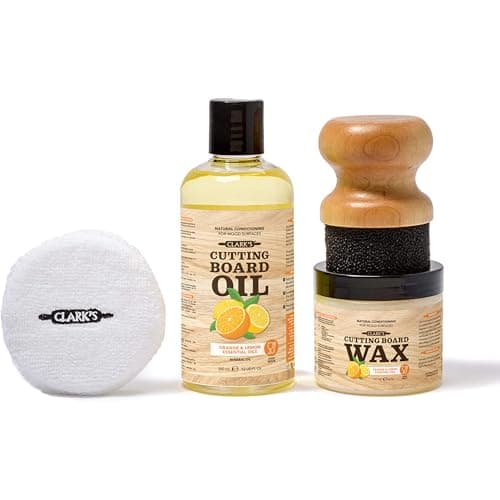
Wooden cutting board care
The four-minute routine that decides whether a board lasts one year or thirty.
For an interest
Handmade gifts for home cooks
The pieces a serious kitchen is missing, not the ones it already has.
Occasion
Handmade wedding gifts
For a pile of forty gifts — go large, dated and genuinely useful.
Roundup
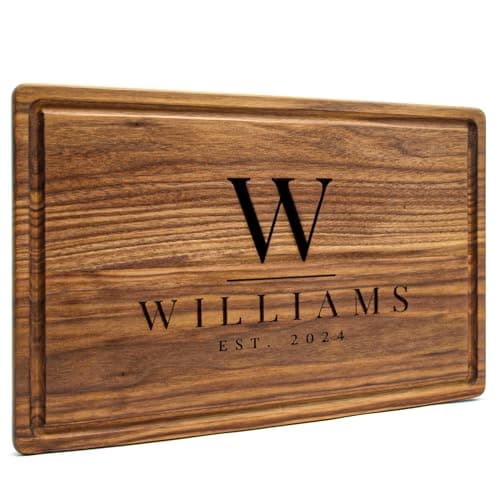
Personalized cutting boards
Engraved to order, and an honest account of what the engraving costs you.
By budget
Handmade gifts under $100
Big enough to be the whole gift, with an honest note on what still costs more.
Head to head
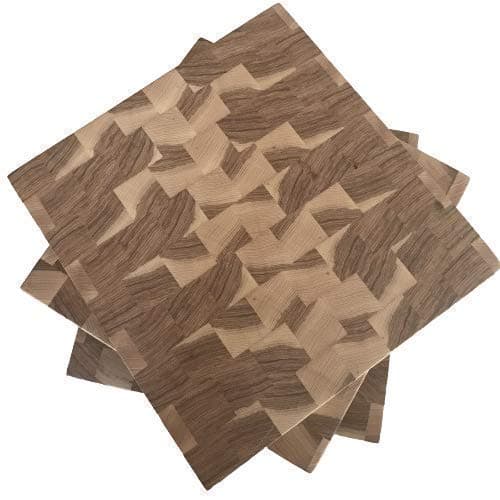
Wood vs plastic cutting boards
What the bacteria studies actually found, why the official advice still says nonporous, and why a scarred plastic board is the one to throw out.