Care
Wooden cutting board care
A handmade board costs three times its factory equivalent and, cared for, lasts ten times as long. Uncared for, it lasts about the same.
We earn a commission when you buy through our Amazon links, at no extra cost to you. It never changes the order of the picks, and we say so when the cheaper thing is the better buy. How this works.
Every pick below is on Amazon Handmade unless the card says otherwise, and every price is the live one. If you want the rules we apply before anything gets listed, they are on how we pick.
The short answer
Quick picks
| # | Product | Best for | Provenance | Price |
|---|---|---|---|---|
| 01 | 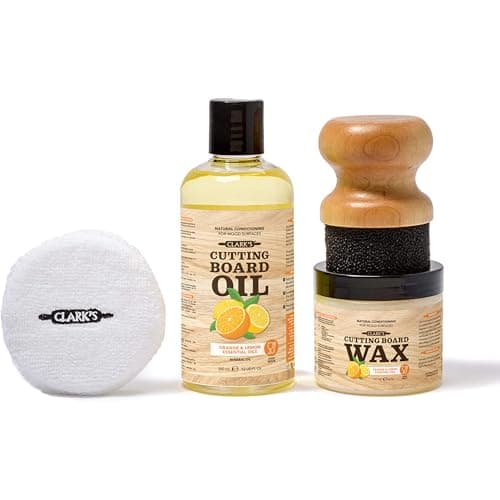 Clarks Cutting Board Oil and Wax Kit Food-grade mineral oil, finishing wax, an applicator and a cloth, in one box. | giving alongside any board on this page | Factory-made | $44.99Amazon (affiliate link) |
| 02 | 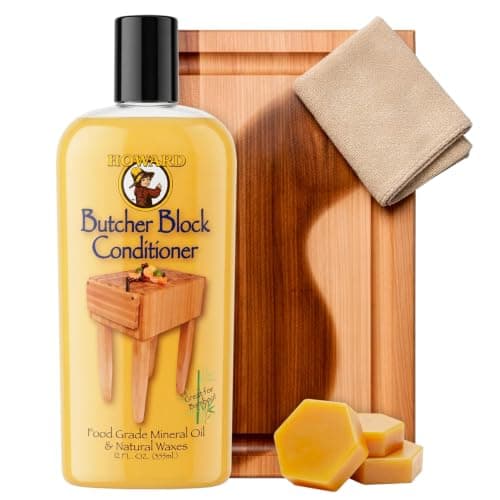 Howard Butcher Block Conditioner Food-grade mineral oil and wax conditioner, twelve ounces, under ten dollars. | the cheapest correct way to keep a board alive | Factory-made | $9.98Amazon (affiliate link) |
#ad · Live prices from the Amazon Creators API, as of October 25, 2026. Where we hold no verified live price we show none — a gap beats a number that has rotted.
The picks, in full
Clarks Cutting Board Oil and Wax Kit
by Clarks
For oil and wax together, which is the right pairing. Food-grade mineral oil, finishing wax, an applicator and a cloth, in one box.
A wooden board that is never oiled will dry out, and a dry board cracks along its glue lines within a couple of years. That is the single most common way a hundred-dollar gift dies. The kit includes both the oil that soaks in and the wax that seals the surface, which is the two-step the manufacturers actually recommend.
Worth knowing first
Mass-produced hardware. It is the companion to a board, never the gift itself.
Price as of October 25, 2026. Prices move, and the one on Amazon is the one that counts.
#ad we may earn a commission from this link to Clarks Cutting Board Oil and Wax Kit
Howard Butcher Block Conditioner
by Howard Products
For a single bottle that does boards and spoons. Food-grade mineral oil and wax conditioner, twelve ounces, under ten dollars.
This is the plain answer to board maintenance and it costs less than lunch. Food-grade mineral oil does not go rancid, which is the reason every manufacturer specifies it and the reason you should never use olive oil on a board. One bottle lasts years.
Worth knowing first
Mass-produced. Buy it as an add-on.
Price as of October 25, 2026. Prices move, and the one on Amazon is the one that counts.
#ad we may earn a commission from this link to Howard Butcher Block Conditioner
The one rule
Never put it in the dishwasher. That is the whole of the most important instruction, and it accounts for more dead handmade boards than everything else combined.
Here is why it kills a board. A dishwasher subjects wood to a prolonged hot soak followed by a hot dry cycle, and the wood swells and shrinks unevenly. On a glued-up board, that stress concentrates at the glue joints. The cruel part is that a board usually survives the first two or three cycles — so the owner concludes it is fine and keeps going, and then the board splits along a glue line and it is finished.
The routine, which takes about a minute a day
- Scrape the board clean before it goes near water. Most of what is on it comes off dry.
- Wash with hot water and dish soap and a cloth or brush. Soap is fine on wood — the myth that it damages a board comes from lye-based soaps that have not been in common use for a century.
- Rinse and dry immediately with a towel. Do not let it drip dry lying flat.
- Stand it on edge to finish drying, so air reaches both faces. This is the step people skip and it is the one that prevents cupping.
That is it, every day. The oiling is a monthly or quarterly job, covered on how to oil a cutting board. A bowl is close enough to follow the same routine and different enough to have its own failure modes — exposed end grain around the rim, and unrestrained seasonal movement in a single piece of wood — so wooden bowl care covers that case separately.
Why drying flat cups a board
A board lying wet on a counter dries on the top face while the underside stays damp against the surface. Wood expands as it takes on moisture and contracts as it loses it, so one face shrinks while the other does not, and the board curls away from the wet side.
A cupped board rocks on the counter, which is annoying with a knife in your hand and genuinely unsafe. Mild cupping can sometimes be reversed by wetting the concave side and drying the convex one under weight, but the fix is unreliable and the prevention costs nothing: stand it up.
Raw meat, and the sensible position
Wash with hot soapy water immediately after raw meat, as you would any surface. Dry it properly. If you want to go further, a wipe with a dilute white vinegar solution or a scrub with coarse salt and half a lemon is a reasonable deodorizing step, and both are what board makers themselves recommend.
On the widely repeated claim that wood is more hygienic than plastic: we have since tracked down the primary research — the Ak, Cliver and Kaspar papers in the Journal of Food Protection — and set out what it actually found on wood vs plastic cutting boards, alongside why official guidance still prefers nonporous surfaces. The short version is that the evidence favors wood more than the standard advice does, and that it does not change anything on this page. What is not in dispute is the practical advice — wash it with hot water and detergent, dry it upright, and do not leave it wet. That is sufficient either way.
Stains and smells
- Coarse salt and lemon
- Half a lemon dipped in coarse salt, scrubbed over the surface, left five minutes, rinsed. The salt is a mild abrasive and the acid deodorizes. The standard fix for garlic and onion.
- Baking soda paste
- For a stubborn stain — wine, turmeric, beetroot. Paste it on, leave it, scrub and rinse. It lifts more than it looks like it should.
- Light sanding
- For deep knife scarring or a stain that will not lift. 220 grit, with the grain, then re-oil generously. Entirely acceptable on a solid hardwood board and one of the reasons they last.
- Bleach
- Avoid. It dries wood out badly and can raise the grain permanently. Hot soapy water does the job.
What actually kills boards, in order
- The dishwasher. Overwhelmingly first, and it is a slow failure that looks like a sudden one.
- Drying flat on a wet counter, repeatedly, until the board cups.
- Never oiling it. A dry board absorbs water, swells and eventually cracks. It is the slowest of the three and the easiest to fix.
- Leaving it soaking in a sink. Same mechanism as the dishwasher, without the heat.
If you are giving a board as a gift
Give conditioner with it, and say why. It costs about fifteen dollars, it makes the gift look considered rather than singular, and it is the single thing most likely to determine whether the board is still in use in five years. Board butter vs mineral oil covers which to put in the box.
A one-line note is enough: hand wash, dry it standing up, and oil it when water stops beading. Most recipients have never been told any of that, and none of it is obvious.
Questions people actually ask
Can a wooden cutting board go in the dishwasher?
Is soap bad for a wooden cutting board?
How do I get a stain out of a wooden board?
Is wood more hygienic than plastic?
Read next
Care
How to oil a cutting board
Which oil, how often, and the two that go rancid.
Roundup
Handmade wood cutting boards
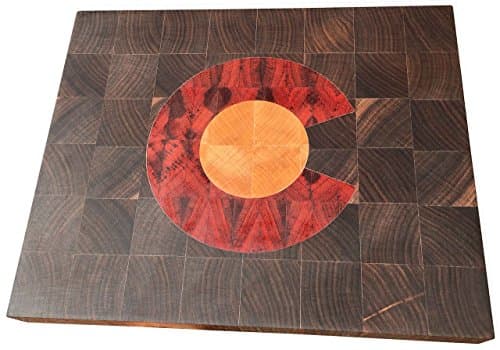
Eight boards from real workshops, with the grain question settled first.
Comparison
End grain vs edge grain
The construction difference, what it costs, and who should pay for it.
Roundup
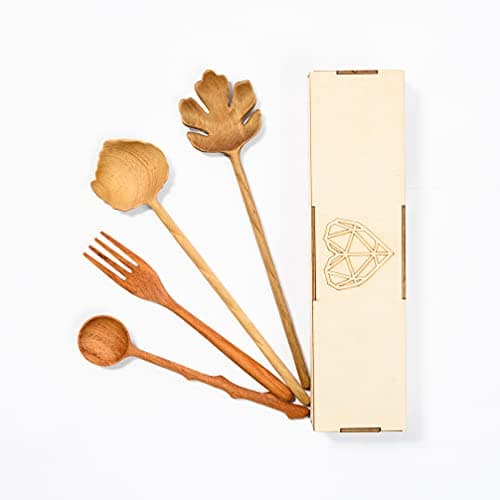
Wooden spoons and utensils
Sets, servers and one engraved spoon — plus the care mistake that splits them.
For an interest
Handmade gifts for home cooks
The pieces a serious kitchen is missing, not the ones it already has.
Woodcraft
Woodcraft, boards and bowls
Grain direction, species, and why the dishwasher is the enemy.
Head to head
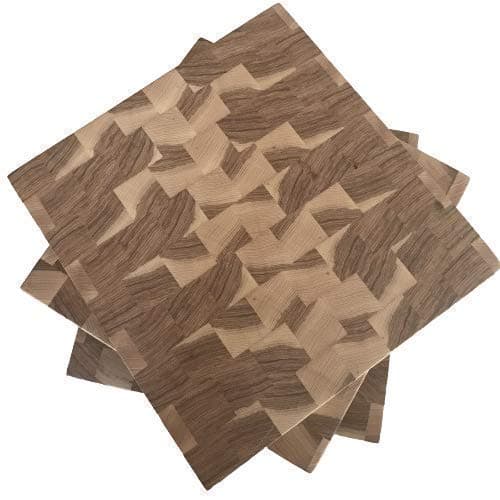
Wood vs plastic cutting boards
What the bacteria studies actually found, why the official advice still says nonporous, and why a scarred plastic board is the one to throw out.