Comparison
End grain vs edge grain
One of these is genuinely kinder to a knife. The other is genuinely better value. Which is which depends entirely on the kitchen.
We earn a commission when you buy through our Amazon links, at no extra cost to you. It never changes the order of the picks, and we say so when the cheaper thing is the better buy. How this works.
Every pick below is on Amazon Handmade unless the card says otherwise, and every price is the live one. If you want the rules we apply before anything gets listed, they are on how we pick.
The short answer
Quick picks
| # | Product | Best for | Provenance | Price |
|---|---|---|---|---|
| 01 | 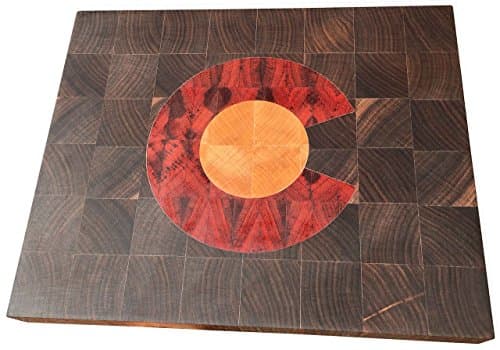 Colorado End Grain Cutting Board A true end grain block from a Handmade storefront, at the price where end grain starts. | the cook who actually chops, and who will keep this for twenty years | Amazon Handmade | $125.00Amazon (affiliate link) |
| 02 | 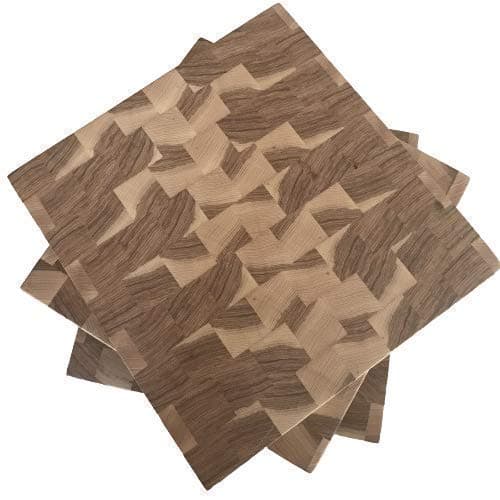 Handcrafted Hickory End Grain Cutting Board Hickory, end grain, handcrafted, and priced accordingly. | someone who already has a board and wants the last one they will buy | Amazon Handmade | $195.00Amazon (affiliate link) |
| 03 | 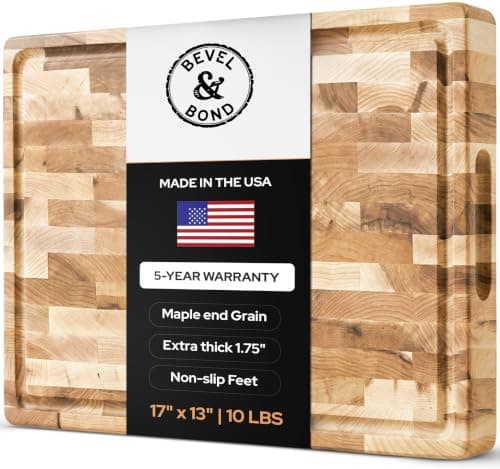 Maple End-Grain Board, 17 x 13 x 1.75 in Ten pounds of maple end grain, made in the USA per the listing, under the handmade price. | end grain at production pricing, with the dimensions stated up front | Factory-made | $119.99Amazon (affiliate link) |
| 04 | 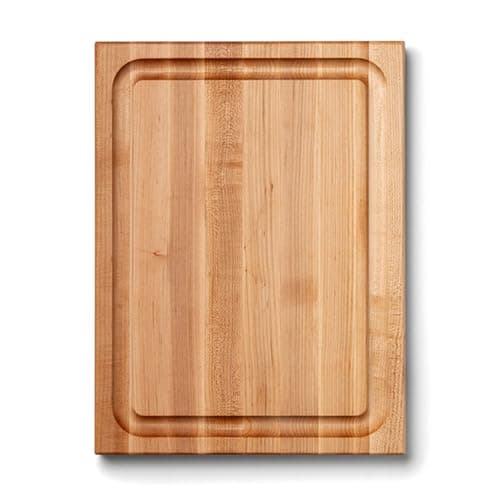 John Boos CB Series Reversible Maple Block, 20 x 15 in Twelve pounds of reversible maple at 1.5 in thick, and it will outlive the kitchen. | a serious home kitchen with counter space to spare | Factory-made | $129.95Amazon (affiliate link) |
| 05 | 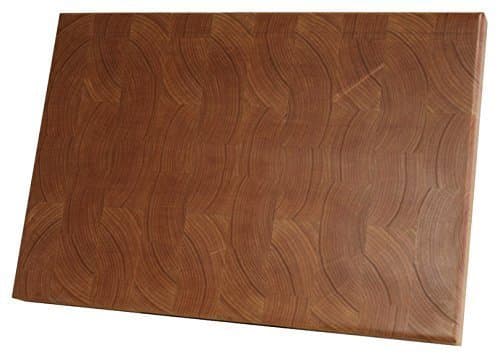 American Cherry Board, 12 x 18 in Single-species cherry, large, and it will darken to a deep red over a few years. | someone who wants a board that gets better looking with age | Amazon Handmade | $110.00Amazon (affiliate link) |
| 06 | 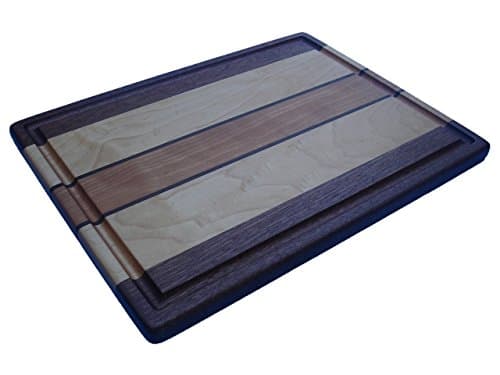 Signature Collection Large Board, Sapele, Maple, Walnut and Cherry Four woods laminated into stripes, large format, from a Handmade workshop. | a wedding or housewarming gift that has to look like an heirloom | Amazon Handmade | $75.00Amazon (affiliate link) |
#ad · Live prices from the Amazon Creators API, as of October 25, 2026. Where we hold no verified live price we show none — a gap beats a number that has rotted.
The one we would not buy
End-grain boards under one inch thick
End grain is expensive because of the block glue-up, and a thin end-grain board pays that premium while throwing away the reason for it. Mass is what makes end grain stable — a thin one is more prone to failing at a glue line than a thick edge-grain board at half the price. If the budget will not stretch to a thick end-grain board, buy a thick edge-grain one instead.
The picks, in full
Colorado End Grain Cutting Board
by Independent maker
For the case for spending the extra. A true end grain block from a Handmade storefront, at the price where end grain starts.
End grain means the wood fibers stand vertically, so the knife edge slots between them instead of scraping across them. Two things follow: the board is kinder to your knives, and the cut marks close up rather than staying as scars. It is also heavier and more expensive to make, which is why edge grain dominates the shelves. This is the entry point to the real thing.
Worth knowing first
End grain boards are thick and heavy by design. If they wash up in a small sink, measure first.
Price as of October 25, 2026. Prices move, and the one on Amazon is the one that counts.
#ad we may earn a commission from this link to Colorado End Grain Cutting Board
Handcrafted Hickory End Grain Cutting Board
by Independent maker
For a heavy-use kitchen. Hickory, end grain, handcrafted, and priced accordingly.
Hickory is harder than maple and considerably harder than walnut, which makes it a more demanding wood to work and a more durable board to own. This is the top of the price range here and it is honest about why: the material is difficult and the construction is the expensive one. Buy it as a milestone gift, not a housewarming afterthought.
Worth knowing first
The most expensive board on this page by some margin. For most kitchens the Colorado or a good edge grain board is enough.
Price as of October 25, 2026. Prices move, and the one on Amazon is the one that counts.
#ad we may earn a commission from this link to Handcrafted Hickory End Grain Cutting Board
Maple End-Grain Board, 17 x 13 x 1.75 in
For someone who wants mass. Ten pounds of maple end grain, made in the USA per the listing, under the handmade price.
End grain from a small workshop generally starts well north of a hundred dollars, so a production board that states its construction, its dimensions and its weight is a genuine value option. The trade is character: this is uniform in a way a workshop board is not. It is the practical choice, not the sentimental one.
Worth knowing first
Factory-made. Buy it for the construction and the price, and do not present it as artisan.
Price as of October 25, 2026. Prices move, and the one on Amazon is the one that counts.
#ad we may earn a commission from this link to Maple End-Grain Board, 17 x 13 x 1.75 in
John Boos CB Series Reversible Maple Block, 20 x 15 in
by John Boos
For the case for not spending it. Twelve pounds of reversible maple at 1.5 in thick, and it will outlive the kitchen.
This is a working butcher block rather than a gift object: heavy enough that it does not move while you chop, thick enough to be resurfaced repeatedly, and reversible so one face can stay for raw meat. Nobody gives this as a romantic gesture. Give it to someone who has complained about their board.
Worth knowing first
Factory-made, heavy, and it needs permanent counter space. Measure before buying.
Price as of October 25, 2026. Prices move, and the one on Amazon is the one that counts.
#ad we may earn a commission from this link to John Boos CB Series Reversible Maple Block, 20 x 15 in
American Cherry Board, 12 x 18 in
by Independent maker
For surface area on a budget. Single-species cherry, large, and it will darken to a deep red over a few years.
Cherry is the one common board wood that visibly changes: it starts pale pinkish and darkens under light into a red-brown, so the board looks different at year five than at week one. That is a genuine feature for a gift, because it makes the object a record of the time it has been owned. Cherry is softer than maple, so treat it as a serving and light-prep board rather than a butcher block.
Worth knowing first
Cherry is softer than maple or hickory. It will scar faster under heavy chopping.
Price as of October 25, 2026. Prices move, and the one on Amazon is the one that counts.
#ad we may earn a commission from this link to American Cherry Board, 12 x 18 in
Signature Collection Large Board, Sapele, Maple, Walnut and Cherry
by Independent maker
For someone who wants it to look made. Four woods laminated into stripes, large format, from a Handmade workshop.
Mixed-species boards are how a small shop shows what it can do: every glue line has to be perfect or the board fails in the first year. The color range here comes from the woods themselves rather than stain, so it will not fade to one tone. Large format means it works as a serving surface as well as a chopping one.
Price as of October 25, 2026. Prices move, and the one on Amazon is the one that counts.
#ad we may earn a commission from this link to Signature Collection Large Board, Sapele, Maple, Walnut and Cherry
The difference, in one paragraph
Picture a bundle of drinking straws. Cut across the side of the bundle and you slice through every straw — that is an edge-grain board, where the long wood fibers run parallel to the surface. Stand the bundle upright and cut into the open ends, and the blade slides down between the straws — that is end grain, where the fibers stand vertically and part rather than sever.
That is the whole mechanism, and everything else follows from it. End grain is kinder to a knife edge because the blade is not cutting fibers. It hides knife marks because the fibers close back over the cut. And it is expensive because a maker has to cut a board into strips, glue them, cross-cut the result into blocks, rotate every block ninety degrees and glue it all again — several times the labor and several times the waste.
The comparison
Is the knife-edge argument real?
Yes, but it matters in proportion to how much the knives matter. If someone owns a Japanese carbon-steel gyuto they sharpen on a whetstone, an end-grain board genuinely extends the interval between sharpenings, and they will notice. If someone owns a stamped supermarket knife they replace every two years, the effect is real and irrelevant.
That is the whole decision. Buying an end-grain board for a kitchen that does not care about knives is buying a beautiful object rather than a functional upgrade — which is a legitimate thing to do with a gift, but worth knowing you are doing.
The maintenance difference nobody mentions
End-grain boards drink oil. The exposed fiber ends are effectively hundreds of open straws, so they absorb far more, far faster, than an edge-grain face does. An end-grain board that is not oiled regularly dries out from the inside and eventually opens at a glue line — which is a repair job, not a wipe-down.
In practice that means monthly oiling for the first year rather than quarterly, and it means a bottle of conditioner is not optional with an end-grain gift. How to oil a cutting board covers which oils work and the two that go rancid.
What we would actually buy
For most people: a thick edge-grain board in maple or walnut, around 15 x 20 inches, and the money saved spent on a decent knife. The John Boos reversible maple block has been the answer to this question for about a century and remains it.
For a cook who sharpens: end grain, at least an inch and a half thick, with conditioner in the same parcel. The Colorado board is our pick, and the hickory one is the choice if the kitchen is genuinely hard on equipment — hickory is harder than maple and takes more abuse.
For a gift where the object is meant to be admired as much as used, the mixed-species Signature board makes the construction visible, which is the point of buying handmade rather than production in the first place. All three routes lead back to the full cutting boards roundup.
Questions people actually ask
Which lasts longer, end grain or edge grain?
Why is end grain so much more expensive?
Can you tell them apart in a photograph?
Does end grain dull knives less, really?
Read next
Roundup
Handmade wood cutting boards
Eight boards from real workshops, with the grain question settled first.
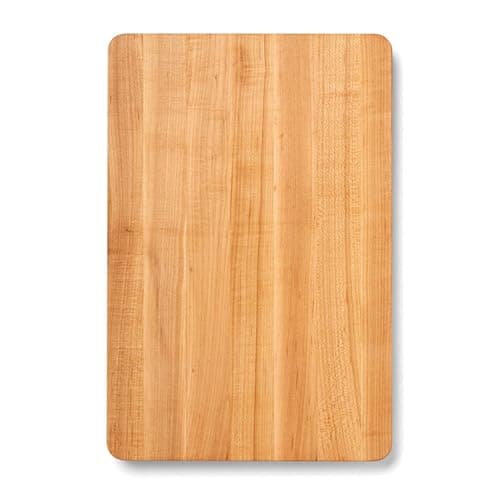
Comparison
Maple, walnut, cherry — and what to avoid
Species by species: hardness, staining, aging, and the ones to avoid.
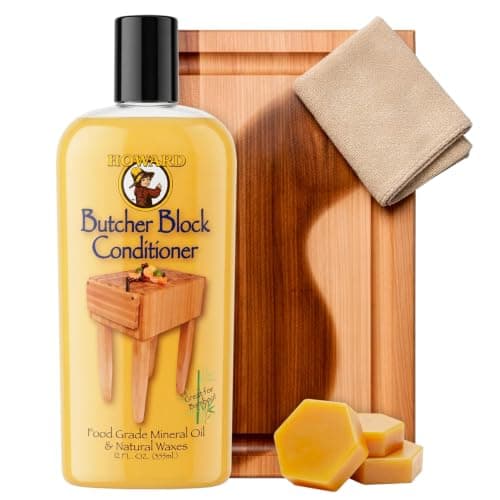
Care
How to oil a cutting board
Which oil, how often, and the two that go rancid.
For an interest
Handmade gifts for home cooks
The pieces a serious kitchen is missing, not the ones it already has.
Woodcraft
Woodcraft, boards and bowls
Grain direction, species, and why the dishwasher is the enemy.