Comparison
Maple, walnut, cherry — and what to avoid
Four woods do almost all the work in this category, and one common one should not be used for food at all.
We earn a commission when you buy through our Amazon links, at no extra cost to you. It never changes the order of the picks, and we say so when the cheaper thing is the better buy. How this works.
Every pick below is on Amazon Handmade unless the card says otherwise, and every price is the live one. If you want the rules we apply before anything gets listed, they are on how we pick.
The short answer
Quick picks
| # | Product | Best for | Provenance | Price |
|---|---|---|---|---|
| 01 | 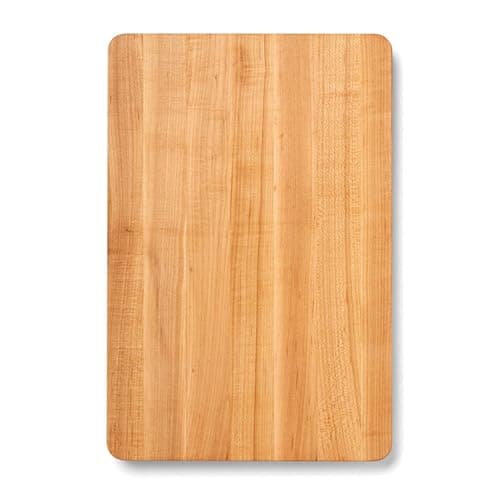 John Boos Chop-N-Slice Maple Board The default American maple edge grain board, made since long before any of this. | the reference point every other board on this page is measured against | Factory-made | $48.95Amazon (affiliate link) |
| 02 | 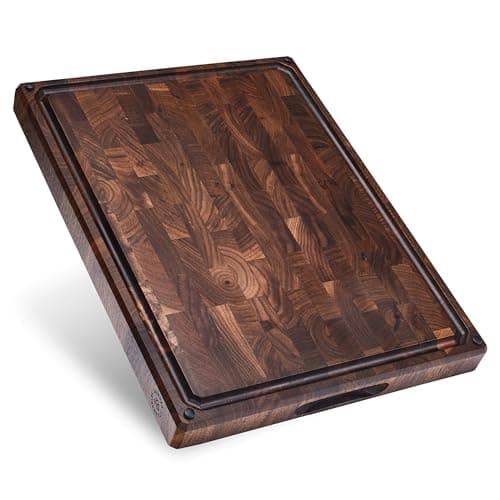 Sonder Los Angeles Alfred End Grain Walnut Board Production end grain walnut, 17 x 13 x 1.5 in, and the specs are stated plainly. | someone who wants end grain walnut at a known brand with a return policy | Factory-made | $179.99Amazon (affiliate link) |
| 03 | 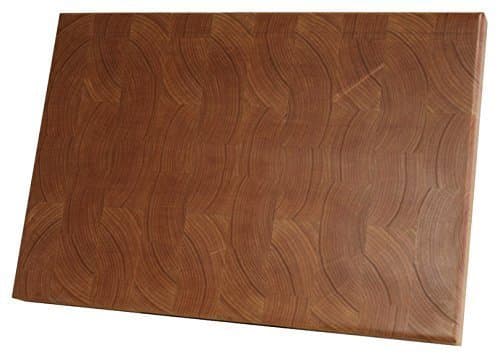 American Cherry Board, 12 x 18 in Single-species cherry, large, and it will darken to a deep red over a few years. | someone who wants a board that gets better looking with age | Amazon Handmade | $110.00Amazon (affiliate link) |
| 04 | 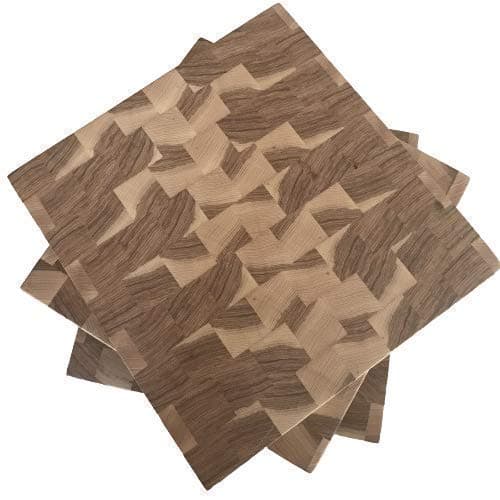 Handcrafted Hickory End Grain Cutting Board Hickory, end grain, handcrafted, and priced accordingly. | someone who already has a board and wants the last one they will buy | Amazon Handmade | $195.00Amazon (affiliate link) |
| 05 | 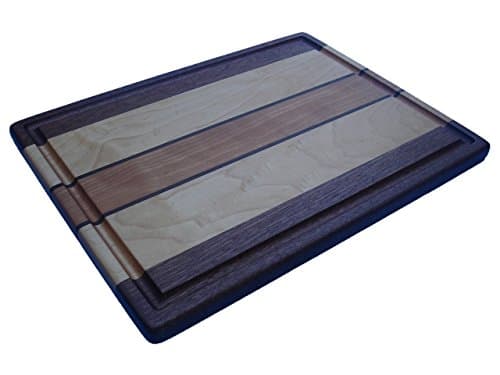 Signature Collection Large Board, Sapele, Maple, Walnut and Cherry Four woods laminated into stripes, large format, from a Handmade workshop. | a wedding or housewarming gift that has to look like an heirloom | Amazon Handmade | $75.00Amazon (affiliate link) |
| 06 | 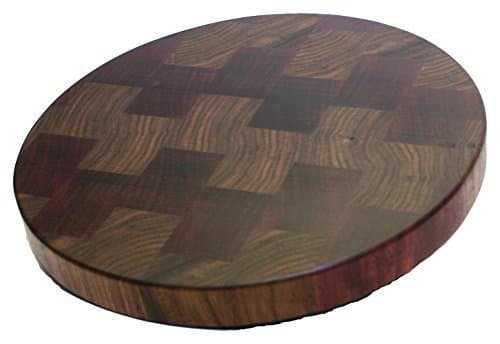 Purpleheart and Walnut Round Board, 12 in A round board in purpleheart and walnut, which is a color combination nobody expects. | the person who has a perfectly good board and wants an object | Amazon Handmade | $115.00Amazon (affiliate link) |
#ad · Live prices from the Amazon Creators API, as of October 25, 2026. Where we hold no verified live price we show none — a gap beats a number that has rotted.
The one we would not buy
Open-grain woods — oak, ash and mahogany
Oak and ash have large open pores you can see with the naked eye, and those pores hold moisture and food residue in a way closed-grain maple and walnut do not. They are excellent furniture woods and poor food-surface woods. If a board is described as oak and priced like a bargain, that is why.
The picks, in full
John Boos Chop-N-Slice Maple Board
by John Boos
For the classic butcher-block look. The default American maple edge grain board, made since long before any of this.
John Boos has been making maple butcher block in Illinois since the nineteenth century, and the Chop-N-Slice is the plain edge grain board most professional kitchens actually use. It is included here as the benchmark: if a handmade board costs more than this, it should be doing something this does not. Many do. Some do not.
Worth knowing first
Factory-made, and deliberately plain. Nobody will unwrap this and be surprised.
Price as of October 25, 2026. Prices move, and the one on Amazon is the one that counts.
#ad we may earn a commission from this link to John Boos Chop-N-Slice Maple Board
Sonder Los Angeles Alfred End Grain Walnut Board
by Sonder Los Angeles
For dark, forgiving, hides everything. Production end grain walnut, 17 x 13 x 1.5 in, and the specs are stated plainly.
We label this factory-made because it is, and we include it because it is a real end grain walnut board at a size and thickness the listing actually states. Production boards win on consistency and on returns: if it arrives warped you send it back, which is not always simple with a one-person workshop. If the maker story matters to the recipient, buy handmade instead.
Worth knowing first
Mass-produced. It carries no maker story, which for a gift is often the entire point.
Price as of October 25, 2026. Prices move, and the one on Amazon is the one that counts.
#ad we may earn a commission from this link to Sonder Los Angeles Alfred End Grain Walnut Board
American Cherry Board, 12 x 18 in
by Independent maker
For a board that gets better looking with age. Single-species cherry, large, and it will darken to a deep red over a few years.
Cherry is the one common board wood that visibly changes: it starts pale pinkish and darkens under light into a red-brown, so the board looks different at year five than at week one. That is a genuine feature for a gift, because it makes the object a record of the time it has been owned. Cherry is softer than maple, so treat it as a serving and light-prep board rather than a butcher block.
Worth knowing first
Cherry is softer than maple or hickory. It will scar faster under heavy chopping.
Price as of October 25, 2026. Prices move, and the one on Amazon is the one that counts.
#ad we may earn a commission from this link to American Cherry Board, 12 x 18 in
Handcrafted Hickory End Grain Cutting Board
by Independent maker
For a kitchen that is hard on equipment. Hickory, end grain, handcrafted, and priced accordingly.
Hickory is harder than maple and considerably harder than walnut, which makes it a more demanding wood to work and a more durable board to own. This is the top of the price range here and it is honest about why: the material is difficult and the construction is the expensive one. Buy it as a milestone gift, not a housewarming afterthought.
Worth knowing first
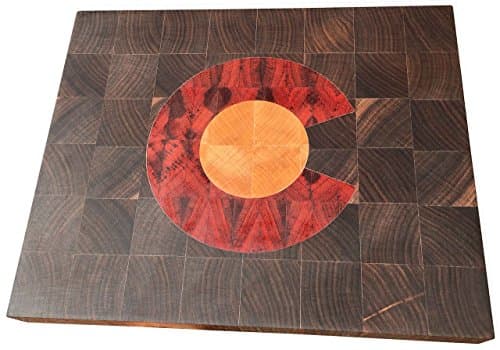
The most expensive board on this page by some margin. For most kitchens the Colorado or a good edge grain board is enough.
Price as of October 25, 2026. Prices move, and the one on Amazon is the one that counts.
#ad we may earn a commission from this link to Handcrafted Hickory End Grain Cutting Board
Signature Collection Large Board, Sapele, Maple, Walnut and Cherry
by Independent maker
For seeing the difference side by side. Four woods laminated into stripes, large format, from a Handmade workshop.
Mixed-species boards are how a small shop shows what it can do: every glue line has to be perfect or the board fails in the first year. The color range here comes from the woods themselves rather than stain, so it will not fade to one tone. Large format means it works as a serving surface as well as a chopping one.
Price as of October 25, 2026. Prices move, and the one on Amazon is the one that counts.
#ad we may earn a commission from this link to Signature Collection Large Board, Sapele, Maple, Walnut and Cherry
Purpleheart and Walnut Round Board, 12 in
by Independent maker
For someone who wants color, not stain. A round board in purpleheart and walnut, which is a color combination nobody expects.
Purpleheart really is purple, and it is the wood that makes people pick up a board and ask what it is. Round format pushes it further toward serving than chopping. This is a decorative buy and we would rather say so than pretend it is the practical choice, because the 10 x 14 rectangles above are better at the actual job.
Worth knowing first
Bought for looks. If they need a working board, this is not it.
Price as of October 25, 2026. Prices move, and the one on Amazon is the one that counts.
#ad we may earn a commission from this link to Purpleheart and Walnut Round Board, 12 in
The property that actually matters: closed grain
Forget hardness for a moment. The first test a cutting-board wood has to pass is closed grain — a tight cell structure with no visible open pores. Look at a piece of oak in raking light and you can see straw-like channels running along it; look at hard maple and the surface is essentially continuous. Those channels are where moisture and food residue sit, and they are why oak is a superb table and a poor chopping surface.
Hard maple, black walnut, cherry and hickory are all closed-grain. That is the reason the same four species turn up on every serious board maker's list, and it is not a matter of taste.
The four, compared
The trade-off nobody explains
Harder wood resists knife scarring better and is harder on the knife edge. Softer wood is kinder to the blade and shows more marks. That is a genuine trade and there is no free option — which is why walnut has become the default gift board: it sits in the middle on both counts and, being dark, it hides the marks it does take.
Maple is the professional choice because it is the hardest of the classic three and stays flat, and because a commercial kitchen cares more about the surface than about a knife edge it re-sharpens daily. Cherry is the aesthete's choice, because cherry does something the others do not: it darkens dramatically and unevenly with light exposure, so a cherry board at five years old looks nothing like the photograph you bought it from. That is a feature.
What about bamboo?
Bamboo is not a wood — it is a grass, formed into boards by shredding and gluing it under pressure. It is cheap, fast-growing and genuinely sustainable, and it is harder than all four woods above, which means it dulls knives faster than any of them. It also uses a lot of adhesive by volume.
None of that makes it bad. It makes it a good second board and a poor primary one for anybody who cares about their knives. Several of the charcuterie sets here are bamboo, and that is the right use for it: serving, not chopping.
Multi-species boards
A board glued up from maple, walnut and cherry in stripes is doing something structurally sensible as well as decorative: alternating species with slightly different movement characteristics can help a wide board stay flat. It is also the clearest way to see the color difference between the three, which makes it a good first handmade board for someone who has never thought about wood at all.
The caution is that a very busy board hides food. A finely striped surface makes it genuinely harder to see whether you have got everything off it, which matters after raw meat. For a working board, fewer and wider stripes.
Questions people actually ask
Which wood is best for a cutting board?
Is walnut too soft for a cutting board?
Why should I avoid an oak cutting board?
Does the wood affect how often I need to oil it?
Read next
Roundup
Handmade wood cutting boards
Eight boards from real workshops, with the grain question settled first.
Comparison
End grain vs edge grain
The construction difference, what it costs, and who should pay for it.
Care
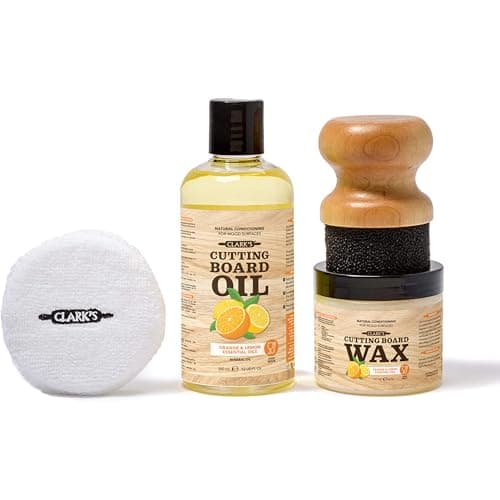
Wooden cutting board care
The four-minute routine that decides whether a board lasts one year or thirty.
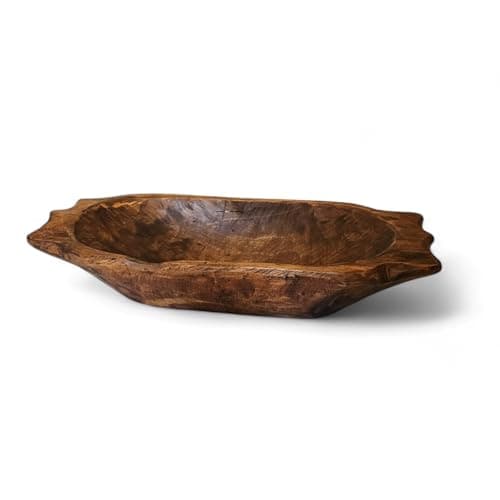
Roundup
Wooden bowls and dough bowls
Turned, carved and one-of-a-kind — the least reproducible thing on the site.
For an interest
Handmade gifts for woodworkers
Why wood is the wrong gift here, and what lands instead.