Care
How to oil a cutting board
Five minutes, three times a year, and the two oils in every kitchen that will ruin the board if you use them.
We earn a commission when you buy through our Amazon links, at no extra cost to you. It never changes the order of the picks, and we say so when the cheaper thing is the better buy. How this works.
Every pick below is on Amazon Handmade unless the card says otherwise, and every price is the live one. If you want the rules we apply before anything gets listed, they are on how we pick.
The short answer
Quick picks
| # | Product | Best for | Provenance | Price |
|---|---|---|---|---|
| 01 | 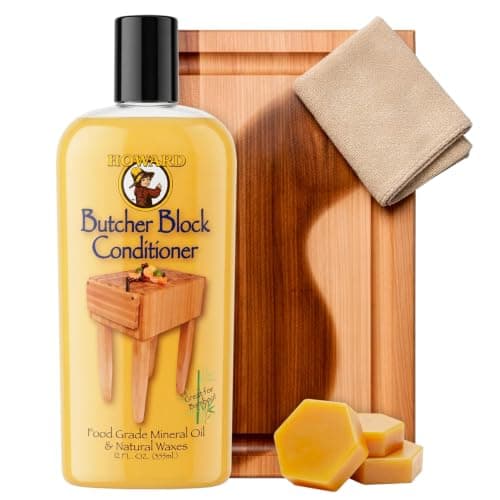 Howard Butcher Block Conditioner Food-grade mineral oil and wax conditioner, twelve ounces, under ten dollars. | the cheapest correct way to keep a board alive | Factory-made | $9.98Amazon (affiliate link) |
| 02 | 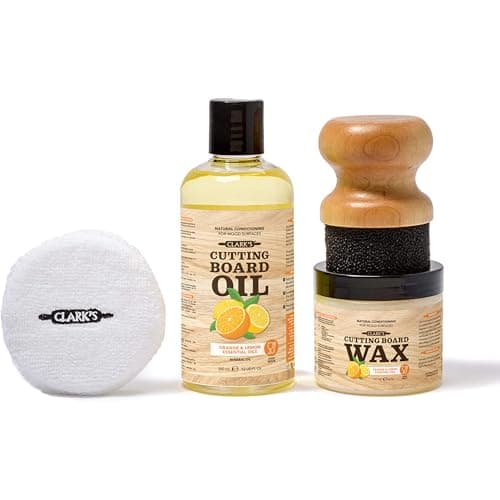 Clarks Cutting Board Oil and Wax Kit Food-grade mineral oil, finishing wax, an applicator and a cloth, in one box. | giving alongside any board on this page | Factory-made | $44.99Amazon (affiliate link) |
#ad · Live prices from the Amazon Creators API, as of October 25, 2026. Where we hold no verified live price we show none — a gap beats a number that has rotted.
The picks, in full
Howard Butcher Block Conditioner
by Howard Products
For mineral oil and wax in one bottle. Food-grade mineral oil and wax conditioner, twelve ounces, under ten dollars.
This is the plain answer to board maintenance and it costs less than lunch. Food-grade mineral oil does not go rancid, which is the reason every manufacturer specifies it and the reason you should never use olive oil on a board. One bottle lasts years.
Worth knowing first
Mass-produced. Buy it as an add-on.
Price as of October 25, 2026. Prices move, and the one on Amazon is the one that counts.
#ad we may earn a commission from this link to Howard Butcher Block Conditioner
Clarks Cutting Board Oil and Wax Kit
by Clarks
For oil and a separate wax, which is the fuller answer. Food-grade mineral oil, finishing wax, an applicator and a cloth, in one box.
A wooden board that is never oiled will dry out, and a dry board cracks along its glue lines within a couple of years. That is the single most common way a hundred-dollar gift dies. The kit includes both the oil that soaks in and the wax that seals the surface, which is the two-step the manufacturers actually recommend.
Worth knowing first
Mass-produced hardware. It is the companion to a board, never the gift itself.
Price as of October 25, 2026. Prices move, and the one on Amazon is the one that counts.
#ad we may earn a commission from this link to Clarks Cutting Board Oil and Wax Kit
Use food-grade mineral oil. Nothing else is necessary.
Food-grade mineral oil is a refined, inert, non-drying oil. It does not oxidize, it does not go rancid, it has no smell, and it costs almost nothing. It penetrates the wood and occupies the space water would otherwise fill, which is the entire mechanism by which oiling protects a board.
The upgrade, and it is a real one, is a board conditioner — mineral oil with beeswax or carnauba wax blended in. The oil penetrates and the wax sits on the surface as a light barrier, so the board sheds water for longer between treatments. If you are buying one thing, buy the conditioner. Board butter vs mineral oil works through which of the two a given board actually needs, and why wax on a dry board seals in the problem.
The two oils that ruin boards
Olive oil and vegetable oil. Both are food oils that oxidize, which means over weeks they go rancid inside the wood. A board treated with olive oil develops a stale, faintly sour smell that cannot be washed out because the oil is in the fibers rather than on them, and the only remedy is sanding the surface back.
This is the single most common well-intentioned mistake in board care, because olive oil is in every kitchen and it seems obviously food-safe. It is food-safe. It is just not stable, and stability is the entire requirement.
Coconut oil is a partial exception: fractionated coconut oil is shelf-stable and is used in some commercial conditioners. Ordinary virgin coconut oil is not, and the two are not interchangeable. If in doubt, use mineral oil.
How often
The practical test beats any schedule: flick water on the surface. If it beads, the board is fine. If it soaks straight in and darkens the wood, it needs oil. That takes two seconds and is more reliable than a calendar.
The method
- Make sure the board is clean and completely dry. Oiling over moisture traps it inside the wood.
- Pour oil generously onto the surface — considerably more than looks reasonable. A dry board will take a surprising amount.
- Spread it with a cloth or your hand, working it in with the grain, and cover every face including the edges and the underside. Skipping the underside is why boards cup: one face is sealed and the other is not.
- Leave it for several hours or overnight. The oil needs time to penetrate rather than sit.
- Wipe off the excess with a clean cloth. The surface should feel dry, not tacky. Any oil left sitting on top will go sticky and attract dust.
If you are using a wax conditioner, apply it after the oil has soaked in and been wiped back, and buff it with a cloth. The wax is a surface layer, not a penetrating one.
Signs a board needs oil
- Water soaks in and darkens the wood instead of beading.
- The surface looks pale, chalky or slightly fuzzy compared with when it was new.
- The color has gone flat — walnut looking gray rather than brown is the clearest example.
- Small hairline cracks are appearing at the ends of the board, which is the last warning before a real split.
Over-oiling
Difficult to do, but possible. A board that stays tacky is one where excess oil was left on the surface rather than wiped back — the fix is to wipe it down firmly with a dry cloth, and if it is genuinely gummy, a light wipe with a cloth dampened in dish soap.
There is no harm in oiling too often beyond wasted oil. The wood only absorbs what it can hold.
Questions people actually ask
What oil should I use on a cutting board?
Can I use olive oil on a cutting board?
How often should I oil a cutting board?
Do I need to oil the underside?
Read next
Care
Wooden cutting board care
The four-minute routine that decides whether a board lasts one year or thirty.
Roundup
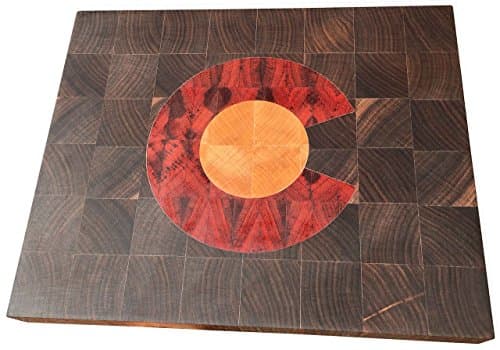
Handmade wood cutting boards
Eight boards from real workshops, with the grain question settled first.
Roundup
Wooden spoons and utensils
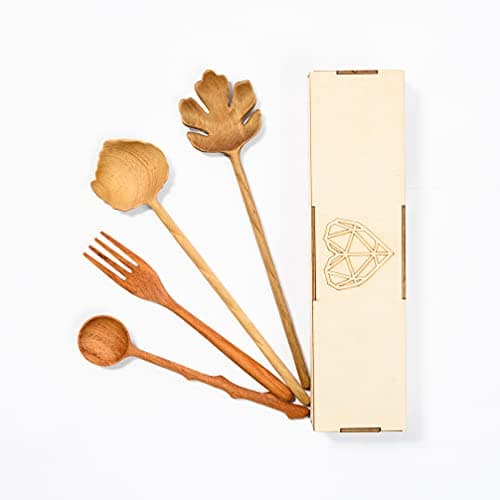
Sets, servers and one engraved spoon — plus the care mistake that splits them.
Roundup
Wooden bowls and dough bowls
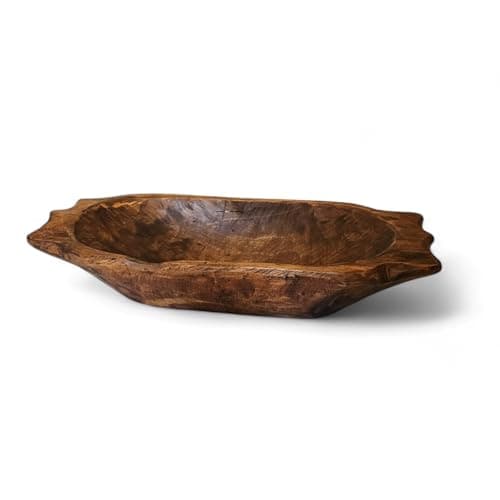
Turned, carved and one-of-a-kind — the least reproducible thing on the site.
For an interest
Handmade gifts for woodworkers
Why wood is the wrong gift here, and what lands instead.
Comparison
End grain vs edge grain
The construction difference, what it costs, and who should pay for it.
Caring for handmade
Board butter vs mineral oil
Oil soaks in, wax seals the surface. Why board butter is both, when plain mineral oil is enough, and what never to use.