Care
Why candles tunnel
The first burn decides the rest of the candle's life. Almost nobody knows this, and it is why half of every jar gets thrown away.

We earn a commission when you buy through our Amazon links, at no extra cost to you. It never changes the order of the picks, and we say so when the cheaper thing is the better buy. How this works.
Every pick below is on Amazon Handmade unless the card says otherwise, and every price is the live one. If you want the rules we apply before anything gets listed, they are on how we pick.
The short answer
Quick picks
| # | Product | Best for | Provenance | Price |
|---|---|---|---|---|
| 01 |  Candle Care Kit: Trimmer, Snuffer and Wick Dipper The three tools that fix most candle problems, for less than the candle costs. | pairing with any candle above, and the reason theirs stops tunneling | Factory-made | $11.59Amazon (affiliate link) |
#ad · Live prices from the Amazon Creators API, as of October 25, 2026. Where we hold no verified live price we show none — a gap beats a number that has rotted.
The picks, in full
Candle Care Kit: Trimmer, Snuffer and Wick Dipper
For trimmer, snuffer and dipper in one. The three tools that fix most candle problems, for less than the candle costs.
Almost every complaint about a candle traces to a wick left too long: soot on the glass, a smoking flame, a tunnel down the middle. A trimmer is a three-dollar fix for a thirty-dollar problem. Adding this to a candle turns a nice object into a thought-through gift, and it costs almost nothing to do.
Worth knowing first
Mass-produced hardware. It is a companion piece, never the gift on its own.
Price as of October 25, 2026. Prices move, and the one on Amazon is the one that counts.
#ad we may earn a commission from this link to Candle Care Kit: Trimmer, Snuffer and Wick Dipper
What tunneling is
A candle burns down through the middle, leaving a thick wall of unmelted wax around the edge. The flame drops into a well, the scent throw collapses because there is barely any melted surface left, and eventually the wick drowns in its own pool. A substantial fraction of the wax you paid for never burns.
It is not a manufacturing defect in most cases. It is caused by how the candle was burned, and it is almost entirely preventable.
The memory ring
Wax has a memory. On any given burn, a candle will melt outward to roughly the edge of the widest pool it has previously reached, and then stop. The pool from the very first burn sets that boundary for the entire life of the candle.
So if the first burn only melts a two-inch circle in the middle of a three-inch jar, every subsequent burn follows that same two-inch channel, however long you leave it lit. The candle has learned its own diameter, and it is wrong.
The rule that prevents it
On the first burn, leave the candle lit until the melt pool reaches the edge of the container. That usually takes two to four hours for a standard jar, and roughly one hour per inch of diameter is a reasonable estimate.
This is why lighting a new candle for twenty minutes before bed is the worst thing you can do to it. If you do not have two hours, do not light it — a new candle is genuinely better left unlit than burned briefly.
The other cause: the wick
A wick too small for the jar's diameter cannot generate enough heat to melt the full width, no matter how long it burns. That is a manufacturing problem rather than a use problem, and it is more common in cheap candles and in very wide vessels.
The related use problem is the opposite: an untrimmed wick grows a large mushroomed tip, burns too hot, produces soot, and consumes wax faster than the pool spreads. Trim to about a quarter of an inch before every burn — and more aggressively on wood wicks, which need about three millimeters.
The two fixes that actually work
The foil method. Wrap aluminum foil around the top of the jar, leaving a hole above the flame. The foil traps and reflects heat down onto the wax wall, which melts it back level. Burn for one to two hours, remove the foil carefully — it will be hot — and pour off or leave the leveled wax to set. This is the standard fix and it works well on moderate tunneling.
The hairdryer method. Warm the surface with a hairdryer on a low setting until the top layer of wax liquefies and self-levels, then let it set. Faster and slightly messier, and better for shallow tunneling than for a deep well.
For a severely tunneled candle, the honest answer is that neither fully recovers it. You can dig out the wall wax with a spoon and melt it separately, or scoop it into a smaller vessel with a new wick — both work and both are a project rather than a fix. The wax stranded against the glass is also the reason tunneling is the main thing that shortens a candle's life: how long handmade candles last has the stated burn times from real listings and the arithmetic of what a tunneled jar actually costs you.
The rest of the routine
- Trim the wick to about a quarter inch before every burn. Nail clippers are fine; a trimmer is easier on a deep jar.
- Burn for two to four hours at a time, not longer. Beyond about four hours the wick mushrooms and the container can overheat.
- Snuff rather than blow out. Blowing sprays hot wax and produces the smoke plume; a snuffer or a wick dipper avoids both.
- Keep it out of drafts. A draft pulls the flame sideways, which melts one side of the pool and not the other and causes uneven burning.
Why this is worth knowing
A 9 oz soy candle should give somewhere around sixty to eighty hours of burn. A tunneled one gives twenty-five. That is not a small difference — it is most of what you paid for, thrown away because of a decision made in the first hour.
It is also why a wick trimmer is the best add-on to any candle gift: ten dollars, and it changes the economics of every candle the recipient owns.
Questions people actually ask
Why is my candle tunneling?
How long should the first burn be?
How do I fix a tunneled candle?
Should I really trim the wick every time?
Read next

Roundup
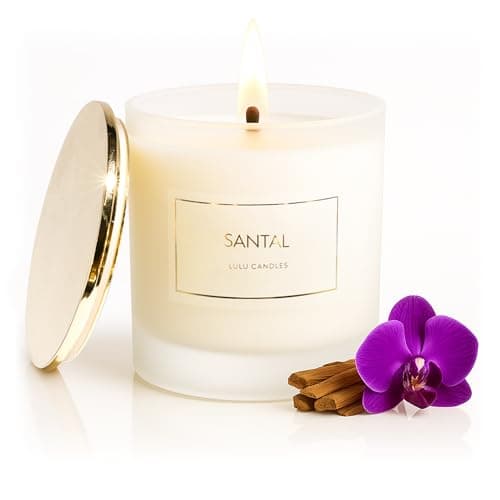
Handmade soy candles
Real scent throw from small makers, and why the surface goes bumpy.
Roundup
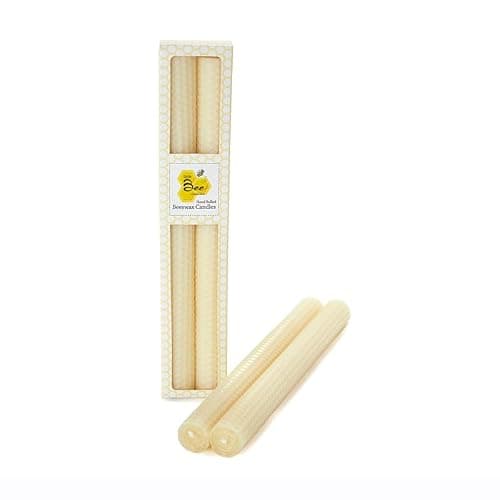
Handmade beeswax candles
Tapers, pillars and votives from small makers, and the 100% question settled.
Roundup
Wood wick candles
The crackle, the trimming, and why some wood wicks keep going out.
Buying handmade
Beeswax vs soy vs paraffin
Burn time, scent throw and cost compared — plus the claims we could not verify.

Roundup
Candle gift sets
Sets, spa boxes and favors — how to hedge a scent you are not sure about.

For an interest
Handmade gifts for candle lovers
How to buy scent for someone else, and what to buy when you cannot.