Caring for handmade
Board butter vs mineral oil
They are not alternatives. Oil goes into the wood and wax sits on top of it, and a board that is given one and not the other is being half looked after.
We earn a commission when you buy through our Amazon links, at no extra cost to you. It never changes the order of the picks, and we say so when the cheaper thing is the better buy. How this works.
They do two different jobs
This is the whole confusion, and it clears up the moment you stop treating the two products as rival answers to one question. Mineral oil is a thin liquid that penetrates the wood. It replaces the moisture that evaporates out of a board over weeks, which is what keeps the wood from shrinking and splitting along its glue lines. Wax does not penetrate. It sits on the surface as a film, slows water from soaking straight in, and takes the dull gray look off a board that has been washed a hundred times.
Board butter — also sold as board cream, board conditioner or butcher block conditioner — is simply the two combined: food-grade mineral oil with a wax, usually beeswax and sometimes carnauba, blended into a paste. So the real question is not which of the two to use. It is whether you need the wax at all, and the answer depends on the board rather than on the product.
What each one actually is
- Food-grade mineral oil
- A highly refined white mineral oil. It is a permitted direct food additive in the US under 21 CFR 172.878, which is why it is the one oil every board maker specifies. It has no flavor, it does not go rancid, and a bottle lasts years.
- Beeswax
- A secretory product of honey bees, affirmed as generally recognized as safe for food use under 21 CFR 184.1973, where it functions among other things as a surface-finishing agent. On a board that is exactly what it does: it finishes the surface.
- Board butter
- The two blended into a soft paste, typically with much more oil than wax. Convenient, slightly more expensive per ounce than plain oil, and the format most new boards ship with.
The food-safety credentials matter here because this is a surface you cut food on, and because the alternative oils people reach for are the actual hazard. A cooking oil on a board is the one genuine mistake in this area: vegetable and olive oils are not stable, they oxidize, and a board treated with them develops a sticky film and a smell of old chips. How to oil a cutting board names the two oils that ruin boards and the method that works.
Which one to buy
Decide on the state of the board rather than on what the label says. A new or newly sanded board, or any board that has gone pale and dry, needs oil first and wax second, which is the case for buying a kit that contains both. A board that is already dark, smooth and in regular use mostly needs topping up, and plain mineral oil at a third of the price does that job completely.
Every pick below is on Amazon Handmade unless the card says otherwise, and every price is the live one. If you want the rules we apply before anything gets listed, they are on how we pick.
What we would buy on that basis
Quick picks
| # | Product | Best for | Provenance | Price |
|---|---|---|---|---|
| 01 | 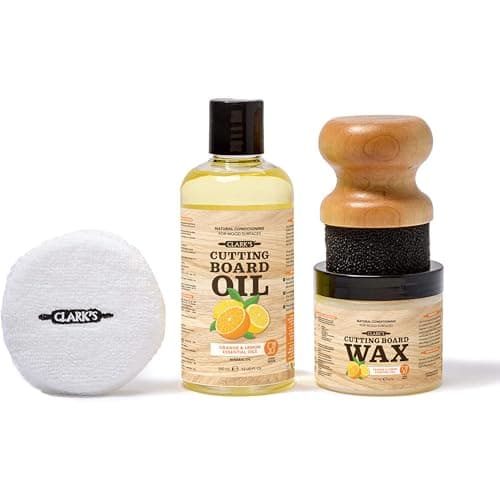 Clarks Cutting Board Oil and Wax Kit Food-grade mineral oil, finishing wax, an applicator and a cloth, in one box. | giving alongside any board on this page | Factory-made | $44.99Amazon (affiliate link) |
| 02 | 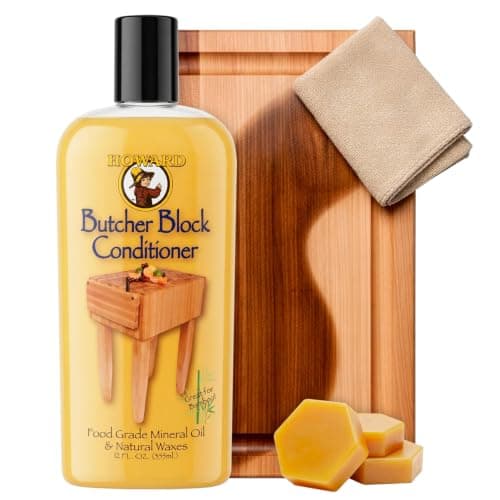 Howard Butcher Block Conditioner Food-grade mineral oil and wax conditioner, twelve ounces, under ten dollars. | the cheapest correct way to keep a board alive | Factory-made | $9.98Amazon (affiliate link) |
#ad · Live prices from the Amazon Creators API, as of October 25, 2026. Where we hold no verified live price we show none — a gap beats a number that has rotted.
The picks, in full
Clarks Cutting Board Oil and Wax Kit
by Clarks
For the oil and the wax in one box, which is the two-step the makers specify. Food-grade mineral oil, finishing wax, an applicator and a cloth, in one box.
A wooden board that is never oiled will dry out, and a dry board cracks along its glue lines within a couple of years. That is the single most common way a hundred-dollar gift dies. The kit includes both the oil that soaks in and the wax that seals the surface, which is the two-step the manufacturers actually recommend.
Worth knowing first
Mass-produced hardware. It is the companion to a board, never the gift itself.
Price as of October 25, 2026. Prices move, and the one on Amazon is the one that counts.
#ad we may earn a commission from this link to Clarks Cutting Board Oil and Wax Kit
Howard Butcher Block Conditioner
by Howard Products
For the plain correct bottle, for a board that is already in good condition. Food-grade mineral oil and wax conditioner, twelve ounces, under ten dollars.
This is the plain answer to board maintenance and it costs less than lunch. Food-grade mineral oil does not go rancid, which is the reason every manufacturer specifies it and the reason you should never use olive oil on a board. One bottle lasts years.
Worth knowing first
Mass-produced. Buy it as an add-on.
Price as of October 25, 2026. Prices move, and the one on Amazon is the one that counts.
#ad we may earn a commission from this link to Howard Butcher Block Conditioner
The method, which is the same for both
- Wash the board and let it dry completely. Oil on a damp board traps the water underneath.
- Apply far more oil than looks reasonable, on every face and both edges. Boards split at the edges first because that is where they dry fastest.
- Leave it flat for a few hours, or overnight for a new board. The wood decides how much it takes.
- Wipe off everything that has not soaked in. Anything still sitting on the surface after that is not going anywhere useful.
- If you are using wax, apply it only now, to an oiled board, and buff it with a cloth until it stops feeling tacky.
How often: roughly monthly for a board in regular use, more often for end grain, and whenever the board looks lighter than it did. The reliable test is a few drops of water on the surface — if they bead and sit, the board is fine; if they soak straight in and darken the wood, it is thirsty.
What the wax does not do
It is worth being clear about this, because board butter is often sold as though it seals a board against bacteria. It does not. The research on cutting-board hygiene found that mineral oil treatment of the wood surface had little effect on the microbiological findings at all, and that washing with hot water and detergent removed bacteria from wood regardless of the wood species or its age. Conditioning a board is a durability measure. The hygiene measure is a separate board for raw meat and ordinary washing-up — which is what wood vs plastic cutting boards goes through in detail.
The other thing wax does not do is survive heat. A waxed board left in direct sun or near a hot oven will go patchy, and the fix is to buff it again rather than to strip it. Nothing about either product is irreversible: a board that has been treated badly can be sanded back and started again, which is the main structural advantage wood has over everything else you could chop on.
If you are giving a board as a gift
Send the conditioner with it. A wooden board that is never oiled dries out and cracks along its glue lines within a couple of years, and that is the most common way an expensive handmade gift quietly dies — not through misuse but through nobody ever telling the recipient it needed anything. A kit in the box, and one line in the card, is the difference between a board that lasts two years and one that lasts twenty.
This matters most on the boards worth protecting: personalized cutting boards, where the engraving makes it a keepsake, and charcuterie boards, which get wet repeatedly. Wooden cutting board care is the page to send them, and gifts for home cooks has the rest of the kitchen.
Questions people actually ask
Is board butter better than mineral oil?
Do I need the wax or is oil enough?
What oil should I use on a wooden cutting board?
How often should I oil a cutting board?
Does conditioning a board make it safer to use?
Can I use beeswax on its own?
Sources
Read next
Care
How to oil a cutting board
Which oil, how often, and the two that go rancid.
Care
Wooden cutting board care
The four-minute routine that decides whether a board lasts one year or thirty.
Head to head
Wood vs plastic cutting boards
What the bacteria studies actually found, why the official advice still says nonporous, and why a scarred plastic board is the one to throw out.
Roundup
Handmade wood cutting boards
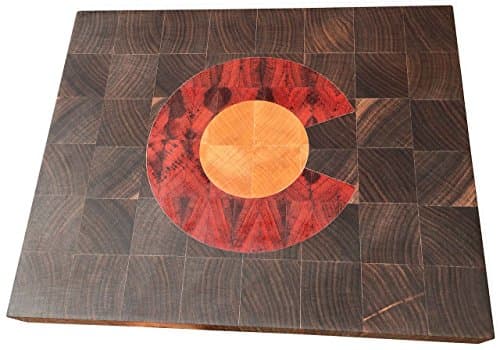
Eight boards from real workshops, with the grain question settled first.
Roundup
Personalized cutting boards
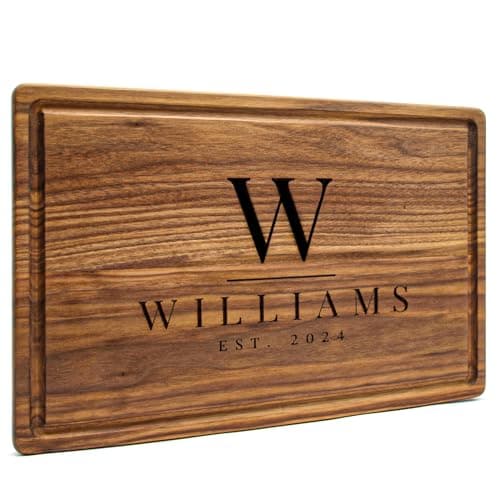
Engraved to order, and an honest account of what the engraving costs you.
Roundup
Charcuterie and cheese boards
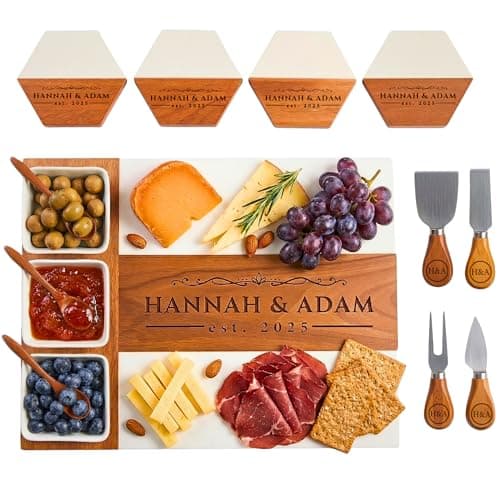
Serving boards sized for a table, not a counter — plus what a set actually needs.
For an interest
Handmade gifts for home cooks
The pieces a serious kitchen is missing, not the ones it already has.