Head to head
Wood vs plastic cutting boards
The research is more favorable to wood than the advice you have heard, and the advice is not wrong either. Both things are true, and the resolution is simpler than the argument.
We earn a commission when you buy through our Amazon links, at no extra cost to you. It never changes the order of the picks, and we say so when the cheaper thing is the better buy. How this works.
Every pick below is on Amazon Handmade unless the card says otherwise, and every price is the live one. If you want the rules we apply before anything gets listed, they are on how we pick.
The short answer
Quick picks
| # | Product | Best for | Provenance | Price |
|---|---|---|---|---|
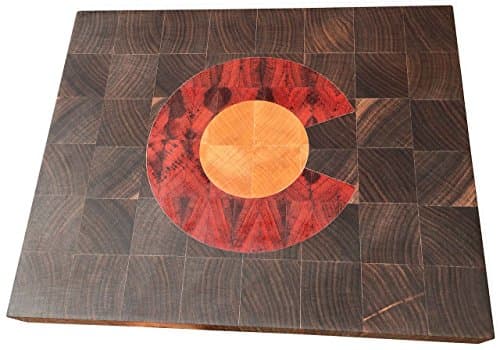
| 01 | 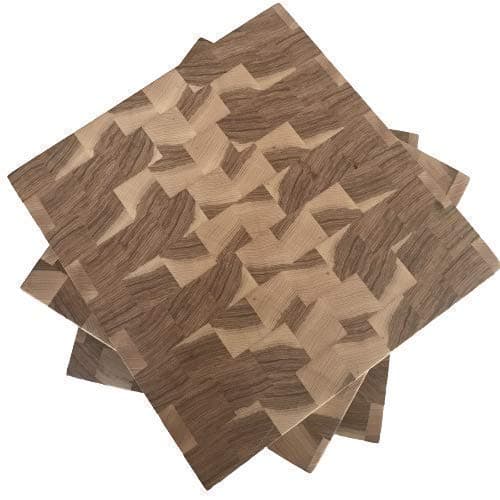 Handcrafted Hickory End Grain Cutting Board Hickory, end grain, handcrafted, and priced accordingly. | someone who already has a board and wants the last one they will buy | Amazon Handmade | $195.00Amazon (affiliate link) |
| 02 | 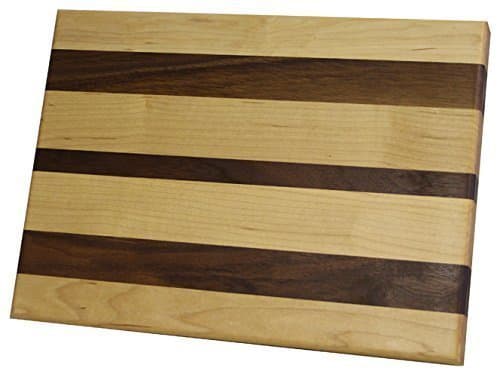 Maple and Walnut Cutting and Serving Board, 10 x 14 in The same footprint as the striped version, plainer, and cheaper for it. | a household that wants one board to chop on and serve from | Amazon Handmade | $70.00Amazon (affiliate link) |
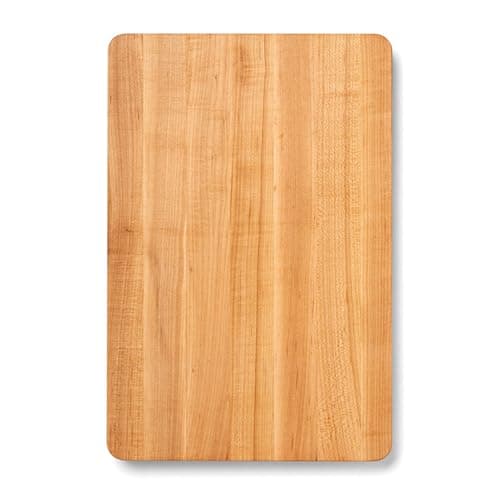
| 03 | 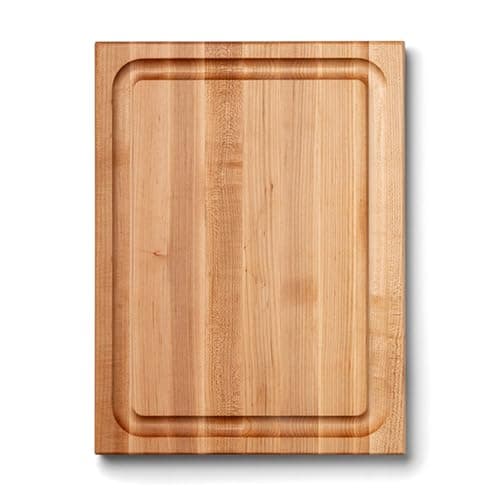 John Boos CB Series Reversible Maple Block, 20 x 15 in Twelve pounds of reversible maple at 1.5 in thick, and it will outlive the kitchen. | a serious home kitchen with counter space to spare | Factory-made | $129.95Amazon (affiliate link) |
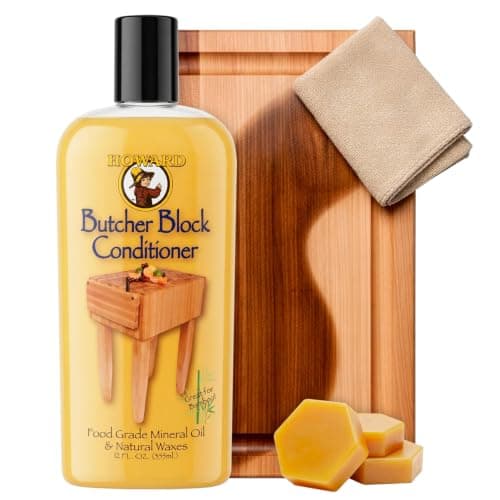
| 04 | 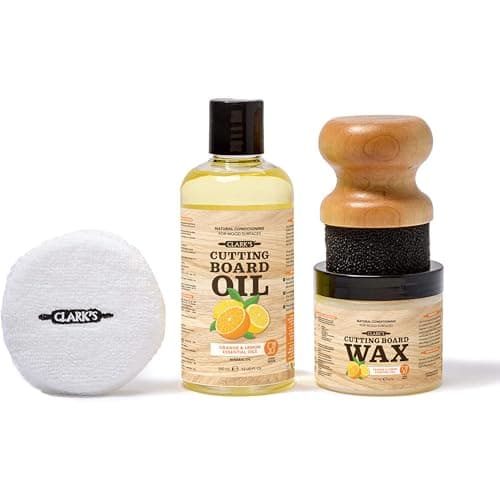 Clarks Cutting Board Oil and Wax Kit Food-grade mineral oil, finishing wax, an applicator and a cloth, in one box. | giving alongside any board on this page | Factory-made | $44.99Amazon (affiliate link) |
#ad · Live prices from the Amazon Creators API, as of October 25, 2026. Where we hold no verified live price we show none — a gap beats a number that has rotted.
The one we would not buy
A plastic board with deep knife scars in it
This is the one clear finding everybody can act on today. In the Ak, Cliver and Kaspar work, new plastic surfaces were easy to clean, but plastic boards with extensive knife scars were difficult to clean by hand — especially with chicken fat on them. Cliver's later review notes that high-density polyethylene, the plastic used in most commercial boards, delaminates in response to knife scarring. A heavily scored plastic board is the worst of both materials. Replace it, and keep replacing them, because that is the trade you accept with plastic.
The picks, in full
Handcrafted Hickory End Grain Cutting Board
by Independent maker
For the last board someone buys, in a wood harder than maple. Hickory, end grain, handcrafted, and priced accordingly.
Hickory is harder than maple and considerably harder than walnut, which makes it a more demanding wood to work and a more durable board to own. This is the top of the price range here and it is honest about why: the material is difficult and the construction is the expensive one. Buy it as a milestone gift, not a housewarming afterthought.
Worth knowing first
The most expensive board on this page by some margin. For most kitchens the Colorado or a good edge grain board is enough.
Price as of October 25, 2026. Prices move, and the one on Amazon is the one that counts.
#ad we may earn a commission from this link to Handcrafted Hickory End Grain Cutting Board
Maple and Walnut Cutting and Serving Board, 10 x 14 in
by Independent maker
For a first good wooden board that also serves, on a normal counter. The same footprint as the striped version, plainer, and cheaper for it.
This is the board to buy when the recipient is practical rather than decorative. It does both jobs a wooden board is asked to do and it does not announce itself on the table. At this price it is the strongest value in the section, and the one we would send to a first apartment.
Price as of October 25, 2026. Prices move, and the one on Amazon is the one that counts.
#ad we may earn a commission from this link to Maple and Walnut Cutting and Serving Board, 10 x 14 in
John Boos CB Series Reversible Maple Block, 20 x 15 in
by John Boos
For a reversible maple block, so one face can stay for raw meat. Twelve pounds of reversible maple at 1.5 in thick, and it will outlive the kitchen.
This is a working butcher block rather than a gift object: heavy enough that it does not move while you chop, thick enough to be resurfaced repeatedly, and reversible so one face can stay for raw meat. Nobody gives this as a romantic gesture. Give it to someone who has complained about their board.
Worth knowing first
Factory-made, heavy, and it needs permanent counter space. Measure before buying.
Price as of October 25, 2026. Prices move, and the one on Amazon is the one that counts.
#ad we may earn a commission from this link to John Boos CB Series Reversible Maple Block, 20 x 15 in
Clarks Cutting Board Oil and Wax Kit
by Clarks
For the oil and wax that stop a wooden board drying out and cracking. Food-grade mineral oil, finishing wax, an applicator and a cloth, in one box.
A wooden board that is never oiled will dry out, and a dry board cracks along its glue lines within a couple of years. That is the single most common way a hundred-dollar gift dies. The kit includes both the oil that soaks in and the wax that seals the surface, which is the two-step the manufacturers actually recommend.
Worth knowing first
Mass-produced hardware. It is the companion to a board, never the gift itself.
Price as of October 25, 2026. Prices move, and the one on Amazon is the one that counts.
#ad we may earn a commission from this link to Clarks Cutting Board Oil and Wax Kit
The short answer
If you want one board and you will wash it by hand, buy wood: the evidence does not support the common claim that plastic is more sanitary, and a wooden board can be resurfaced for decades instead of being thrown away. If you want a board you can put in a dishwasher, or a dedicated raw-meat surface you are happy to replace, buy plastic and replace it when it scars. The thing that matters more than either choice is using separate boards for raw meat and for food that is not going to be cooked.
What the studies actually found
The research most people are vaguely aware of comes from Nurdan Ak, Dean Cliver and Charles Kaspar, published in the Journal of Food Protection in 1994. They applied E. coli (including O157:H7), Listeria and Salmonella typhimurium to small blocks cut from nine hardwoods and from four plastics plus hard rubber, in nutrient broth and in chicken juice, then tried to recover the bacteria minutes and hours later.
Bacteria applied to the plastic blocks were readily recovered for minutes to hours, and would multiply if the blocks were held overnight. Recoveries from the wooden blocks were generally lower, whether the wood was new or used, and the gap widened the longer the blocks were held. Clean wood usually absorbed the inoculum completely within three to ten minutes, and at the bacterial loads likely to come off raw meat or poultry the bacteria generally could not be recovered after entering the wood. Push the dose up to a million colony-forming units and some could be recovered after twelve hours at room temperature and high humidity — but numbers were down by at least 98 percent, and often by more than 99.9 percent. The authors' own conclusion: these results do not support the often-heard assertion that plastic cutting boards are more sanitary than wood.
Two details from that work matter for how you own a board. The companion paper found that washing with hot water and detergent removed the bacteria regardless of species, wood species, or whether the wood was new or used — so ordinary washing-up works. And mineral oil treatment of the wood surface had little effect on the microbiological findings, which means oiling a board is maintenance for the wood, not a hygiene measure. How to oil a cutting board covers the maintenance side, and board butter vs mineral oil covers what to oil it with.
Why the official advice still says nonporous
Public-health guidance has not flipped to recommending wood, and it is worth understanding why rather than assuming someone is behind. USDA guidance says consumers may use either wood or a nonporous surface such as plastic, marble or glass for raw meat and poultry, and that nonporous surfaces are easier to clean than wood. University extension services say the same thing more firmly: wood is porous, so it absorbs juices from raw meat.
Both positions are consistent with the research. Wood absorbs the juice — that is the mechanism, not a counterargument. The disagreement is about what absorption means. Cliver's 2006 review describes it precisely: moisture is drawn in by capillary action until there is no free fluid on the surface, bacteria in the wood pores are not killed instantly, but neither do they return to the surface, and getting them back out onto a knife edge has not been demonstrated. Destructive sampling finds them for hours; a knife does not. Guidance written to be safe for every kitchen reasonably prefers the surface you can scrub and see.
The comparison, honestly
The epidemiology is the part nobody quotes, and it cuts both ways. Cliver's review notes that two epidemiological studies suggest cutting-board cleaning habits have little influence on the incidence of sporadic salmonellosis, and that one of them indicated use of plastic boards in home kitchens is hazardous while use of wooden boards is not. That is suggestive rather than conclusive, and it is a fair summary of where this subject sits: the lab work favors wood, the real-world data is thin, and the official advice is cautious.
What to actually do, whichever you buy
- Use two boards. One for raw meat, poultry and seafood; one for produce, bread and anything that will not be cooked. This is the recommendation every source agrees on, and it does more than the material choice.
- Wash with hot water and detergent after every use. The 1994 decontamination paper found that this removed the bacteria from wood regardless of species or age. It is not a compromise measure; it is the measure.
- Dry a wooden board on its edge, never flat. A board drying flat loses moisture from one face only and cups. Wooden cutting board care has the full minute-a-day routine.
- Replace a plastic board once it is visibly scored. Both USDA guidance and the research point the same way here: grooves you cannot clean are the end of a plastic board's useful life.
- Keep a wooden board oiled. Not for hygiene, as the research showed, but because a dry board splits along its glue lines and that is how most expensive boards die.
Which wooden board, if you are switching
Closed-grain hardwoods are the ones used for boards: maple, walnut, cherry, hickory. Maple, walnut and cherry compared covers how they differ and what to avoid. Construction matters as much as species — end grain vs edge grain explains why an end-grain block is kinder to a knife and heavier to lift, and the four picks here deliberately span one serious end-grain board, one everyday maple-and-walnut, one factory-made reversible block for a kitchen that wants a dedicated raw-meat face, and the oil and wax that keep any of them alive.
If the board is a gift, the sink is the constraint people forget: wooden boards are hand-washed, so a board that will not fit a basin gets used less. What size cutting board takes the three measurements that settle it, and the cutting boards roundup has the wider shortlist.
Questions people actually ask
Are wooden cutting boards more sanitary than plastic?
Can you cut raw chicken on a wooden board?
Why do wooden boards hold fewer bacteria?
When should I throw out a cutting board?
Does oiling a cutting board make it more hygienic?
Can wooden cutting boards go in the dishwasher?
Sources
- Ak NO, Cliver DO, Kaspar CW — Cutting Boards of Plastic and Wood Contaminated Experimentally with Bacteria, J Food Prot 1994;57(1):16-22
- Ak NO, Cliver DO, Kaspar CW — Decontamination of Plastic and Wooden Cutting Boards for Kitchen Use, J Food Prot 1994;57(1):23-30
- Cliver DO — Cutting boards in Salmonella cross-contamination, J AOAC Int 2006;89(2):538-42
- University of Maine Cooperative Extension — Cutting Board Safety
Read next
Roundup
Handmade wood cutting boards
Eight boards from real workshops, with the grain question settled first.
Comparison
Maple, walnut, cherry — and what to avoid
Species by species: hardness, staining, aging, and the ones to avoid.
Comparison
End grain vs edge grain
The construction difference, what it costs, and who should pay for it.
Care
Wooden cutting board care
The four-minute routine that decides whether a board lasts one year or thirty.
Caring for handmade
Board butter vs mineral oil
Oil soaks in, wax seals the surface. Why board butter is both, when plain mineral oil is enough, and what never to use.
Buying handmade
What size cutting board do you need?
Counter, sink, biggest job: the three measurements that settle board size, with maker-made boards at each size.
Care
How to oil a cutting board
Which oil, how often, and the two that go rancid.