Buying handmade
What size cutting board do you need?
Measure the counter, the sink and the biggest thing you cut, in that order. The right board is the largest one that still gets left out.
We earn a commission when you buy through our Amazon links, at no extra cost to you. It never changes the order of the picks, and we say so when the cheaper thing is the better buy. How this works.
Measure three things first
Board size is not really a matter of taste. It is set by three measurements, and taking them before you shop removes most of the chance of buying the wrong board.
- The counter, front to back. The board has to sit flat with room in front of it for your forearms and room behind it before the backsplash. Measure the depth of the stretch of counter where it will live, not the length of the kitchen.
- The sink. Wooden boards are washed by hand, never in a dishwasher, so a board has to be manageable at the sink — ideally flat in the basin, or at least easy to hold under the tap and turn. Wooden cutting board care covers the minute-a-day routine.
- The biggest thing you regularly cut. A loaf, a roast, a squash, a whole chicken. The board should hold it with room left over for the pieces you have already cut.
Then apply one rule: the best board is the largest one that still gets left out on the counter. A board that has to be dragged out of a cupboard gets used less, however good it is, and a board that is used daily is the one that earns its price.
Sizes, matched to the job
A 10 x 14 inch board is a prep board: fine for an onion, cramped for a chicken. A 15 x 20 is a board you can genuinely work on. The mid-size between them is where we would start for a kitchen we had never seen, because it fits most counters and handles most jobs. The cutting boards roundup covers species and construction; the four boards below are chosen to cover the sizes in the table, each with its dimensions stated on the listing.
Every pick below is on Amazon Handmade unless the card says otherwise, and every price is the live one. If you want the rules we apply before anything gets listed, they are on how we pick.
What we would buy on that basis
Quick picks
| # | Product | Best for | Provenance | Price |
|---|---|---|---|---|
| 01 | 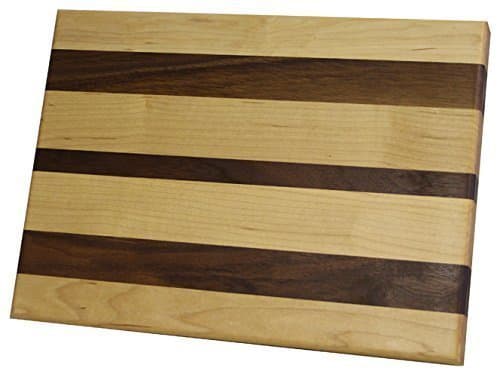 Maple and Walnut Cutting and Serving Board, 10 x 14 in The same footprint as the striped version, plainer, and cheaper for it. | a household that wants one board to chop on and serve from | Amazon Handmade | $70.00Amazon (affiliate link) |
| 02 | 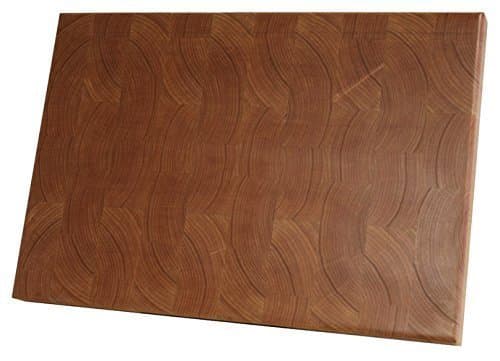 American Cherry Board, 12 x 18 in Single-species cherry, large, and it will darken to a deep red over a few years. | someone who wants a board that gets better looking with age | Amazon Handmade | $110.00Amazon (affiliate link) |
| 03 | 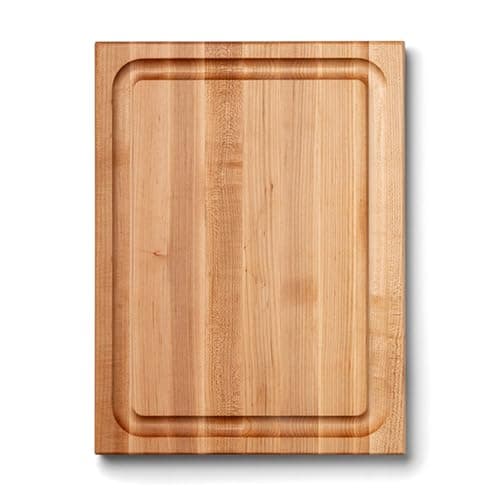 John Boos CB Series Reversible Maple Block, 20 x 15 in Twelve pounds of reversible maple at 1.5 in thick, and it will outlive the kitchen. | a serious home kitchen with counter space to spare | Factory-made | $129.95Amazon (affiliate link) |
| 04 | 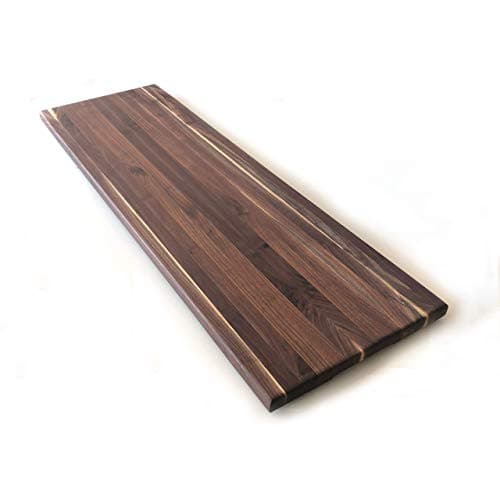 Extra-Large Black Walnut Edge Grain Board, 40 in, with Handles Forty inches of black walnut with built-in handles and rubber feet. | a long table and a genuinely large spread | Amazon Handmade | $179.29Amazon (affiliate link) |
#ad · Live prices from the Amazon Creators API, as of October 25, 2026. Where we hold no verified live price we show none — a gap beats a number that has rotted.
The picks, in full
Maple and Walnut Cutting and Serving Board, 10 x 14 in
by Independent maker
For a small counter, a first apartment, or a board that also serves. The same footprint as the striped version, plainer, and cheaper for it.
This is the board to buy when the recipient is practical rather than decorative. It does both jobs a wooden board is asked to do and it does not announce itself on the table. At this price it is the strongest value in the section, and the one we would send to a first apartment.
Price as of October 25, 2026. Prices move, and the one on Amazon is the one that counts.
#ad we may earn a commission from this link to Maple and Walnut Cutting and Serving Board, 10 x 14 in
American Cherry Board, 12 x 18 in
by Independent maker
For a counter with room for one larger board that stays out. Single-species cherry, large, and it will darken to a deep red over a few years.
Cherry is the one common board wood that visibly changes: it starts pale pinkish and darkens under light into a red-brown, so the board looks different at year five than at week one. That is a genuine feature for a gift, because it makes the object a record of the time it has been owned. Cherry is softer than maple, so treat it as a serving and light-prep board rather than a butcher block.
Worth knowing first
Cherry is softer than maple or hickory. It will scar faster under heavy chopping.
Price as of October 25, 2026. Prices move, and the one on Amazon is the one that counts.
#ad we may earn a commission from this link to American Cherry Board, 12 x 18 in
John Boos CB Series Reversible Maple Block, 20 x 15 in
by John Boos
For a big counter and someone who cooks from scratch. Twelve pounds of reversible maple at 1.5 in thick, and it will outlive the kitchen.
This is a working butcher block rather than a gift object: heavy enough that it does not move while you chop, thick enough to be resurfaced repeatedly, and reversible so one face can stay for raw meat. Nobody gives this as a romantic gesture. Give it to someone who has complained about their board.
Worth knowing first
Factory-made, heavy, and it needs permanent counter space. Measure before buying.
Price as of October 25, 2026. Prices move, and the one on Amazon is the one that counts.
#ad we may earn a commission from this link to John Boos CB Series Reversible Maple Block, 20 x 15 in
Extra-Large Black Walnut Edge Grain Board, 40 in, with Handles
For serving and carving at a long table, not everyday prep. Forty inches of black walnut with built-in handles and rubber feet.
This is a table-runner-sized serving board, and there is essentially no mass-market equivalent because the material cost at this length is prohibitive. Built-in handles and feet mean it can be carried loaded and set down without scratching. It is a statement purchase and it should be treated as one.
Worth knowing first
Forty inches. Confirm the table and the storage before ordering.
Price as of October 25, 2026. Prices move, and the one on Amazon is the one that counts.
#ad we may earn a commission from this link to Extra-Large Black Walnut Edge Grain Board, 40 in, with Handles
Thickness and weight
Size on a listing is two numbers, and the third matters too. Thickness is what keeps a board from sliding and flexing, and it is what allows a board to be sanded back and refinished over the years. It also drives weight, fast. The John Boos CB Series board on this page is 20 x 15 inches at 1.5 inches thick, and its listing gives it as twelve pounds. The boards here run from one inch to an inch and a half thick.
Weight is a feature on the counter and a problem at the sink. If the board is for someone who will struggle to lift ten pounds to a tap — an older relative, someone with wrist trouble — buy a smaller board, and consider walnut, which is lighter than maple. A heavy board that never gets washed properly is worse than a light one that does.
Carving a roast, a turkey or a brisket
Big holiday cuts are where people discover their board is too small. For carving, length matters more than width, and a juice groove — a channel cut around the edge — matters more than either, because it catches what runs out of the meat instead of sending it across the counter. If a large roast is an annual event rather than a weekly one, a big serving board brought out for the occasion is often a better answer than a permanent giant on the counter.
The 40-inch walnut board on this page is that kind of piece: a serving and carving board for a long table, with handles and feet, not an everyday prep surface. For a smaller board with a groove, the personalized cutting boards page includes a grooved walnut board, and charcuterie boards covers serving-board sizes for a crowd.
End grain changes the numbers
At the same length and width, an end-grain board is usually thicker and heavier than an edge-grain one, because of how it is built — short blocks standing on end rather than long strips laid side by side. It is also kinder to knives. If you are choosing end grain, allow for more weight at every size in the table above. End grain vs edge grain sets out the rest of that trade.
Buying a board as a gift
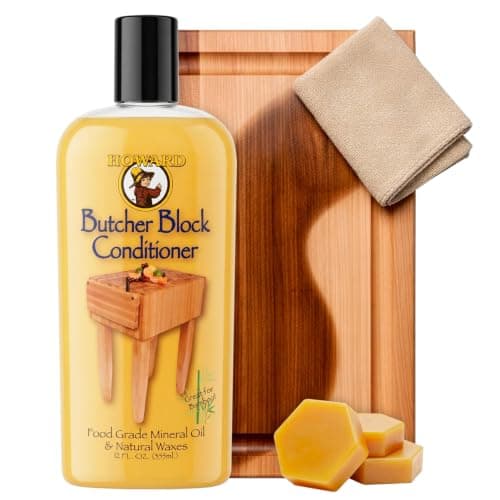
You rarely know the recipient's counter depth, so play the odds: a mid-size board fits most kitchens, and a board that is slightly small still gets used where one that is too big goes in a cupboard. Add a bottle of board conditioner so the gift arrives with its upkeep; how to oil a cutting board takes five minutes to read. For a cook who already owns a good board, a second, smaller one for bread or garlic is a better gift than a bigger version of what they have — and the home cooks page has other ideas for that person.
Questions people actually ask
What size cutting board should I buy?
Is a 10 x 14 cutting board big enough?
What size cutting board do I need for a turkey or brisket?
Can a wooden cutting board go in the dishwasher?
How thick should a cutting board be?
Read next
Roundup
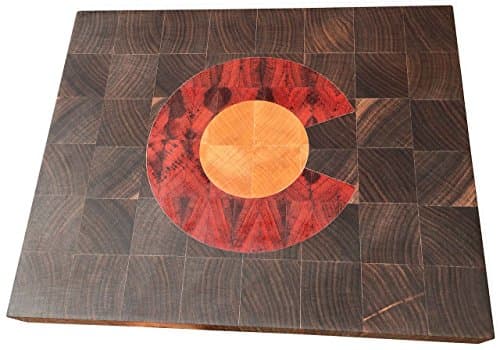
Handmade wood cutting boards
Eight boards from real workshops, with the grain question settled first.
Comparison
End grain vs edge grain
The construction difference, what it costs, and who should pay for it.
Comparison
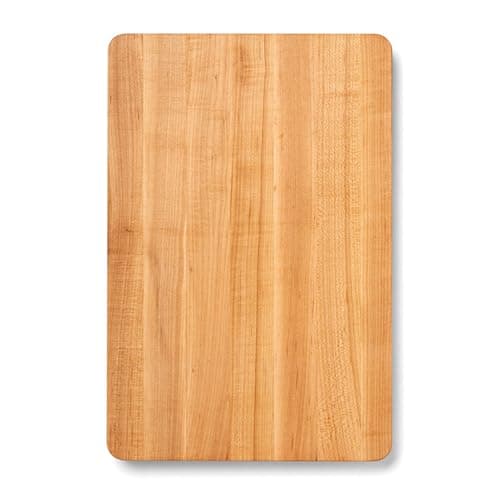
Maple, walnut, cherry — and what to avoid
Species by species: hardness, staining, aging, and the ones to avoid.
Care
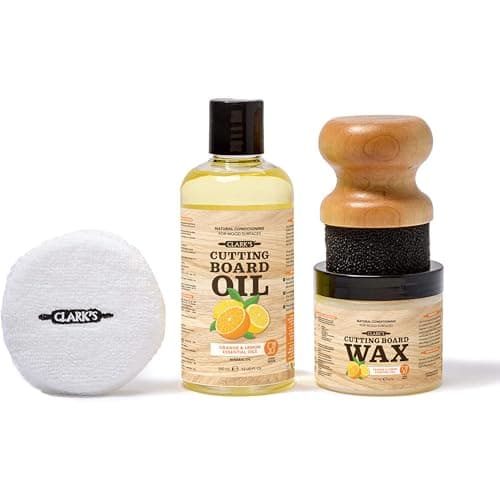
Wooden cutting board care
The four-minute routine that decides whether a board lasts one year or thirty.
Care
How to oil a cutting board
Which oil, how often, and the two that go rancid.
Roundup
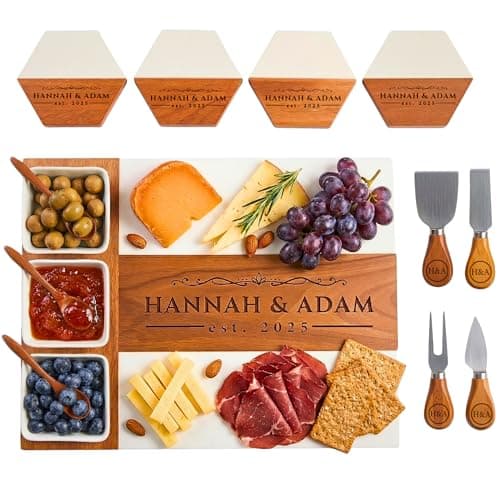
Charcuterie and cheese boards
Serving boards sized for a table, not a counter — plus what a set actually needs.
For an interest
Handmade gifts for home cooks
The pieces a serious kitchen is missing, not the ones it already has.