Care guide
How to care for a wooden bowl
A bowl is not a board, and treating it like one is what kills it. No soaking, no dishwasher, no cooking oil — mineral oil two or three times a year, wiped on, and the bowl outlives you.
We earn a commission when you buy through our Amazon links, at no extra cost to you. It never changes the order of the picks, and we say so when the cheaper thing is the better buy. How this works.
Three kinds of wooden bowl, and they are not interchangeable
Almost all the bad advice about wooden bowls comes from applying one type's rules to another. A salad bowl gets oil and vinegar in it weekly. A dough bowl is a decorative object that holds fruit and never gets wet. A turned bowl from a single piece of figured wood is thin, valuable and moves with humidity. The routine is similar for all three; the risks are not.
- Salad and serving bowls
- In contact with food and dressing. The exposure is oil, acid and salt, all of which strip a surface finish over time. These need re-oiling most often and benefit most from wooden rather than metal servers.
- Dough bowls
- Carved, thick-walled and almost always decorative now. The risk is not food at all — it is dry indoor air, which is what splits a thick carved bowl along its growth rings.
- Turned bowls, including burl
- Cut from one piece on a lathe, so the walls are thin and the grain runs around the form rather than across it. The most sensitive of the three to heat, water and sudden humidity change, and the most expensive to lose.
The bowls on this site span all three — wooden bowls has the carved dough bowls and the turned burl, and the care below is written so you can tell which parts apply to which.
The daily routine, which takes about a minute
- Wipe it out rather than filling it. Hot water on a cloth, a little mild dish soap if there was dressing in it, and wipe. A quick wash is fine. A soak is not: wood absorbs water, swells unevenly, and dries back with raised grain or a split.
- Rinse briefly and dry immediately. Standing water is the enemy, and the worst version is water sitting in the bottom of a bowl where it cannot evaporate.
- Dry it on its side or upside down on a rack. Not flat on a worktop, which traps moisture against the base — the same reason boards are dried on edge.
- Never the dishwasher. A dishwasher is sustained heat plus sustained water plus aggressive detergent. It is the fastest reliable way to destroy a wooden bowl, and it does it in one cycle.
Soap is not the villain here, and the myth that it is causes more damage than it prevents. A brief wash with mild soap removes dressing residue that would otherwise go rancid in the grain. What harms wood is time in water, not detergent. The same argument applies to boards and is laid out in wooden cutting board care.
What to put on it, and what never to
This is the question that actually matters, and the answer is narrower than the internet suggests. Use food-grade mineral oil. It is a non-drying oil that does not oxidise, which is precisely why every board and bowl manufacturer specifies it: it soaks into the fibres, slows moisture movement, and never goes rancid. A butcher-block conditioner is mineral oil with wax added, and the wax leaves a thin surface seal on top of the oil underneath.
Do not use a kitchen cooking oil. Olive, sunflower, vegetable and nut oils are drying or semi-drying oils that oxidise in the grain, and the result is a bowl that smells faintly of old oil within a few months and cannot be fixed. This is the single most common piece of bad advice about wooden kitchenware, and it ruins more bowls than neglect does. Walnut and tung oils are genuine finishing oils used by makers, but they are a finish applied in a workshop rather than a maintenance routine, and walnut oil is worth avoiding on a gift where a nut allergy is unknown.
- How often: two or three times a year for a decorative bowl, and whenever the wood starts looking pale and dry for one in regular use. A bowl that absorbs oil quickly was overdue.
- How much: a cloth, a thin coat, let it sit twenty to thirty minutes, wipe off whatever has not soaked in. A surface left wet with oil stays tacky.
- Wax after oil, not instead: the oil conditions the fibres, the wax slows water getting back in. Oil alone is fine; wax alone is not.
- Both faces: inside and outside, including the base. Oiling one side of a thin turned bowl encourages it to cup.
Every pick below is on Amazon Handmade unless the card says otherwise, and every price is the live one. If you want the rules we apply before anything gets listed, they are on how we pick.
What we would buy on that basis
Quick picks
| # | Product | Best for | Provenance | Price |
|---|---|---|---|---|
| 01 | 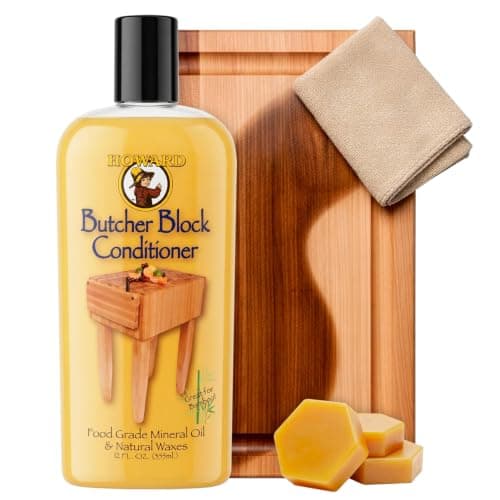 Howard Butcher Block Conditioner Food-grade mineral oil and wax conditioner, twelve ounces, under ten dollars. | the cheapest correct way to keep a board alive | Factory-made | $9.98Amazon (affiliate link) |
| 02 | 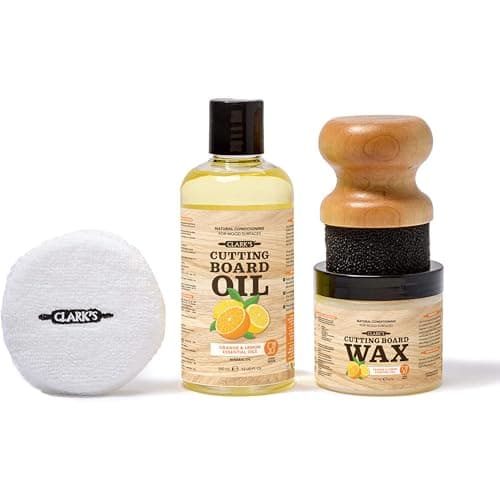 Clarks Cutting Board Oil and Wax Kit Food-grade mineral oil, finishing wax, an applicator and a cloth, in one box. | giving alongside any board on this page | Factory-made | $44.99Amazon (affiliate link) |
| 03 | 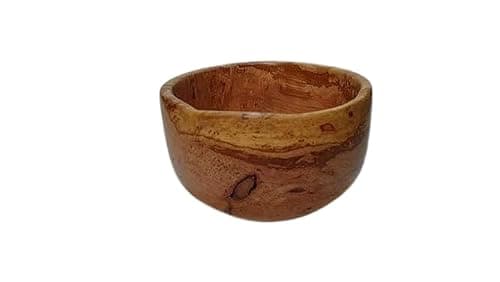 Cherry Burl Bowl, One of a Kind A turned burl bowl, and burl is why the grain does that. | someone who will actually look at the grain | Amazon Handmade | $85.00Amazon (affiliate link) |
| 04 | 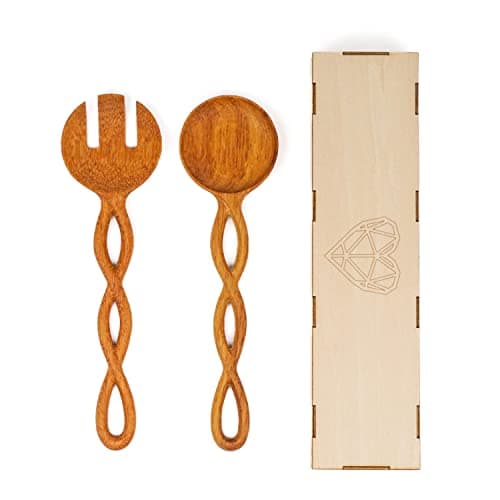 JABIHOME Wooden Salad Server Set Salad servers in wood, best given alongside something to serve out of. | pairing with a bowl, so the gift is a complete thing | Amazon Handmade | $38.99Amazon (affiliate link) |
#ad · Live prices from the Amazon Creators API, as of October 25, 2026. Where we hold no verified live price we show none — a gap beats a number that has rotted.
The picks, in full
Howard Butcher Block Conditioner
by Howard Products
For the cheapest correct answer — food-grade mineral oil, under ten dollars, lasts years. Food-grade mineral oil and wax conditioner, twelve ounces, under ten dollars.
This is the plain answer to board maintenance and it costs less than lunch. Food-grade mineral oil does not go rancid, which is the reason every manufacturer specifies it and the reason you should never use olive oil on a board. One bottle lasts years.
Worth knowing first
Mass-produced. Buy it as an add-on.
Price as of October 25, 2026. Prices move, and the one on Amazon is the one that counts.
#ad we may earn a commission from this link to Howard Butcher Block Conditioner
Clarks Cutting Board Oil and Wax Kit
by Clarks
For the two-step version, where the wax seals the surface after the oil soaks in. Food-grade mineral oil, finishing wax, an applicator and a cloth, in one box.
A wooden board that is never oiled will dry out, and a dry board cracks along its glue lines within a couple of years. That is the single most common way a hundred-dollar gift dies. The kit includes both the oil that soaks in and the wax that seals the surface, which is the two-step the manufacturers actually recommend.
Worth knowing first
Mass-produced hardware. It is the companion to a board, never the gift itself.
Price as of October 25, 2026. Prices move, and the one on Amazon is the one that counts.
#ad we may earn a commission from this link to Clarks Cutting Board Oil and Wax Kit
Cherry Burl Bowl, One of a Kind
For a turned bowl where the grain is the point, and which needs this routine most. A turned burl bowl, and burl is why the grain does that.
Burl is the wart on a tree: a knot of disordered growth where the grain swirls instead of running straight. It is the most figured wood available and it is difficult to turn without it coming apart on the lathe, which is why a burl bowl costs what it does. Every one is different because the tree decided the pattern, not the maker.
Worth knowing first
One-off piece. What arrives will not look identical to the photograph, which is the point.
Price as of October 25, 2026. Prices move, and the one on Amazon is the one that counts.
#ad we may earn a commission from this link to Cherry Burl Bowl, One of a Kind
JABIHOME Wooden Salad Server Set
by JABIHOME
For serving out of a wooden bowl without putting metal edges against the finish. Salad servers in wood, best given alongside something to serve out of.
Servers on their own are a thin gift. Servers plus one of the carved bowls above is a considered one, and the pair still lands well under a hundred dollars. Wood is the right material here for the same reason it is right for spoons: it will not scratch a glazed bowl.
Price as of October 25, 2026. Prices move, and the one on Amazon is the one that counts.
#ad we may earn a commission from this link to JABIHOME Wooden Salad Server Set
The two things that actually destroy bowls
Water and dry air, and they look like the same failure. Water damage comes from soaking, dishwashers or standing liquid; the wood swells, the grain lifts, and the piece often splits as it dries back unevenly. Dry-air damage is slower and more common in winter: a heated room with no humidity pulls moisture out of wood, the wood shrinks, and a thick carved bowl splits along a growth ring because the outside shrinks faster than the inside.
Nothing repairs either properly, so the whole routine is prevention. Keep bowls off radiators, out of direct sun and away from a woodburner. Keep them out of standing water. If you want one rule it is this: wooden objects want to be stable, and both heat and water are ways of making them unstable fast.
Food, stains and smells
A finished wooden bowl is fine for dry and lightly dressed food. Strongly colored ingredients — beetroot, turmeric, berries — will mark pale woods, and that mark is permanent in practice. Raw meat does not belong in a wooden bowl, not because wood is unhygienic but because a bowl cannot be scrubbed and dried the way a board can.
- Smells: wipe with a cloth dampened in a weak vinegar solution, dry at once, then re-oil. Repeat rather than scrubbing harder.
- Mild stains: a paste of coarse salt and a little water, rubbed with the grain, then rinsed briefly, dried and oiled.
- Raised grain: very fine sandpaper with the grain, lightly, then oil. This resets the surface and is normal maintenance on a working bowl.
- Resin-filled or painted bowls: do not treat these as bare wood. A resin finish is a serving surface only, and it should never be cut on or soaked.
If the bowl is a gift
Give the conditioner with it. A ten-dollar bottle of food-grade mineral oil is the difference between a bowl that lasts thirty years and one that cracks in its third winter, and almost nobody buys it for themselves because they do not know they need it. The same logic applies to boards, and the comparison between the plain oil and the oil-and-wax products is in board butter vs mineral oil.
A pair of wooden servers is the other add-on worth making, and not only because it looks like a set. Metal servers scrape a finish off the inside of a bowl where it is hardest to maintain, and wood does not. Wooden spoons and utensils covers the range, and gifts for home cooks is the page for pairing the two.
Questions people actually ask
How do I clean a wooden bowl?
What oil should I use on a wooden bowl?
Can I use olive oil on a wooden bowl?
How often should I oil a wooden bowl?
Why did my wooden bowl crack?
Can a wooden bowl go in the dishwasher?
Read next
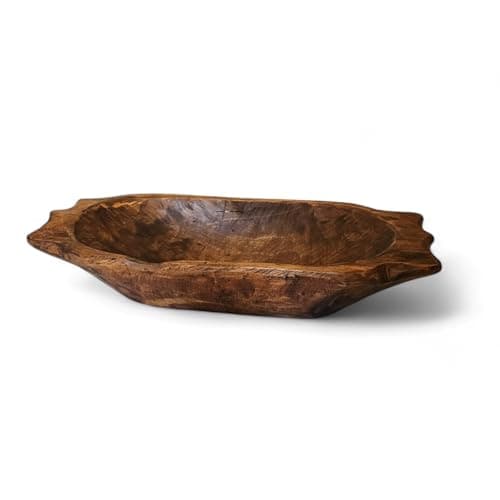
Roundup
Wooden bowls and dough bowls
Turned, carved and one-of-a-kind — the least reproducible thing on the site.
Care
Wooden cutting board care
The four-minute routine that decides whether a board lasts one year or thirty.
Care
How to oil a cutting board
Which oil, how often, and the two that go rancid.
Caring for handmade
Board butter vs mineral oil
Oil soaks in, wax seals the surface. Why board butter is both, when plain mineral oil is enough, and what never to use.
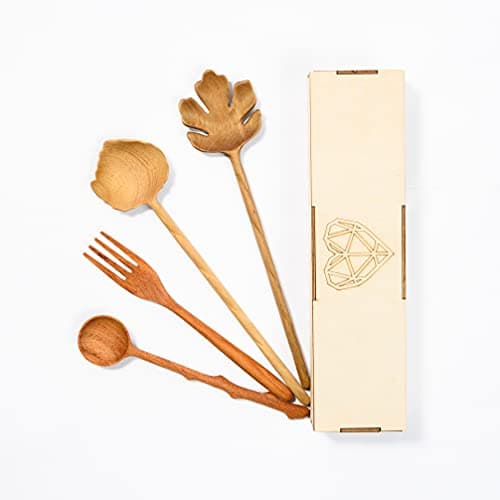
Roundup
Wooden spoons and utensils
Sets, servers and one engraved spoon — plus the care mistake that splits them.
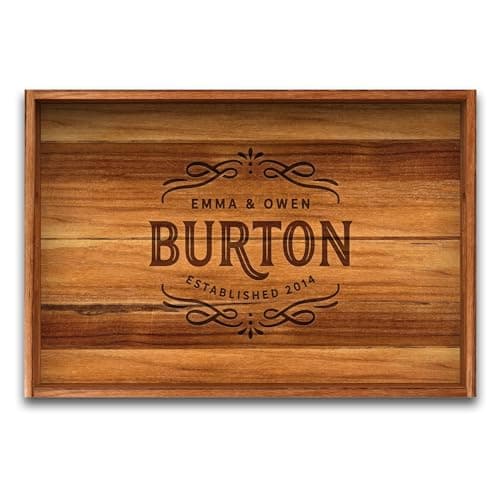
Occasion
5th anniversary wood gifts
Wood for the fifth year in named hardwoods: teak, black walnut, cherry burl and beech. Dimensions stated, bamboo called out for what it is.