Caring for handmade
Leather conditioner, chosen properly
Three different products are sold under one word, and the wrong one will permanently darken the thing you were given.
We earn a commission when you buy through our Amazon links, at no extra cost to you. It never changes the order of the picks, and we say so when the cheaper thing is the better buy. How this works.
The one we would not buy
Recoloring balms sold in the conditioner aisle
A recoloring balm is pigment in a carrier. It is a repair product for a scuffed car seat or a faded couch, and it works by putting color on top of the leather. Used on a handmade wallet or a veg-tan belt it will mask exactly the surface you were supposed to be feeding, it transfers onto cloth while it cures, and it cannot be undone. They turn up in every search for conditioner because the listings use the word. Read the title for the word color or restorer, and put it back.
What conditioner actually does
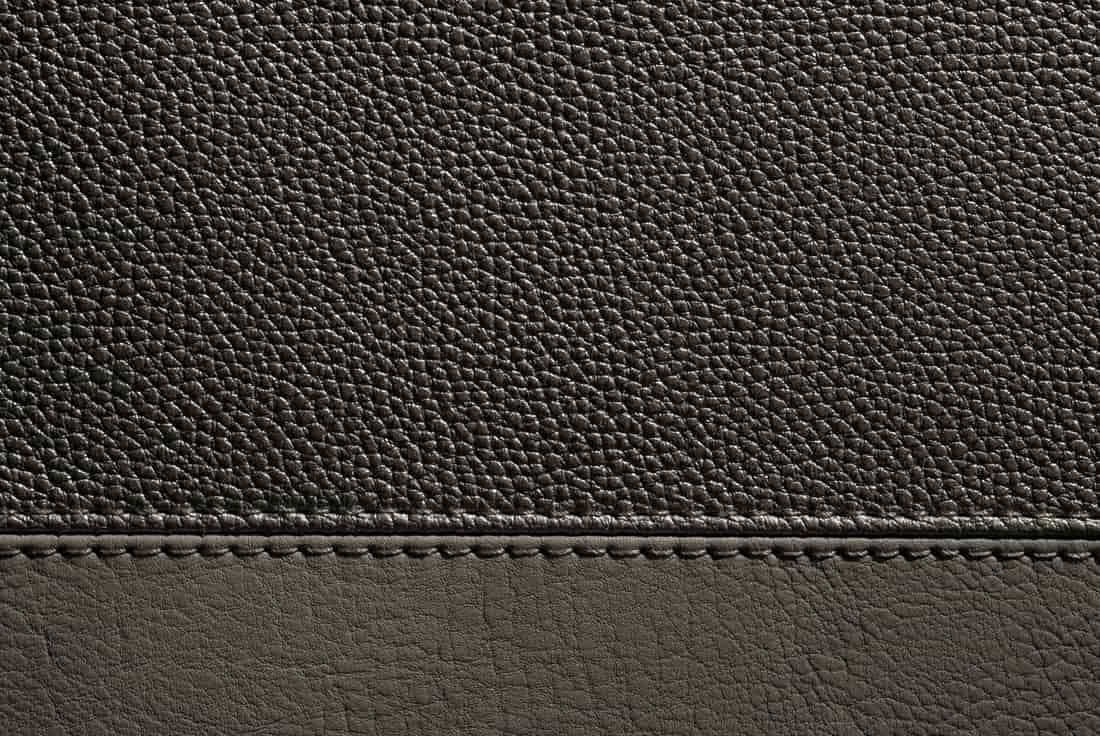
Leather is skin, and the tanning process leaves fats and oils in the fiber structure that keep it flexible. Those migrate out over time — faster with heat, faster still with repeated wetting and drying. When enough of them are gone the fibers rub against each other instead of sliding, and that is what cracking is: not the surface drying out cosmetically, but the structure failing at a fold. A wallet cracks across the spine, a belt cracks at the buckle holes, a boot cracks across the vamp where it flexes.
Conditioner replaces those oils. That is the whole job. It does not clean, it does not waterproof, and it does not repair damage that has already happened. Everything else on a care-product label is a secondary claim, and most of the confusion in this category comes from products that do two of those jobs being sold under the name of one.
This matters more on handmade leather than on a factory bag, because the pieces worth conditioning are the ones with the least finish on them. A heavily coated bag has a plastic-ish top layer that slows the oil loss down and also stops conditioner getting in. A full-grain, lightly finished wallet from a maker drinks it. Full grain vs top grain vs genuine leather explains why those are different objects.
The three kinds, and they are not interchangeable
- Conditioner
- A thin oil-based liquid or cream whose job is to penetrate. Use it on wallets, belts, bags, jackets and furniture. Most of them will darken leather slightly; the few that state they do not are the useful ones on finished or light-colored pieces.
- Preservative or heavy-duty paste
- Oil plus a significant amount of beeswax, so it is a paste rather than a liquid. It conditions and it also leaves a water-resisting film. Right for boots, work gloves, saddlery and anything that lives outdoors. Wrong for a structured bag, because the oil content softens leather you wanted to keep its shape.
- Balm or salve
- A smaller, waxier, usually tinned version of the same idea, blended for small goods. Easier to control, easier to carry, and the format that works as a gift. Natural waxes and butters in these will warm the color of pale leather a shade or two.
- Cleaner, which is a separate product
- Saddle soap and dedicated leather cleaners lift dirt. Conditioning over trapped grit grinds it in, so filthy leather gets cleaned first and fed second. Several products combine the two steps, which is genuinely convenient for routine upkeep.
Darkening is the decision nobody warns you about
Almost every oil-based product makes leather darker, and on most leather that is a pleasant deepening that stops looking like a change within a week. On three kinds of leather it is not pleasant, it is not reversible, and it is the most common way a well-meant care routine ruins a gift.
- Natural or undyed vegetable-tanned leather — the pale tan that darkens to honey over years. An oil-heavy product skips that whole process in one afternoon and does it unevenly.
- Light-colored dyed leather: tan, sand, bone, pale gray. Blotching is visible on these in a way it never is on brown or black.
- Suede and nubuck, which should not be conditioned with oils or waxes at all — they need a dedicated suede product, and the nap mats permanently if you oil it.
Two rules follow. On anything pale, use a product that states it will not darken, and test it anyway on the inside of a strap or the back of a tongue. On anything brown or black you are free to use whatever suits the object. If you are not sure which tannage your piece is, how to tell if leather is real or fake covers reading a listing and a surface.
Match the product to the object
The pattern is simple once you see it: the more water the object meets, the more wax belongs in the product; the more the object has to hold a shape, the less. Everything in the middle is served by one bottle of ordinary conditioner.
Which conditioner to buy
Six products, all verified on the listing at the time of writing, covering the three kinds above and the gift case. One note on provenance before the picks: there is no handmade leather conditioner in any meaningful sense. Blending oil and wax into a tin is chemistry, and Amazon Handmade does not list it, so these are labeled factory or maker-direct on their cards rather than dressed up. The two closest to the spirit of this site are the Maine-made balm and the Portland-made salve, both of which name a workshop on the listing.
Every pick below is on Amazon Handmade unless the card says otherwise, and every price is the live one. If you want the rules we apply before anything gets listed, they are on how we pick.
What we would buy on that basis
Quick picks
| # | Product | Best for | Provenance | Price |
|---|---|---|---|---|
| 01 | 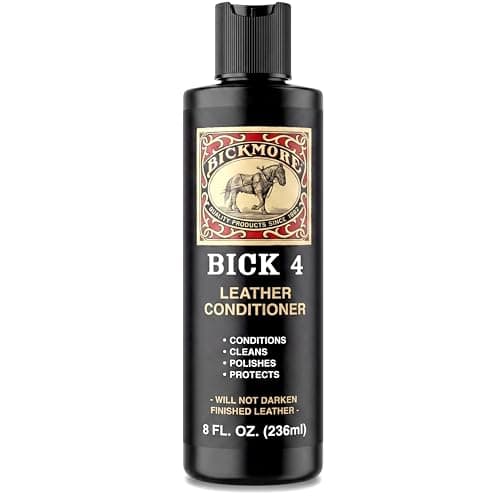 Bickmore Bick 4 Leather Conditioner and Cleaner, 8 oz The one that cleans and conditions in a single pass and is listed as not darkening leather. | almost every handmade leather object on this site | Factory-made | $12.99Amazon (affiliate link) |
| 02 | 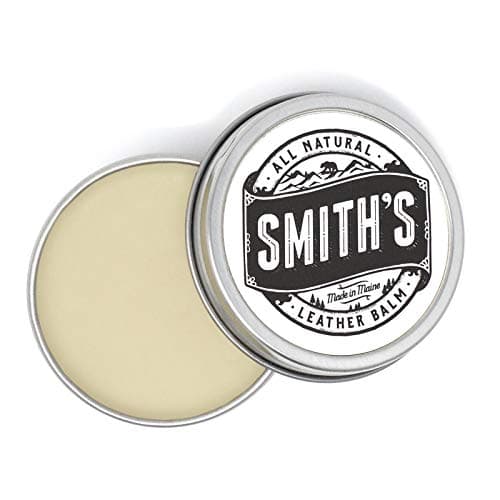 Smith's All Natural Leather Balm, 2 oz Tin A small-batch beeswax balm from a named Maine workshop — the one that reads as part of the present. | a conditioner to put in the box with the leather gift | Maker-direct | $14.00Amazon (affiliate link) |
| 03 | 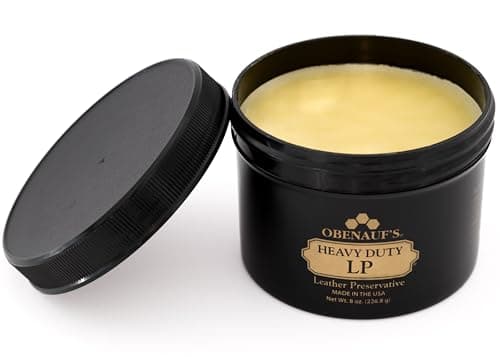 Obenauf's Heavy Duty LP Leather Preservative, 8 oz A thick oil-and-beeswax paste built for leather that gets wet, not for a wallet. | boots, work gloves and anything that gets rained on | Factory-made | $17.99Amazon (affiliate link) |
| 04 | 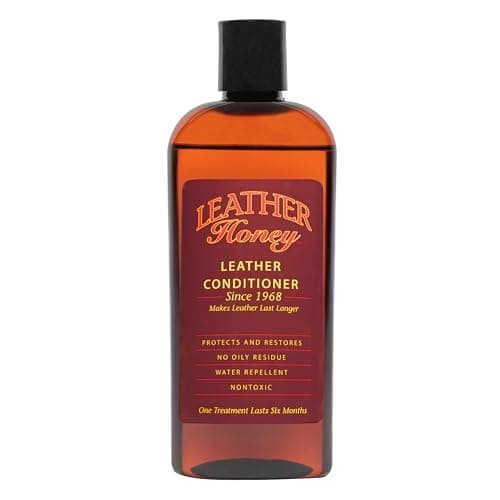 Leather Honey Leather Conditioner The rescue product — thin enough to soak into neglected leather that has stopped taking anything else. | leather that has already dried out and gone stiff | Factory-made | $19.99Amazon (affiliate link) |
| 05 | 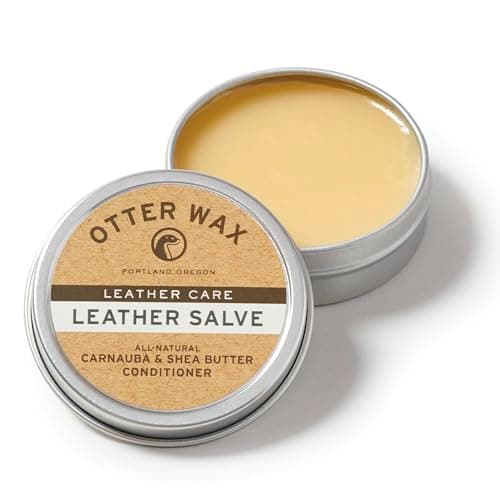 Otter Wax Leather Salve, 2 oz A small all-natural salve from a named Portland workshop, under eleven dollars. | a tin to keep in a bag, and anyone avoiding PFAS | Maker-direct | $10.95Amazon (affiliate link) |
| 06 | 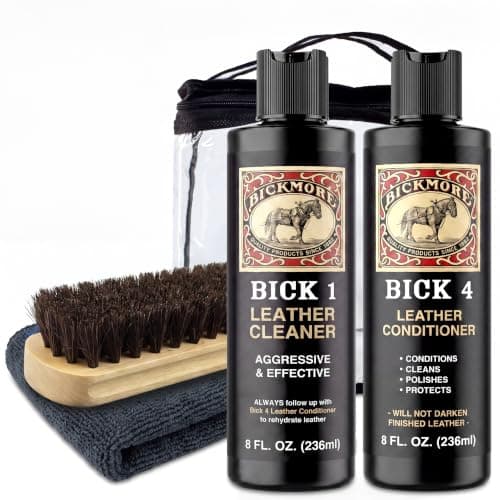 Bickmore Leather Care Kit — Bick 1, Bick 4, Brush and Cloth Cleaner, conditioner, brush and cloth in one box — the version that does not need explaining. | giving the care with the gift, so it actually happens | Factory-made | $24.99Amazon (affiliate link) |
#ad · Live prices from the Amazon Creators API, as of October 25, 2026. Where we hold no verified live price we show none — a gap beats a number that has rotted.
The picks, in full
Bickmore Bick 4 Leather Conditioner and Cleaner, 8 oz
by Bickmore
For almost everything, and the one that is listed as not darkening. The one that cleans and conditions in a single pass and is listed as not darkening leather.
Most conditioners darken leather, and on a hand-dyed wallet or a natural veg-tan belt that is not a side effect, it is a permanent change to the thing you were given. Bick 4 is the widely stocked product that states it will not darken, which makes it the safe default when you do not know how the piece was tanned or finished. It also cleans, so it replaces two bottles with one for normal maintenance.
Worth knowing first
It conditions rather than waterproofs. Boots that get genuinely wet want the Obenauf's instead.
$14.9913% off
Price as of October 25, 2026. Prices move, and the one on Amazon is the one that counts.
#ad we may earn a commission from this link to Bickmore Bick 4 Leather Conditioner and Cleaner, 8 oz
Smith's All Natural Leather Balm, 2 oz Tin
by Smith's
For the tin that goes in the box with the leather gift. A small-batch beeswax balm from a named Maine workshop — the one that reads as part of the present.
This is the closest thing to a handmade conditioner on the marketplace: the listing states it is made in Maine from beeswax, cocoa butter and almond oil, and it comes in a tin rather than a plastic bottle. That matters for one specific job — a two-ounce tin alongside a wallet makes the gift look considered, and a supermarket squeeze bottle does not. It conditions well on bags, boots and furniture.
Worth knowing first
Natural waxes and oils will darken light leather slightly. Test on the inside of a strap first.
Price as of October 25, 2026. Prices move, and the one on Amazon is the one that counts.
#ad we may earn a commission from this link to Smith's All Natural Leather Balm, 2 oz Tin
Obenauf's Heavy Duty LP Leather Preservative, 8 oz
by Obenauf's
For anything that gets genuinely wet. A thick oil-and-beeswax paste built for leather that gets wet, not for a wallet.
There is a real split in this category between conditioners that feed leather and preservatives that also keep water out, and Obenauf's is the best-known of the second kind. The beeswax content makes it a paste rather than a liquid, it works in with heat and finger pressure, and it is the right answer for boots. It is the wrong answer for a dress belt, because it will darken and soften leather you wanted stiff.
Worth knowing first
It darkens leather and softens it. Never use it on a structured bag or a veg-tan piece you want to keep pale.
Price as of October 25, 2026. Prices move, and the one on Amazon is the one that counts.
#ad we may earn a commission from this link to Obenauf's Heavy Duty LP Leather Preservative, 8 oz
Leather Honey Leather Conditioner
by Leather Honey
For a bag found at the back of a closet. The rescue product — thin enough to soak into neglected leather that has stopped taking anything else.
Leather that has been stored dry for years will sit there refusing a wax balm, because the balm cannot get past the surface. A thin penetrating conditioner is the thing that works, and this is the long-established one: the listing states non-toxic and made in the USA since 1968. Use it on a bag found at the back of a closet, then switch to a balm for upkeep.
Worth knowing first
A little goes a long way and too much leaves leather tacky. Thin coats, long waits, buff between them.
$27.9929% off
Price as of October 25, 2026. Prices move, and the one on Amazon is the one that counts.
#ad we may earn a commission from this link to Leather Honey Leather Conditioner
Otter Wax Leather Salve, 2 oz
by Otter Wax
For small goods, and anyone avoiding PFAS. A small all-natural salve from a named Portland workshop, under eleven dollars.
The cheapest honest entry point in this category. The listing states all-natural and PFAS-free and gives Portland, Oregon as the origin, which is more than most care products on the marketplace will commit to. Two ounces is enough for a wallet and a belt for a year, and the tin travels. It cleans as well as conditions, so it covers the whole job on small goods.
Worth knowing first
Two ounces will not get through a jacket or a sofa. For those, buy a bottle, not a tin.
Price as of October 25, 2026. Prices move, and the one on Amazon is the one that counts.
#ad we may earn a commission from this link to Otter Wax Leather Salve, 2 oz
Bickmore Leather Care Kit — Bick 1, Bick 4, Brush and Cloth
by Bickmore
For giving the care alongside the leather so it actually happens. Cleaner, conditioner, brush and cloth in one box — the version that does not need explaining.
The practical problem with telling someone to condition a new wallet is that they will not buy the bottle. A kit solves it, and this one is the right four pieces: Bick 1 to clean, Bick 4 to condition, a brush to work it in and a cloth to buff. Under twenty-five dollars, it turns a leather gift into a leather gift that is still presentable in five years.
Worth knowing first
Four items means four things to find space for. If they already own a cloth, buy the plain Bick 4 bottle.
Price as of October 25, 2026. Prices move, and the one on Amazon is the one that counts.
#ad we may earn a commission from this link to Bickmore Leather Care Kit — Bick 1, Bick 4, Brush and Cloth
How to apply it, in five lines
- Empty the thing and brush or wipe the dust off. Grit plus conditioner is sandpaper.
- If it is actually dirty, clean it first and let it dry at room temperature — never on a radiator, which cooks leather.
- Test on a hidden area. Inside a strap, under a flap, the back of a tongue. Wait an hour and look at it in daylight.
- Apply a thin coat with a cloth or bare fingers; finger warmth helps a paste go in. Thin is the whole technique — two thin coats beat one thick one every time.
- Leave it twenty minutes to an hour, then buff the excess off with a clean dry cloth. Leather that still feels greasy has too much on it, and the excess will transfer onto shirts and car seats.
How often
Far less often than the bottles imply. Twice a year is right for a wallet or a belt in normal use. Three or four times a year for a bag carried daily. Boots get done when they stop beading water, which in a wet winter might be monthly and in a dry summer not at all. The practical test for any piece is the same one used on wooden boards: a drop of water should sit on the surface for a moment rather than vanishing straight in.
Over-conditioning is a real failure mode and it looks like this: leather that feels slightly soapy, has lost its structure, and has gone darker than it should. It cannot be taken back out. When in doubt, wait another month. A brand-new piece from a maker usually needs nothing at all for the first six months — it left the bench with a finish on it. How to break in leather without ruining it is the better page for a stiff new belt or bag.
What never to use
- Olive oil, coconut oil or any kitchen oil. They go rancid in the fiber and the smell does not come out. This is the single most common piece of bad internet advice about leather.
- Mink oil and neatsfoot oil on fine veg-tan. They work — they also darken heavily and over-soften, and on stitched small goods the oil migrates into the thread.
- Saddle soap as a conditioner. It is a cleaner. Using it alone leaves leather cleaner and drier than it started.
- Silicone or wax-based furniture polish and anything described as a protectant spray for upholstery. Wrong chemistry, and they seal the surface against the thing it needs.
- Heat to speed up drying. A hairdryer or a radiator shrinks and stiffens leather permanently.
Buying it as a gift
This is the useful case, and the reason this page exists on a gift site rather than only in a care manual. Telling someone to condition a new wallet does not work, because they will not go and buy the bottle. Putting a two-ounce tin in the box with the wallet does work, it costs ten to fifteen dollars, and it changes whether the gift still looks good in five years.
A tin reads better than a plastic squeeze bottle for this, which is most of the case for the small-batch picks above. The four-piece kit is the version for someone receiving their first good leather thing and owning nothing to look after it with. The same argument runs through charcuterie board gift sets, where a fifteen-dollar bottle of board oil is what decides whether the board is still in use in five years. If the leather itself is still to be chosen, handmade leather wallets, handmade leather belts and handmade leather gifts for men are where to start, and how to care for handmade leather is the routine to put on the card.
Questions people actually ask
What is the best leather conditioner for a handmade wallet?
Will leather conditioner darken my leather?
How often should leather be conditioned?
Is a conditioner the same thing as a leather cleaner?
Can I use olive oil or coconut oil on leather?
Does new leather from a maker need conditioning right away?
Read next
Care
Leather care
A short routine, done rarely — and why over-conditioning is a real risk.
Caring for handmade
How to break in leather
Why new full-grain is stiff, how long each item takes, and the four shortcuts that permanently damage a hide.
Buying handmade
Leather grades explained
Four grades, and why one of them is a trap.
Roundup
Handmade leather wallets
Full grain and hand-stitched, from slim card holders to conventional bifolds.