Caring for handmade
How to break in leather
A good wallet arrives stiff and a good belt arrives unwilling to bend. That is the material doing what it was bought for, and the only reliable way through it is use.
We earn a commission when you buy through our Amazon links, at no extra cost to you. It never changes the order of the picks, and we say so when the cheaper thing is the better buy. How this works.
Stiffness is the feature, not the fault
The first thing people do with a new full-grain wallet is try to close it, fail, and conclude something is wrong. Nothing is. Full grain is the outermost layer of the hide with its original grain surface intact, which is the densest and most tightly structured part of the skin. That density is the reason it will still be in use in fifteen years, and it is the same reason it will not fold politely in week one.
The alternative is a hide that has been split, sanded and coated to feel soft immediately, which is exactly what most mass-market leather goods are — and they feel their best on the day you buy them and worse every year after. Leather grades explained sets out the difference between full grain, top grain and the bonded material that is not really leather at all, and how to tell real leather covers what you can check before you buy.
Tannage decides how long it takes
Two hides can both be full grain and behave completely differently out of the box, and the reason is how they were tanned. The industry body Leather Naturally puts the proportions at roughly three quarters of all leather being chrome tanned, which uses chromium salts and produces a supple, consistent leather quickly. Vegetable tanning is the older method, using tannins extracted from wood, bark and nuts; it takes considerably longer in the tannery, uses several times more tanning material, and gives a leather with a distinctive handle that ages — which is a polite way of saying it starts firm.
For a buyer the practical consequence is simple. Vegetable-tanned goods — most hand-stitched wallets, most heavy belts, most of the leather that darkens dramatically — need a real break-in period and reward it with patina. Chrome-tanned goods are close to their final feel on arrival and change less over time. Neither is better; they are different trades, and a maker who names the tannage on the listing is telling you which one you are buying.
What breaks in well, and what does not
The row worth noticing is the one that does not change. A valet tray is formed and stitched to stand up, and a tray that has gone soft and floppy has been over-conditioned rather than broken in. The same applies to structured bag bases and belt keepers. Softness is the goal in some items and a failure in others, which is why there is no universal treatment to apply to everything leather you own.
Every pick below is on Amazon Handmade unless the card says otherwise, and every price is the live one. If you want the rules we apply before anything gets listed, they are on how we pick.
What we would buy on that basis
Quick picks
| # | Product | Best for | Provenance | Price |
|---|---|---|---|---|
| 01 | 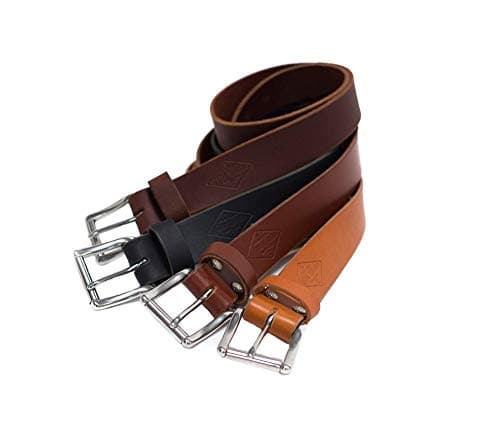 Arizona Full Grain Belt with Lifetime Guarantee Full grain, 1.5 inches, handmade in Arizona and guaranteed for life by the maker. | the last belt someone needs to buy | Amazon Handmade | $69.99Amazon (affiliate link) |
| 02 | 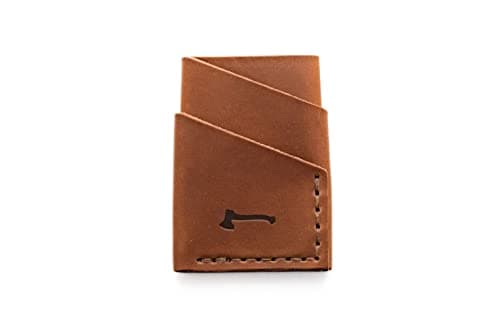 Craft & Lore Port Wallet A single folded piece of thick leather with almost no stitching, which is why it lasts. | the person who carries four cards and resents carrying five | Amazon Handmade | $60.00Amazon (affiliate link) |
| 03 | 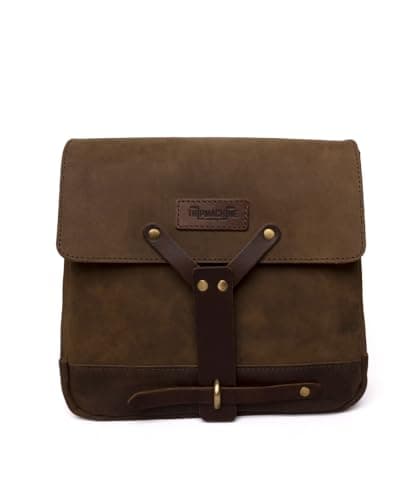 Full Grain Leather Messenger Bag A full-grain messenger with an adjustable strap, priced where a serious gift starts. | the big-ticket gift, when one object has to carry the whole occasion | Amazon Handmade | $145.00Amazon (affiliate link) |
#ad · Live prices from the Amazon Creators API, as of October 25, 2026. Where we hold no verified live price we show none — a gap beats a number that has rotted.
The picks, in full
Arizona Full Grain Belt with Lifetime Guarantee
For a full-grain belt at the standard width, guaranteed for life by its maker. Full grain, 1.5 inches, handmade in Arizona and guaranteed for life by the maker.
A lifetime guarantee is only worth as much as the workshop standing behind it, but it does tell you the maker expects the belt to survive — nobody offers one on a bonded-leather belt. Full grain at 1.5 inches is the standard width that works with both jeans and chinos. This is the belt to buy when you want the gift to end a category rather than add to it.
Price as of October 25, 2026. Prices move, and the one on Amazon is the one that counts.
#ad we may earn a commission from this link to Arizona Full Grain Belt with Lifetime Guarantee
Craft & Lore Port Wallet
by Craft and Lore
For one heavy piece folded rather than thin pieces sewn, which is why it starts stiff. A single folded piece of thick leather with almost no stitching, which is why it lasts.
Most slim wallets are slim because they use thin leather. This one is slim because it is one heavy piece folded rather than several thin pieces sewn together, so there is very little to come apart. It starts stiff and unwelcoming and takes a month to break in, which is the correct trade for something meant to outlive three phones. If the person you are buying for has a wallet held together by a rubber band, this is the upgrade.
Worth knowing first
It holds about four to six cards and folded bills. It is not a wallet for coins, receipts or a checkbook.
Price as of October 25, 2026. Prices move, and the one on Amazon is the one that counts.
#ad we may earn a commission from this link to Craft & Lore Port Wallet
Full Grain Leather Messenger Bag
by Trip Machine Company
For a milestone gift that arrives stiff and darkens over its first year. A full-grain messenger with an adjustable strap, priced where a serious gift starts.
Leather bags are where the gap between the photo and the object is widest, because a bonded-leather bag photographs identically to a full-grain one. What separates this listing is that the grade is stated outright and the capacity is described in objects rather than liters — it is sized for an iPad, documents and a couple of shirts, with two internal pockets and one at the back. Expect it to arrive stiff and darken over the first year. This is a retirement, graduation or milestone-birthday gift rather than a casual one.
Worth knowing first
It is heavy before you put anything in it. Full grain at this size always is, and it is the reason it will still be usable in fifteen years.
Price as of October 25, 2026. Prices move, and the one on Amazon is the one that counts.
#ad we may earn a commission from this link to Full Grain Leather Messenger Bag
The method, which is mostly patience
- Use it, loaded, every day. A wallet breaks in around its contents. Put the cards and the folded bills in from day one, accept that it will not close neatly for a few weeks, and let the pockets form to what is actually in them. A wallet broken in empty fits nothing.
- Flex it by hand, gently, along the lines it already wants to fold. A minute at a time, rolling the leather over itself. You are working the fibers loose, not forcing a new crease into the piece.
- Warmth helps; heat does not. Body warmth over a day makes leather more willing. A hairdryer, a radiator or an oven dries the hide out and makes it brittle, permanently.
- Leave conditioner alone at first. New leather already contains the oils the tannery put into it. Condition it when it starts to look dry, which on a wallet is usually months in, not on arrival. Leather care covers what conditioner does and why over-conditioning is the real risk, and leather conditioner names the products worth buying when the time comes.
- For a belt, wear it on the hole you intend to use. The leather sets to the curve you give it, so a belt broken in on the wrong hole keeps the wrong shape.
Expect color change as well as softness. Vegetable-tanned leather darkens with handling and light, unevenly at first and then into something consistent, and the parts you touch most go first. That is patina and it is not reversible, which is the point of it.
The four shortcuts that ruin a hide
Every one of these circulates as advice and every one of them trades a few days of comfort for years of life.
- Soaking it in water. It will be softer and it will also be a different, weaker thing: water leaches out tanning oils, and leather that dries fast — especially near heat — stiffens into a brittle shell and cracks at the fold.
- Heat. Hairdryers, radiators, cars in summer, the oven trick. Heat drives moisture out of a hide and leather does not recover from being dried hard.
- Saddle soap or solvent to loosen it. Saddle soap cleans; it is not a softener, and repeated use strips the finish.
- A thick coat of conditioner on day one. Over-conditioned leather goes spongy and loses its structure, and on a stitched piece it can soften the thread channels. This is the most common way people damage a new wallet while trying to help it.
There is one legitimate accelerant and it is unglamorous: carry it. Hand oils, body warmth and daily flexing are precisely what the material evolved to respond to, and no bottle reproduces them.
If it is a gift
Say it in the card. A full-grain wallet given without explanation is a gift that is briefly disappointing — it will not close, the cards are tight, and the recipient quietly concludes you bought the wrong size. One line saying that it is meant to be stiff and will take about a month converts that into anticipation. This is the single most useful thing you can do for a leather gift and it costs nothing.
The other gift-specific trap is format. A slim card wallet given to someone who carries a stack of cards will never break in to fit, because the problem is capacity rather than stiffness — card holder vs bifold vs money clip covers how to read what someone carries. For belts, the size has to be right on arrival; leather stretches slightly with wear but it does not change size. Handmade belts explains how belt sizing is actually measured, and leather wallets and leather bags have the wider shortlists.
Questions people actually ask
How long does it take to break in leather?
Why is my new leather wallet so stiff?
Should I put conditioner on new leather?
Can I use water or heat to soften leather faster?
Does all leather break in?
Will the color change as it breaks in?
Sources
Read next
Care
Leather care
A short routine, done rarely — and why over-conditioning is a real risk.
Buying handmade
Leather grades explained
Four grades, and why one of them is a trap.
Buying handmade
How to tell if leather is real
The checks that work in your hands and on a listing, the label words with legal meaning, and the tests to skip.
Roundup
Handmade leather wallets
Full grain and hand-stitched, from slim card holders to conventional bifolds.
Roundup
Handmade leather belts
Single-piece belts that do not curl, and how to size one without asking.
Roundup
Handmade leather bags
Messengers, slings, totes and the twenty-dollar dopp kit that beats all of them on value.
Comparison
Card holder vs bifold vs money clip
Card holder, slim wallet, bifold, flap or money clip, matched to what the person actually carries.