Buying handmade
Lead-free pottery, and how to know
Your mug is held to a stricter lead limit than your dinner plate, and that is not an accident. What the limits are, which pieces deserve suspicion, and what lead-free legally means.
We earn a commission when you buy through our Amazon links, at no extra cost to you. It never changes the order of the picks, and we say so when the cheaper thing is the better buy. How this works.
Why lead is in pottery at all
Not as an additive and not as a shortcut — as chemistry. Lead has been used in ceramic glazes for centuries because it works unusually well: it gives a smooth, glass-like finish at a lower firing temperature, it lets bright colors and patterns underneath show through, and it keeps moisture out of the body of the piece. California's health department sets this out plainly, and it is worth understanding, because the point is not that some potters are careless. The point is that lead glazes are genuinely good at being glazes, which is why the practice persisted long enough to need regulating.
Modern US studio potters overwhelmingly use lead-free glazes, and the commercial glazes they buy are formulated that way. The risk concentrates somewhere else: in older pieces made before the rules, in imported traditional ware, and in anything decorative that has been re-listed as something to eat off.
The limits, and the detail nobody expects
FDA sets action levels for how much lead may leach out of ceramicware, measured by filling or soaking the piece in a weak acid solution and testing what comes off. The levels are not one number. They vary by what the piece is, and the logic is exposure: the longer and hotter a liquid sits against a surface, the more lead comes out of it, so the categories that hold hot drinks are held to the tightest limit.
A mug is held to a limit six times stricter than a plate. That is the single most useful fact in this subject, because it tells you where to direct your attention: if you are going to be careful about one piece in a cupboard, be careful about the thing you drink coffee and tea out of every morning, not the dinner service. Ceramicware that exceeds the FDA levels cannot legally be sold in the US.
What lead-free legally means, and what it does not
Two terms get used interchangeably and they are not the same. Lead-free means the ware contains no lead. Lead-safe means it contains some lead, but not enough leaches out to exceed the limits. California's health department draws exactly that distinction, and it is the reason a listing that says lead-safe is not hedging — it is being precise.
FDA has also been explicit about the label itself: ceramicware that contains extractable lead when tested by the prescribed method should not be labelled Lead Free, and doing so can constitute misbranding. That guidance was issued after FDA received reports of traditional pottery imported from several Mexican manufacturers, labelled Lead Free, that in fact contained extractable lead at levels comparable to those found in lead-glazed pottery. The practical consequence for a buyer: the words on the box are a claim, not a test result, and they are worth more when the maker is identifiable and worth less when they are not.
What to look for in a listing
You cannot tell whether a piece contains lead by looking at it — that is the first thing California's guidance says, and it is true. What you can do is read the risk factors, which are well established, and read the listing for the claims a real maker volunteers.
- A stated food-safe or lead-free glaze. Any potter selling functional ware will say this, because it is the claim that matters to their customers. Silence is not proof of a problem, but it is a reason to ask.
- A named maker, studio or state. Accountability is the strongest available signal when you cannot hold the object. How to tell handmade pottery covers the other provenance tells.
- Functional, not decorative. Decorative ware may use glazes never tested for food contact, and a decorative piece re-listed as a serving dish is a real category on marketplaces. If the listing hedges, treat it as decorative.
- Decoration under the glaze, not on top of it. Run a finger over the pattern. If you can feel it, or see brush strokes standing above the glazed surface, the decoration sits on top — which is where lead-containing decoration is found.
- Nothing bright on the food-bearing surface. Including the upper rim of a cup, which is in contact with a mouth. Plain white ware rarely contains lead at all.
Every pick below is on Amazon Handmade unless the card says otherwise, and every price is the live one. If you want the rules we apply before anything gets listed, they are on how we pick.
What we would buy on that basis
Quick picks
| # | Product | Best for | Provenance | Price |
|---|---|---|---|---|
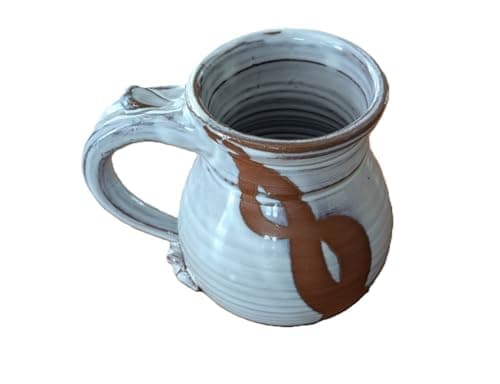
| 01 | 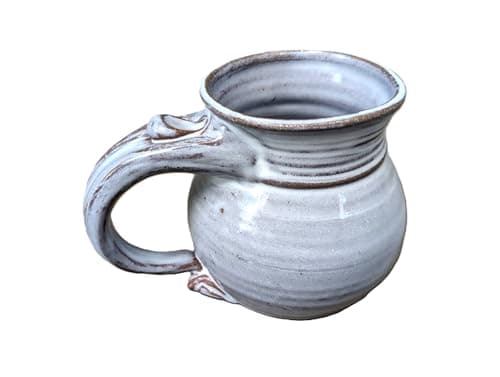 Hand-Thrown Pottery Mug in Shale Thrown on a wheel in North Carolina, and the throwing rings are still visible. | the person who has a favorite mug and defends it | Amazon Handmade | $42.00Amazon (affiliate link) |
| 02 | 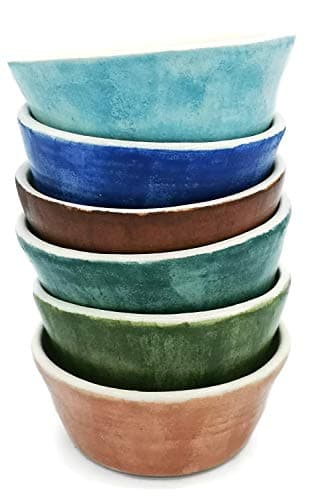 Ceramica Ana Rafael Small Pottery Bowls, Set of 6 Six wheel-thrown sauce bowls, one of each color, from a pottery studio in Portugal. | someone who serves small things: olives, dipping sauce, salt | Amazon Handmade | $65.00Amazon (affiliate link) |
| 03 | 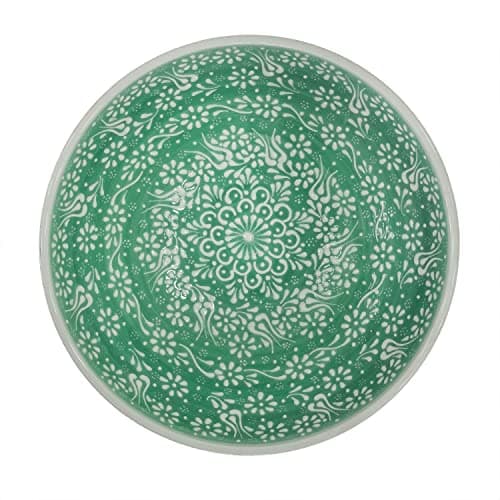 Embossed Relief Serving Bowl, 10 in A ten-inch handmade bowl with a raised relief surface, at under thirty dollars. | one good serving bowl, which most kitchens are missing | Amazon Handmade | $28.00Amazon (affiliate link) |
#ad · Live prices from the Amazon Creators API, as of October 25, 2026. Where we hold no verified live price we show none — a gap beats a number that has rotted.
The picks, in full
Hand-Thrown Pottery Mug in Shale
by North Carolina pottery
For a wheel-thrown stoneware mug from a named North Carolina pottery. Thrown on a wheel in North Carolina, and the throwing rings are still visible.
A wheel-thrown mug is asymmetric in the way a hand is asymmetric: the walls vary slightly in thickness, the handle is pulled rather than molded, and you can feel the rings under your fingers. That is the whole difference between this and a mug from a supermarket, and it is the difference people notice every single morning. Shale is a muted gray-brown glaze that goes with everything.
Price as of October 25, 2026. Prices move, and the one on Amazon is the one that counts.
#ad we may earn a commission from this link to Hand-Thrown Pottery Mug in Shale
Ceramica Ana Rafael Small Pottery Bowls, Set of 6
by Ceramica Ana Rafael
For a maker who states lead-free, food-safe and dishwasher-friendly outright. Six wheel-thrown sauce bowls, one of each color, from a pottery studio in Portugal.
Thrown on the wheel, kiln-fired, glazed and fired again per the listing, which is the full stoneware process rather than slip-cast ware with a glaze on top. At about two and a half inches across each bowl holds one thing — a dip, a pinch of salt, a few olives — and six of them cover a table. The maker states lead-free, food safe and dishwasher friendly, and the price is for the full set of six as shown.
Worth knowing first
One bowl of each color, and every set is thrown and glazed individually, so expect the colors to differ from the photo.
Price as of October 25, 2026. Prices move, and the one on Amazon is the one that counts.
#ad we may earn a commission from this link to Ceramica Ana Rafael Small Pottery Bowls, Set of 6
Embossed Relief Serving Bowl, 10 in
For the ten-inch bowl most kitchens are missing, in functional glazed ware. A ten-inch handmade bowl with a raised relief surface, at under thirty dollars.
Ten inches is the useful serving size: big enough for a salad for four, small enough to fit in a cupboard. The relief surface catches light on the rim, which is what stops a plain bowl looking like a plain bowl. This is the best-value ceramic on the page.
Price as of October 25, 2026. Prices move, and the one on Amazon is the one that counts.
#ad we may earn a commission from this link to Embossed Relief Serving Bowl, 10 in
The pieces to be careful with
This is where an honest handmade-goods site has to be straight with its readers: California's health department lists home-made and hand-crafted tableware, from the US or abroad, among the categories to be careful with unless you are sure the maker uses a lead-free glaze. We are not going to leave that out. It belongs alongside the other high-risk categories, which are consistent across every public-health source: rustic glazed terra cotta from some Latin American traditions, such as Mexican bean pots, where the guidance is to stop cooking in them at once unless they are labelled lead-free or sin plomo; highly decorated traditional ware from some Asian communities; and antique tableware handed down, or bought at flea markets and estate sales, which predates the regulations entirely.
There is also one condition that is a stop sign rather than a caution. A corroded glaze, or a dusty chalky gray residue left on the glaze after washing, may represent a serious lead hazard, and a piece in that state should not be used. That is a visible, checkable thing, and it is the one case where you can act on appearance alone.
Three habits that reduce the risk on anything uncertain
- Do not heat food in it. Cooking and microwaving speed up leaching. If you are unsure about a piece, it is a serving dish and not a cooking one.
- Do not store food in it. The longer food is in contact with the surface, the more lead is drawn out. An unknown bowl is for the hour of the meal, not for the fridge overnight.
- Keep acidic food out of it. Citrus, apples, tomatoes, soy sauce, salad dressing, fruit juice, cola, coffee, tea, wine. Acid pulls lead out far faster than neutral food does, which is why rice, potatoes, water and milk are the safe things to put in an uncertain dish.
Any two of those stacked together is worse than either alone — storing tomato sauce in a questionable dish and then microwaving it in the same dish is the example California's guidance itself uses. One more practical note: if a piece does contain lead, a dishwasher can damage the glazed surface and make it leach more next time, and in some cases lead may contaminate other items in the load. That is one of several reasons unknown and antique ware should be hand washed, and handmade pottery care covers the rest of the dishwasher question per glaze.
Questions people actually ask
Is handmade pottery lead-free?
What are the FDA lead limits for ceramic dishes?
Why is the limit stricter for mugs than for plates?
What is the difference between lead-free and lead-safe?
Can you tell if a dish has lead by looking at it?
Should I use a home lead test kit on my dishes?
Sources
- FDA Chemical Contaminants Transparency Tool — lead action levels for ceramicware (flatware, hollowware, cups and mugs, pitchers), ref. CPG 545.450
- FDA — CPG Sec. 545.450 Pottery (Ceramics); Import and Domestic, Lead Contamination
- FDA — Guidance for Industry: Safety of Imported Traditional Pottery Intended for Use with Food and the Use of the Term Lead Free
- California Department of Public Health — Q & A About Lead in Tableware
Read next
Care
Handmade pottery care
Microwave, oven and dishwasher — answered per glaze rather than in general.
Buying handmade
How to tell if pottery is handmade
Throwing rings, the trimmed foot, pulled handles and mold seams: the signs of a thrown pot, and what a listing should show.
Ceramics
Ceramics and pottery
Wheel-thrown mugs, dinnerware and vases, and the glaze question that decides it.
Roundup
Handmade mugs
Wheel-thrown stoneware from working potters, and how to pick a size.
Comparison
Stoneware vs porcelain vs earthenware
How the three clay bodies differ in strength, porosity and care, and which one a handmade gift should be.
For a person
Gifts for pottery lovers
They already own mugs. Buy a form they are missing, or a signed studio piece with the maker's name on the base.
Buying handmade
Spotting resold mass production
A nine-point checklist you can run on any listing in a minute.