Comparison
Wood wick vs cotton wick candles
For a gift, buy cotton: it lights first time, needs nothing explained and never arrives as a complaint. Buy wood — the Sandalwood wooden-wick soy jar is the handmade one here — only for someone who wants the crackle and will trim the wick, because an untrimmed wood wick drowns in its own wax and that is the single most common reason these candles get returned.
We earn a commission when you buy through our Amazon links, at no extra cost to you. It never changes the order of the picks, and we say so when the cheaper thing is the better buy. How this works.
Every pick below is on Amazon Handmade unless the card says otherwise, and every price is the live one. If you want the rules we apply before anything gets listed, they are on how we pick.
The short answer
Quick picks
| # | Product | Best for | Provenance | Price |
|---|---|---|---|---|
| 01 | 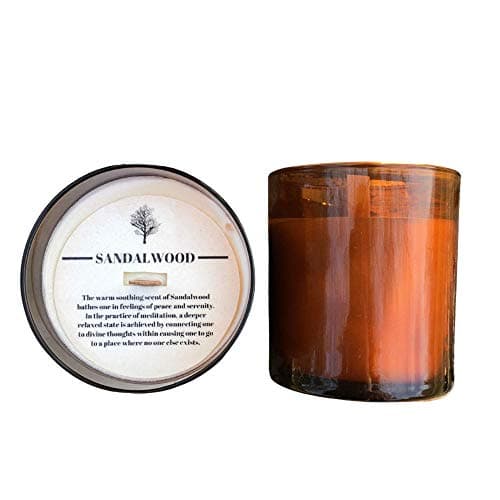 Sandalwood Wooden-Wick Soy Jar Candle Sandalwood and a wood wick, which is the warmest combination on this page. | a home office, a reading chair, or anyone who dislikes floral | Amazon Handmade | $32.00Amazon (affiliate link) |
| 02 | 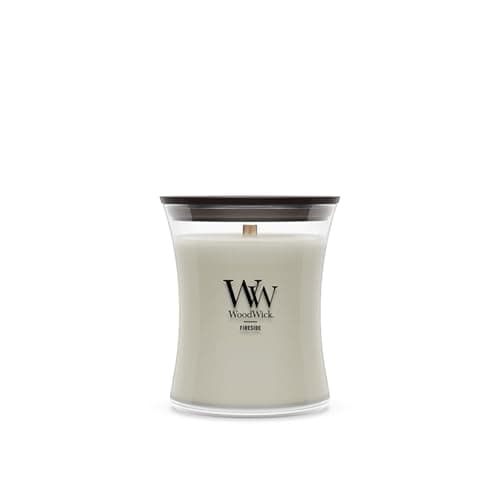 WoodWick Fireside Hourglass Candle The mass-market original, and still the strongest crackle of anything here. | someone who specifically wants the loudest crackle | Factory-made | $16.87Amazon (affiliate link) |
| 03 | 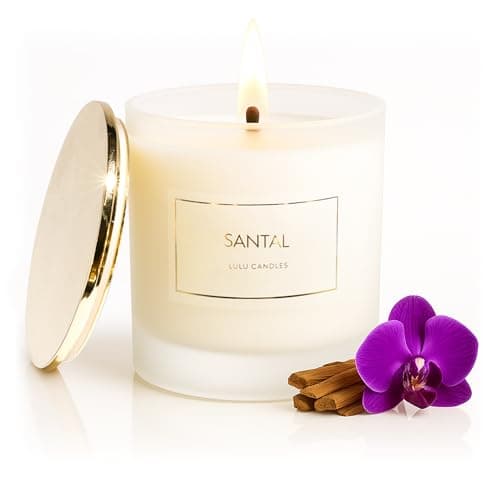 Lulu Candles Santal Wood Wick Soy Jar Candle A wood wick hand-poured in the US, at the lowest price we found from a named maker. | someone who wants the crackle without a mall-brand jar on the shelf | Maker-direct | $24.95Amazon (affiliate link) |
| 04 | 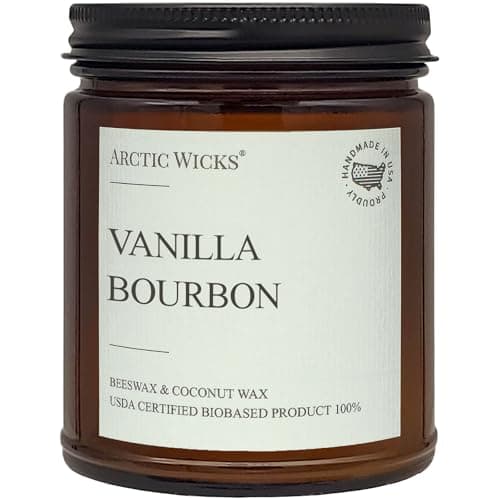 Arctic Wicks Vanilla Bourbon Coconut-Beeswax Candle A coconut-and-beeswax blend in a jar, scented, from a Handmade storefront. | the person who wants a scented candle but reads ingredient lists | Amazon Handmade | $22.00Amazon (affiliate link) |
| 05 | 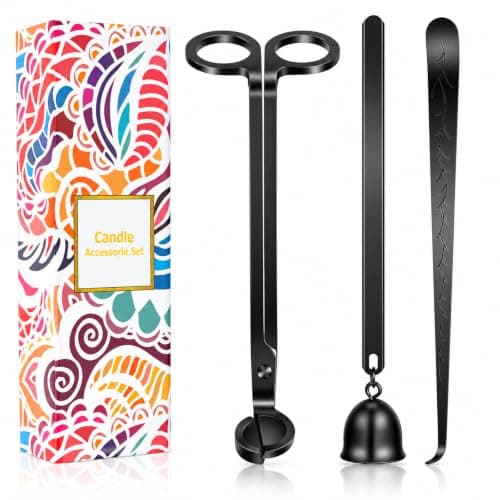 Candle Care Kit: Trimmer, Snuffer and Wick Dipper The three tools that fix most candle problems, for less than the candle costs. | pairing with any candle above, and the reason theirs stops tunneling | Factory-made | $11.59Amazon (affiliate link) |
#ad · Live prices from the Amazon Creators API, as of October 25, 2026. Where we hold no verified live price we show none — a gap beats a number that has rotted.
The one we would not buy
A single thin wood wick in a wide jar
This is the configuration that produces every complaint about wood wicks, and it is easy to spot in the photographs: a jar three or four inches across with one slim flat wick down the middle. A wood wick throws a short, wide flame rather than a tall one, so it has to be sized to the jar — the better makers use a thicker wick, a ribbed or booster wick, or two wicks side by side in a wide vessel. One thin wick in a wide jar cannot melt the far edges, so it tunnels, and then the pool it does make is deep enough to drown it. Look for a stated wick width, a double wick, or a narrower jar.
The picks, in full
Sandalwood Wooden-Wick Soy Jar Candle
by Independent maker
For someone who specifically wants the crackle and will maintain the wick. Sandalwood and a wood wick, which is the warmest combination on this page.
Sandalwood sits in the same warm-woody family as the crackling wick itself, so the scent and the sound point the same direction rather than fighting. At 11 oz it is a full-size jar rather than a sampler. This is the candle to buy for someone who has told you they hate vanilla.
Price as of October 25, 2026. Prices move, and the one on Amazon is the one that counts.
#ad we may earn a commission from this link to Sandalwood Wooden-Wick Soy Jar Candle
WoodWick Fireside Hourglass Candle
by WoodWick
For the person buying this for the sound rather than the scent, and who says so. The mass-market original, and still the strongest crackle of anything here.
We are including a factory candle in a handmade roundup and labeling it plainly, because on the single axis most wood-wick buyers care about it wins. The wick is wider than the small-maker versions, so the crackle is louder and more constant. Fireside is a smoke-and-wood scent rather than a food one. If the person you are buying for has said they want the crackling candle, this is what they mean.
Worth knowing first
Mass-produced and sold everywhere. It carries no maker story at all, which for some recipients is the whole problem.
$18.9911% off
Price as of October 25, 2026. Prices move, and the one on Amazon is the one that counts.
#ad we may earn a commission from this link to WoodWick Fireside Hourglass Candle
Lulu Candles Santal Wood Wick Soy Jar Candle
by Lulu Candles
For a first wood wick, in a narrower jar where the wick has less pool to fight. A wood wick hand-poured in the US, at the lowest price we found from a named maker.
Wood wicks crackle because the wood is burning alongside the wax, and the effect is the entire reason people buy them. Most of the market for that sensation belongs to one large brand; this is the small-maker version, and it undercuts that brand's full-size jars. The listing states a natural wood wick, a vegan soy-blend wax and hand-pouring in the US. Santal here is leather, sandalwood and cedarwood — the scent family most people have already decided they like.
Worth knowing first
A soy blend rather than 100% soy, and the listing states no burn time — the ounce count is the only number you get.
Price as of October 25, 2026. Prices move, and the one on Amazon is the one that counts.
#ad we may earn a commission from this link to Lulu Candles Santal Wood Wick Soy Jar Candle
Arctic Wicks Vanilla Bourbon Coconut-Beeswax Candle
by Arctic Wicks
For a gift, and anyone who wants the candle to just work without instructions. A coconut-and-beeswax blend in a jar, scented, from a Handmade storefront.
Pure beeswax barely holds fragrance, which is why almost every scented candle is soy or paraffin. A coconut-beeswax blend is the compromise: it carries scent better than straight beeswax while keeping the wax itself something you can name. Vanilla and bourbon is about as safe as a scent gift gets without being boring.
Worth knowing first
This is a blend, not 100% beeswax. If the person you are buying for specifically wants pure beeswax, buy the tapers instead.
Price as of October 25, 2026. Prices move, and the one on Amazon is the one that counts.
#ad we may earn a commission from this link to Arctic Wicks Vanilla Bourbon Coconut-Beeswax Candle
Candle Care Kit: Trimmer, Snuffer and Wick Dipper
For anyone who already owns a wood wick candle and keeps relighting it. The three tools that fix most candle problems, for less than the candle costs.
Almost every complaint about a candle traces to a wick left too long: soot on the glass, a smoking flame, a tunnel down the middle. A trimmer is a three-dollar fix for a thirty-dollar problem. Adding this to a candle turns a nice object into a thought-through gift, and it costs almost nothing to do.
Worth knowing first
Mass-produced hardware. It is a companion piece, never the gift on its own.
Price as of October 25, 2026. Prices move, and the one on Amazon is the one that counts.
#ad we may earn a commission from this link to Candle Care Kit: Trimmer, Snuffer and Wick Dipper
The short answer
Cotton is the default for good reasons: it is predictable, it relights without thought, and it suits almost any jar. Wood trades that reliability for two things cotton cannot do — an audible crackle and a wider, shallower melt pool that releases scent across more surface at once. If the person receiving the candle wants the sound, wood is the only way to get it. If they just want a candle, cotton is the better gift and it is not a close call.
Neither wick says anything about the wax, and the wax is the variable that decides burn time, scent capacity and soot. A wood wick in cheap paraffin is still a cheap paraffin candle. Beeswax vs soy vs paraffin is the wax comparison, and this page is only about the wick.
What each wick actually is
- Cotton wick
- Braided cotton, usually with a paper or zinc core for rigidity, standing vertically in the wax. It burns with a tall, narrow flame, draws fuel up the braid by capillary action, and forms a carbon mushroom at the tip that needs trimming every few burns.
- Wood wick
- A thin flat strip of wood — commonly cherry or another hardwood — held upright in a metal clip. It burns along its top edge rather than at a point, which gives a short, wide flame perhaps a quarter the height of a cotton flame and perhaps three times the width.
- The crackle
- Real, and it is the wood itself: moisture and volatile compounds in the strip boil off as the edge burns, which is the same mechanism that makes a log pop in a fireplace. It is not an additive and it is not a speaker. It is also quieter than most people expect from the marketing — closer to a fire two rooms away than to a campfire.
- The melt pool
- The pool of liquid wax at the top. A wood wick makes a shallower, wider one; a cotton wick makes a deeper, narrower one. This is the real functional difference between them, and it is what drives everything in the table below.
The comparison, honestly
Why your wood wick candle keeps going out
This is the most common question about wood wicks and it nearly always has the same answer: the wick is too long. A wood wick that has burned for an hour has a charred top edge that no longer draws fuel efficiently, and the flame it produces is too small to keep the pool hot. Meanwhile the pool keeps deepening and eventually floods the wick. The fix is unglamorous — before every single burn, pinch the charred edge off between your fingers or snip it back to roughly an eighth of an inch above the wax, so you are lighting clean wood.
Two other causes are worth knowing. Too much wax in the pool, usually from burning for more than about four hours at a stretch, drowns the flame regardless of trimming; pour nothing out, just put it out and let it set. And a draught is far more damaging to a short wide flame than to a tall narrow one, so a wood wick on a windowsill or near an air vent will keep going out when the same candle on a table does not.
If the problem is a hole down the middle rather than a flame going out, that is a different failure and why candles tunnel is the page for it — the first burn is what decides it, and the rule is the same for both wick types.
Which to buy, by who is getting it
- A gift for someone whose taste you do not know. Cotton. A wood wick candle that needs a technique explained is a gift with homework attached, and the first time it goes out they will assume it is faulty.
- Someone who has mentioned the crackle. Wood, in the narrowest jar you can find, with the trimming instruction written in the card. That one line is the difference between a candle they love and a candle they give up on.
- A room with a fireplace nobody uses. Wood. This is the clearest case for it — the sound is doing something the room was built for.
- A bedroom or a desk. Cotton. A crackle that is pleasant in a living room is a distraction next to a keyboard or a pillow.
- Someone who wants the strongest scent in the room. Neither answer is the wick. Go to soy candles for fragrance capacity, or non-toxic candles if the question behind the question is what is in the wax.
What the makers state, and what they do not
Wick type is nearly always on the listing, because it is a selling point. Wick width, number of wicks and jar diameter usually are not, and those are the three numbers that predict whether a wood wick candle will behave. Where a listing states only wood wick and shows a wide jar in the photograph, treat it as the configuration in the skip call above.
Burn time is the other number that goes missing, from both wick types. How long handmade candles last has what the real listings on this site do and do not state, and the arithmetic for working out the rest. For the full wood wick selection rather than the comparison, wood wick candles is the roundup.
Questions people actually ask
Are wood wick candles better than cotton?
Why does my wood wick candle keep going out?
Do wood wicks need trimming?
Is the crackle in a wood wick candle real?
Do wood wick candles smell stronger?
Are wood wicks safer or cleaner than cotton?
Read next
Roundup
Wood wick candles
The crackle, the trimming, and why some wood wicks keep going out.
Candles
Handmade candles and home fragrance
Wax type, wick type, and what a candle gift risks that other gifts do not.
Care
Why candles tunnel
The memory ring, why the first burn decides everything, and two real fixes.
Buying handmade
Beeswax vs soy vs paraffin
Burn time, scent throw and cost compared — plus the claims we could not verify.
Care guide
How long do handmade candles last?
Burn time versus shelf life, with the stated hours from real listings, the arithmetic that follows, and why most makers do not print a number at all.
Roundup
Handmade soy candles
Real scent throw from small makers, and why the surface goes bumpy.