Comparison
Alpaca vs merino wool, with cashmere as the third option
Three fibers, one honest difference between them, and a lot of marketing built on a claim the evidence does not quite support.
We earn a commission when you buy through our Amazon links, at no extra cost to you. It never changes the order of the picks, and we say so when the cheaper thing is the better buy. How this works.
Every pick below is on Amazon Handmade unless the card says otherwise, and every price is the live one. If you want the rules we apply before anything gets listed, they are on how we pick.
The short answer
Quick picks
| # | Product | Best for | Provenance | Price |
|---|---|---|---|---|
| 01 | 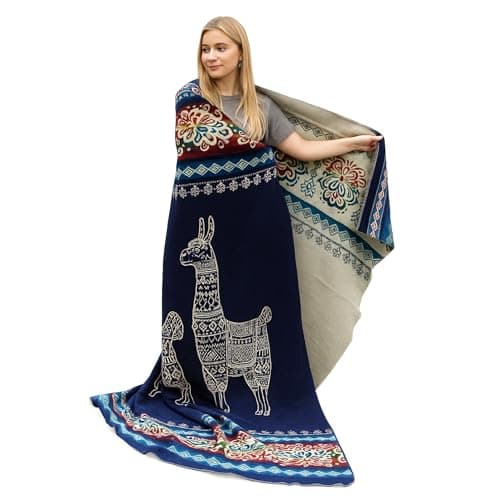 Tommy Lion Alpaca Wool Blanket, Blue Alpaca at bed size — warmer than wool for the weight, and it does not itch. | the person who is always cold and owns four inadequate throws | Amazon Handmade | $135.00Amazon (affiliate link) |
| 02 | 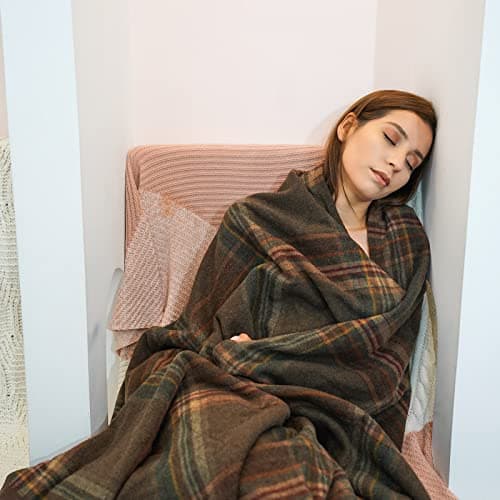 YOUR MOON Merino Wool Blanket, Queen 100% Australian merino at 360 GSM and queen size, and the listing states both numbers. | a bed blanket in pure merino, at the size that makes it a real gift | Factory-made | $109.99Amazon (affiliate link) |
| 03 | 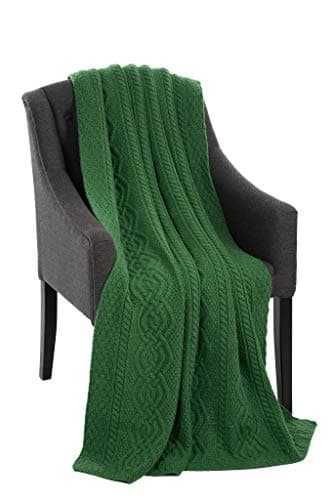 SAOL Dara Merino Aran Cable Knit Throw 100% merino in a traditional Aran cable, from an Irish knitwear house rather than a marketplace reseller. | someone who wants the cable pattern as much as the warmth | Maker-direct | $114.90Amazon (affiliate link) |
| 04 | 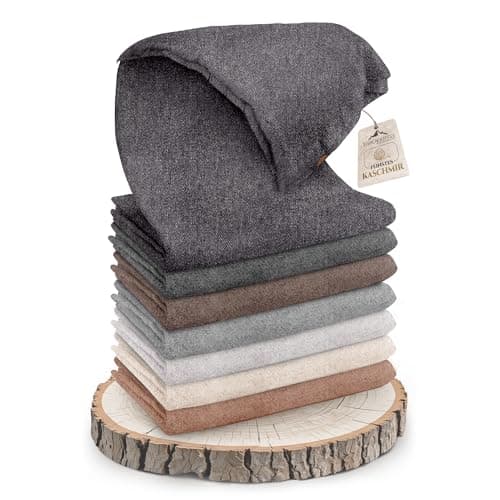 yanopurna Handwoven Cashmere Throw Hand woven in Nepal in 100% cashmere, at roughly the price of a good merino blanket. | the third option, when neither alpaca nor merino is soft enough | Amazon Handmade | $119.00Amazon (affiliate link) |
| 05 | 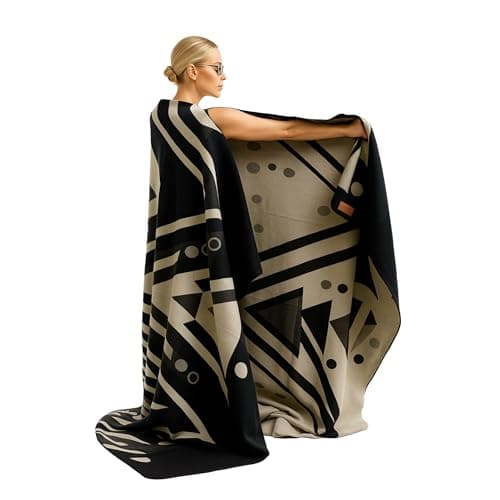 Tommy Lion Alpaca Blanket, Gray The neutral colorway, which is the one to send when you have not seen the room. | the same blanket, for someone whose house has a color scheme | Amazon Handmade | $129.00Amazon (affiliate link) |
| 06 | 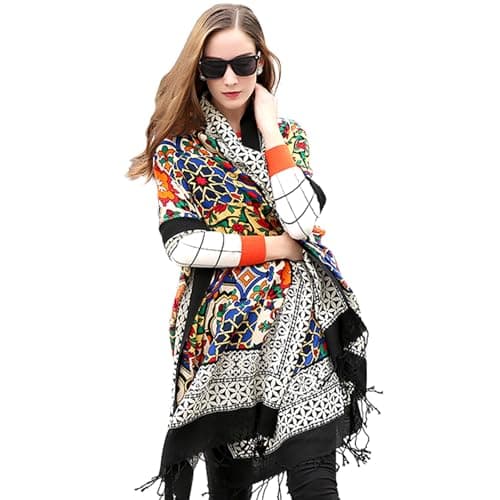 DANA XU Merino Wool Oversized Shawl A 96 by 43 inch merino wrap with hand-knotted tassels — a blanket you can wear. | the merino version of a gift that has to travel in hand luggage | Maker-direct | $43.34Amazon (affiliate link) |
| 07 | 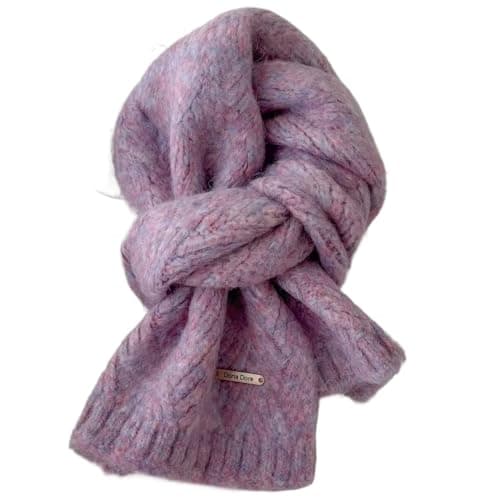 100% Alpaca Wool Neck Scarf Pure alpaca at scarf scale and scarf price, which is the cheap way to settle the fiber question. | testing whether someone gets on with alpaca before spending blanket money | Factory-made | $26.99Amazon (affiliate link) |
#ad · Live prices from the Amazon Creators API, as of October 25, 2026. Where we hold no verified live price we show none — a gap beats a number that has rotted.
The one we would not buy
Chunky knit blankets made from giant loop yarn
They photograph beautifully and the listings are full of the word merino, and a large share of them are polyester chenille with no wool in them at all. The tells are price and weight: a genuine merino throw at sofa size costs three figures, because that much fine wool costs that much. A giant-yarn blanket at thirty or forty dollars is a synthetic, and the US Wool Products Labeling Act requires the fiber content to be stated on the label, so a listing that will not state a percentage has told you the answer.
The picks, in full
Tommy Lion Alpaca Wool Blanket, Blue
by Tommy Lion
For the person who is always cold and reacts to sheep's wool. Alpaca at bed size — warmer than wool for the weight, and it does not itch.
Alpaca fiber is hollow, which is why it insulates better than sheep's wool at a lower weight, and it has no lanolin, which is why people who react to wool usually do not react to it. At 90 x 80 inches this is a real bed blanket rather than a throw, and that size is what makes it a serious gift. It is a three-figure gift and the piece on this page most likely to still be in use in twenty years.
Worth knowing first
Hand wash or dry clean. Putting alpaca through a hot machine cycle is how a three-figure blanket becomes a doll's blanket.
Price as of October 25, 2026. Prices move, and the one on Amazon is the one that counts.
#ad we may earn a commission from this link to Tommy Lion Alpaca Wool Blanket, Blue
YOUR MOON Merino Wool Blanket, Queen
by YOUR MOON
For the same bed, in the fiber that takes more abuse. 100% Australian merino at 360 GSM and queen size, and the listing states both numbers.
We list this as mill-made rather than handmade, because it is, and it earns its place anyway: it is the merino counterpart to the alpaca blankets on this site, at a comparable size, so the fiber comparison is actually a comparison rather than a mismatch. The two figures that matter are both stated — 100% merino, not a blend, and 360 grams per square meter, which is a real winter weight rather than a decorative throw.
Worth knowing first
Mass-produced. If the point of the gift is that a person made it, buy one of the handwoven pieces instead.
Price as of October 25, 2026. Prices move, and the one on Amazon is the one that counts.
#ad we may earn a commission from this link to YOUR MOON Merino Wool Blanket, Queen
SAOL Dara Merino Aran Cable Knit Throw
by SAOL
For a sofa, where the cable pattern is half the point. 100% merino in a traditional Aran cable, from an Irish knitwear house rather than a marketplace reseller.
Aran cabling is not decoration. The cables pull the knit tighter and double the fabric back on itself along each twist, which is why an Aran piece is warmer and heavier than a flat knit of the same yarn. SAOL is an Irish company working in that tradition, so the pattern is the real one rather than a print of it. At 69 by 44 inches this is a sofa throw, not a bed blanket.
Worth knowing first
Stock on single colorways runs low and the size is throw, not bed. Wool this heavily cabled also needs gentle washing; see [wool and fiber care](/guides/wool-and-fiber-care).
Price as of October 25, 2026. Prices move, and the one on Amazon is the one that counts.
#ad we may earn a commission from this link to SAOL Dara Merino Aran Cable Knit Throw
yanopurna Handwoven Cashmere Throw
by yanopurna
For someone who finds both of the others too coarse. Hand woven in Nepal in 100% cashmere, at roughly the price of a good merino blanket.
Cashmere is the finest of the three fibers on this page — the individual hairs are thinner than merino, which is what softness actually measures — and it is hand woven here rather than mill-knit, so the piece has the slight irregularity that reads as made. At 135 by 270 cm it is long enough to cover a sofa or lie across the foot of a bed.
Worth knowing first
Cashmere is the least hard-wearing of the three. It pills where it rubs and it will not take the abuse a merino or alpaca blanket shrugs off, so it belongs on a sofa rather than in a dog's favorite chair.
Price as of October 25, 2026. Prices move, and the one on Amazon is the one that counts.
#ad we may earn a commission from this link to yanopurna Handwoven Cashmere Throw
Tommy Lion Alpaca Blanket, Gray
by Tommy Lion
For a room you have never seen. The neutral colorway, which is the one to send when you have not seen the room.
Same fiber, same size, same construction as the version above. It is listed separately because color is the single most common reason a textile gift gets quietly folded away, and gray is the option that survives contact with a room you have never visited. Buy the blue if you know the house; buy this one if you do not.
Price as of October 25, 2026. Prices move, and the one on Amazon is the one that counts.
#ad we may earn a commission from this link to Tommy Lion Alpaca Blanket, Gray
DANA XU Merino Wool Oversized Shawl
by DANA XU
For a blanket that has to go in hand luggage. A 96 by 43 inch merino wrap with hand-knotted tassels — a blanket you can wear.
At this size the distinction between a wrap and a throw stops meaning anything, which is exactly the point: it is a scarf on a cold platform, a shawl at a dinner, and a blanket on a plane. Merino is the right fiber for that job because it is fine enough to go round a neck without itching, which coarser wool is not. The tassels are hand knotted, which is the part a machine does badly.
Worth knowing first
It is a wrap, so it is lighter than any of the blankets here. Buy it for wearing, not for a bed.
$45.896% off
Price as of October 25, 2026. Prices move, and the one on Amazon is the one that counts.
#ad we may earn a commission from this link to DANA XU Merino Wool Oversized Shawl
100% Alpaca Wool Neck Scarf
For finding out whether they get on with the fiber before spending blanket money. Pure alpaca at scarf scale and scarf price, which is the cheap way to settle the fiber question.
Alpaca has no lanolin, which is the usual culprit when a person says wool makes them itch, and the fiber is hollow, so it insulates heavily for its weight. Both of those claims are easy to test on a neck and expensive to test on a bed. A scarf is the honest first step for a recipient you are not sure about, and it is useful on its own.
Worth knowing first
Mass-produced, and lightweight — this is a mild-weather scarf, not an answer to a prairie winter.
Price as of October 25, 2026. Prices move, and the one on Amazon is the one that counts.
#ad we may earn a commission from this link to 100% Alpaca Wool Neck Scarf
The short version
If the recipient says wool makes them itch, buy alpaca. If the blanket is going to be used hard, washed often and sat on by a dog, buy merino. If neither of those is soft enough and the budget reaches it, buy cashmere and accept that it is the most delicate of the three.
That is the whole decision, and the rest of this page is the evidence behind it, because almost every claim made for these fibers in a product listing is either unverifiable or quietly wrong. The numbers below come from the sources listed at the bottom, not from a brand's own copy.
The one number that matters: fiber diameter
Softness is not a vague quality. It is almost entirely a function of how thick the individual hairs are, measured in microns, because a thicker hair is stiff enough to press into the skin rather than bend against it. Roughly 25 microns is where most people start to feel prickle. Everything else about these three fibers is secondary to that one number.
Read that table carefully, because it does not say what the marketing says. Good alpaca and good merino overlap almost completely. A fine merino at 19 microns is finer than a lot of commercial alpaca, and a top-grade alpaca is finer than a standard merino. Neither fiber is inherently softer than the other — the grade within each fiber matters more than the choice between them.
The itch question, and why alpaca usually wins it
Two separate things make wool itch, and people conflate them constantly. The first is diameter, covered above. The second is lanolin, the grease in sheep's wool, which is the usual culprit when somebody reacts to wool rather than merely finding it scratchy. Alpaca fiber is described as having essentially no lanolin, and that absence is where the hypoallergenic claim comes from.
Be precise about what that does and does not mean. It means alpaca is a sensible first try for someone who has given up on wool, because the most common irritant is simply not present. It does not mean alpaca is hypoallergenic in a tested, clinical sense — the claim rests on the absence of lanolin rather than on allergy data, and nobody has shown that no one reacts to alpaca.
The practical move is cheap: buy a scarf before you buy a blanket. A neck is the most sensitive place a fiber will ever touch, so a scarf settles the question for the price of a takeaway rather than the price of a bed blanket.
What alpaca marketing gets wrong
You will read everywhere, including in older copy on this site, that alpaca fiber is hollow and that this is why it insulates so well. The documented position is narrower than that. Medullated fibers — ones with a central core — do occur in alpaca, and when that core contracts it leaves air pockets that assist insulation. But medullation is mostly found in the coarser guard hairs, and it is treated as an undesirable trait in quality products, not a selling point. The fine fiber in a good alpaca blanket is largely not the hollow kind.
So the honest version is this: alpaca is described as warmer than sheep's wool and not prickly, and it insulates even when wet. Those are real properties. The tidy hollow-fiber explanation attached to them in product listings is an overstatement, and we would rather say so than repeat it. If a listing leans on the hollow-fiber story as its main claim, it is selling you physics it has not checked.
Warmth, weight, and which one you actually want on a bed
- Alpaca
- Warm for its weight and warm when damp, which is the property that matters in a cold house rather than on a mountain. The practical result is a blanket that feels lighter than it performs.
- Merino
- The all-rounder. Slightly heavier for the same warmth, far more available at every price, and the fiber with the deepest range of grades, so a merino blanket can be anything from scratchy to superb depending on the grade.
- Cashmere
- The softest and the most temperature-neutral: it is hygroscopic, absorbing and releasing moisture from the air, which is why it suits a person who overheats as much as one who is cold.
For a bed blanket, the number to look for is GSM — grams per square meter — and almost no listing gives it. When one does, it is telling you something real: around 350 GSM and above is a genuine winter weight, while a decorative throw is often half that. A listing that states the fiber and the GSM has told you more than a page of adjectives.
Durability, pilling, and the thing nobody mentions
This is where the ranking inverts, and it is the single most useful reason to choose merino over the other two. The finer a fiber is, the less abrasion it takes before it breaks and tangles into pills. Cashmere, being the finest by definition, is the first to pill where it rubs — the arm of a sofa, a seatbelt, a bag strap. Alpaca sits in the middle. Merino, especially at the medium grades, is the one that takes a decade of being sat on.
Construction matters as much as fiber here. A tightly cabled Aran knit is dense and holds its shape; a loosely spun giant-yarn blanket snags on a ring the first week. If the gift is going to a house with children, a dog, or furniture with wooden arms, weight the decision toward merino and toward a tight knit or a close weave.
Washing, which is where most of these blankets die
Every fiber on this page is protein, not plant, and protein fibers felt when you combine heat, water and agitation. That is the whole mechanism behind a three-figure blanket coming out of a machine at doll size, and it is not reversible.
- Do not put any of them in a hot wash. If the label says hand wash or dry clean, that is a load-bearing instruction rather than a legal disclaimer.
- Wash rarely. Wool is naturally odor-resistant and most blankets need airing far more often than they need washing. Hanging one outside on a dry day does most of the work.
- Dry flat, never hung. A wet wool blanket is heavy enough to stretch itself out of shape over a line.
- Spot clean first. Nine times out of ten a mark comes out with cool water and patience, and that avoids the risk entirely.
Wool and fiber care is the full routine, including what to do about moths, which are a bigger threat to all three of these fibers than any amount of normal use.
Price, and what you are actually paying for
The supply side explains most of the pricing. Cashmere comes from the undercoat of a goat, combed out by hand, at roughly 150 grams per animal per year. That is why a cashmere throw costs what it does: the raw material is measured in handfuls per goat per season. Merino is shorn by the fleece and farmed at enormous scale, which is why merino is the fiber with a genuine budget end. Alpaca sits between the two, with far less global production than merino and far more than cashmere.
In qualitative terms: at the price of one cashmere throw you can usually buy a merino bed blanket, and at the price of one fine alpaca bed blanket you can buy two or three merino throws. All three are objects that should last fifteen years, so the sensible way to compare them is cost per year rather than cost per blanket — and on that basis the most expensive mistake is not choosing the dearer fiber, it is choosing a blanket that gets folded into a cupboard because the color was wrong.
How to read a fiber listing
Four checks, in order, and they will filter out almost everything dishonest in this category.
- Is there a percentage? US law requires wool products to carry their fiber content. A listing that says alpaca blend without a number is usually mostly acrylic, and a listing that says merino-style or cashmere-feel contains neither.
- Is there a measurement? Dimensions in inches or centimeters, and ideally a GSM. Throw and blanket are not sizes.
- Does the price make sense for the fiber? A three-figure fiber cannot be sold as a two-figure blanket at sofa size. When it is, the fiber is not what the title says.
- Who made it, and does it say where? Hand woven in Nepal, knitted in Ireland, woven by a Guatemalan cooperative — specific provenance is checkable and vague provenance is not. The same test runs across every craft on this site: see spotting resold mass production.
Which one, for which gift
A summary for the person who scrolled to the bottom. Alpaca for someone who has decided wool is not for them, for a cold sleeper, and for a gift that should feel like a serious object. Merino for a household rather than a person: it is the one that survives being used by everybody, and it is the only one of the three with a credible budget end. Cashmere for a reader, a sofa, and someone who notices textiles, and not for a house where it will be sat on by something with claws.
If you are buying a blanket as a gift for a couple rather than a person, engagement gifts covers how a large textile fits alongside the smaller things, and knit blankets and throws and handwoven throws are the full product lists once you have settled on a fiber.
Questions people actually ask
Is alpaca warmer than merino wool?
Which is softer, alpaca or merino?
Why does alpaca not itch when wool does?
Is cashmere worth the extra over merino?
Can you machine wash an alpaca or merino blanket?
How can you tell if a chunky knit blanket is really merino?
Sources
- Merino — fiber diameter grades (strong 23-24.5 μm through ultra-fine 11.5-15 μm)
- Alpaca fiber — diameter range, absence of lanolin, medullation and air pockets
- Cashmere wool — the US 19-micron definition and average yield per goat
- 15 U.S.C. § 68b — Wool Products Labeling Act, required fiber content disclosure
Read next
Roundup
Knit blankets and throws
Alpaca and crochet, plus an honest account of what this marketplace does not have.
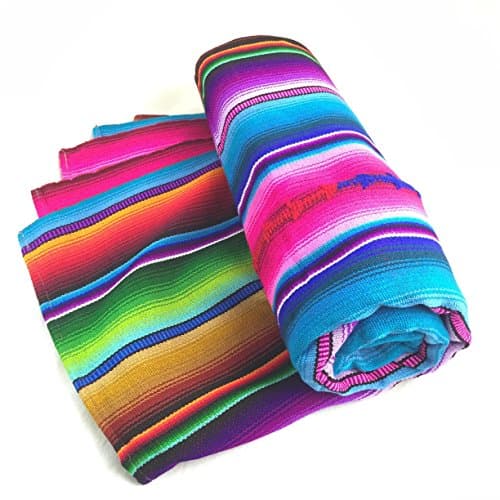
Roundup
Handwoven throws
Loom-woven cotton and alpaca, and the back-of-the-fabric test.
Care
Wool and fiber care
Washing wool without felting it, plus pilling and moths.
Fiber
Fiber and textiles
Woven, knotted, quilted — and how to tell each from a printed imitation.
Occasion
Engagement gifts for the year before the wedding
What to give a newly engaged couple, how much to spend when the wedding gift is still to come, and the one thing not to personalize yet.
For a person
Gifts for the person who has everything
For someone who owns the good version of everything already.
Buying handmade
Spotting resold mass production
A nine-point checklist you can run on any listing in a minute.